
Parley
Talks between the Ethiopian government and Oromiya rebels have started in Zanzibar, a spokesman for the regional Africa group…

Talks between the Ethiopian government and Oromiya rebels have started in Zanzibar, a spokesman for the regional Africa group Intergovernmental Authority on Development (IGAD), Nuur Mohamud Sheekh, has said. The unrest in Oromiya is one of several security challenges Prime Minister Abiy Ahmed’s government is working to address after signing a peace deal in November to end a two-year civil war in the northern Tigray region that cost tens of thousands of lives. The talks bring together representatives from the Ethiopian government and the Oromo Liberation Army (OLA), an outlawed splinter group of the Oromo Liberation Front (OLF).
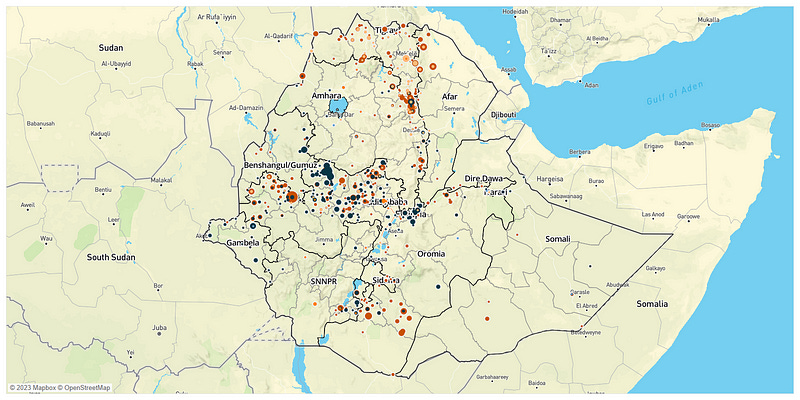
The peace talks in Zanzibar are another important milestone in the international community’s effort to end the conflict in Ethiopia, a daunting task given the ethnic politics of the modern Ethiopian state. Being Africa’s second most populous country, Ethiopia is an all too familiar story―an ethnic minority dominating government and state politics for decades; mutual distrust between the ethnic groups; regions created along ethnic identities; a hamstrung federal government barely surviving onslaughts on its legitimacy. The Oromo conflict, which started before the Tigray crisis in 2020, ended with a political solution that merely papered over the cracks when an Oromo national, Abiy Ahmed, was appointed Prime Minister in 2019. As a result, it was easy for the OLF to ally itself with the TPLF during the middle of the war between the ENDF and the TPLF. Decades-long repression of the Oromo―the country’s biggest ethnic population―was possible by the collective participation of all other groups, with the Tigrayans being the arrowhead. And while the conflict between Addis Ababa and Mekele may be hitting the ice, Abiy’s government has got its hands full with Amhara violence in the west threatening to assume a civil-war status. The key lesson is that for big states like Ethiopia and Nigeria, repressing ethnicities (whether major or minor) may maintain state-enforced cohesion for some time, but it cannot sustain it. A state that deprioritises justice and the primacy of mutual partnership of its federating units will spend more time putting out fires through force than governing the country.