
“Playing with fire”
In Kampala, security forces surrounded the opposition National Unity Platform (NUP) headquarters, blocking entry and exit ahead of planned…

In Kampala, security forces surrounded the opposition National Unity Platform (NUP) headquarters, blocking entry and exit ahead of planned anti-government protests. NUP leader Bobi Wine reported violent arrests of party leaders and shared images of military presence. President Yoweri Museveni warned protesters they would be “playing with fire” if they proceeded with the anti-corruption march, which was banned. The march, organised by young Ugandans on social media, demands an end to government corruption. Museveni, in power since 1986, is accused of ruling with an iron hand. The crackdown comes amid growing discontent and inspiration from neighbouring Kenya’s protests.
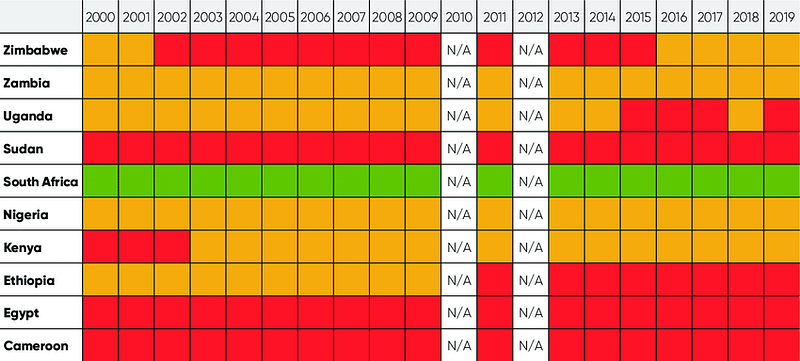
In 2022, Transparency International rated Uganda 141 of 180 countries in its corruption index. According to a 2023 Afrobarometer report, one in five Ugandans (18%) cite corruption as one of the top challenges in their country. The proportion of citizens viewing corruption as an urgent problem increased from 3% in 2000 to 20% in 2017. Since coming to power in 1986, President Yoweri Museveni’s failure to meet popular promises has led to disillusionment with his government, causing younger voters to shift from the NRM to the NUP, led by singer Bobi Wine. This latest crackdown on civil liberties is a common characteristic of Museveni’s rule. Police called it a “precautionary move” before planned protests, but NUP leader Bobi Wine reported violent arrests and shared images of military personnel surrounding the site. Museveni maintains his grip on power through military loyalty, patronage networks and opposition suppression. Predicting the end of Museveni’s rule has been a fool’s errand. His political skill and readiness to use force suggest he can still suppress opposition in the short term. Kampala remains tense as young activists and the ageing autocrat are locked in a struggle that will influence Uganda’s path for years. Beyond Uganda, social unrest patterns across Africa in the past decade and a half have shown that popular movements are ideologically transnational. Parallels and similarities can thus be drawn between the Kenyan and emergent protests elsewhere, including in Uganda. However, while the protests against the anti-finance bill, subsequently dubbed “Ruto-Must-Go,” are driven by Gen Z anger in Kenya, they are spearheaded by the opposition in Uganda. As such, it is easier for Museveni to use the instruments of the state to suppress them. The responses of these governments to protests, including the potential August 1 demonstrations in Nigeria, suggest a troubling erosion of civil liberties as they become increasingly uneasy about public dissent. While Freedom House rates Uganda “not free” with a measly 24/100 score in its 2022 report, the reality is democracies on the continent are sliding into illiberalism, maintaining a facade with regular elections. Over the past year, observations in Ghana, Kenya, and Uganda suggest that conflicts between state forces and Generation Z protesters will become common.