
Prices are flying high
In November 2023, air travel costs in Nigeria surged by 11.01% compared to the same period in 2022, reaching ₦81,334.05 from ₦73,270.27…

In November 2023, air travel costs in Nigeria surged by 11.01% compared to the same period in 2022, reaching ₦81,334.05 from ₦73,270.27. This marked a 3.24% increase from October 2023. The National Bureau of Statistics’ Transport Fare Watch report attributed the spike to elevated aviation fuel prices and foreign exchange scarcity, amplifying airline operating costs. Meanwhile, the average fare for city bus journeys per drop decreased by 6.23% from ₦1,117.30 in October to ₦1,047.63 in November. However, it rose by 64.44% yearly from ₦637.10 in November 2022.
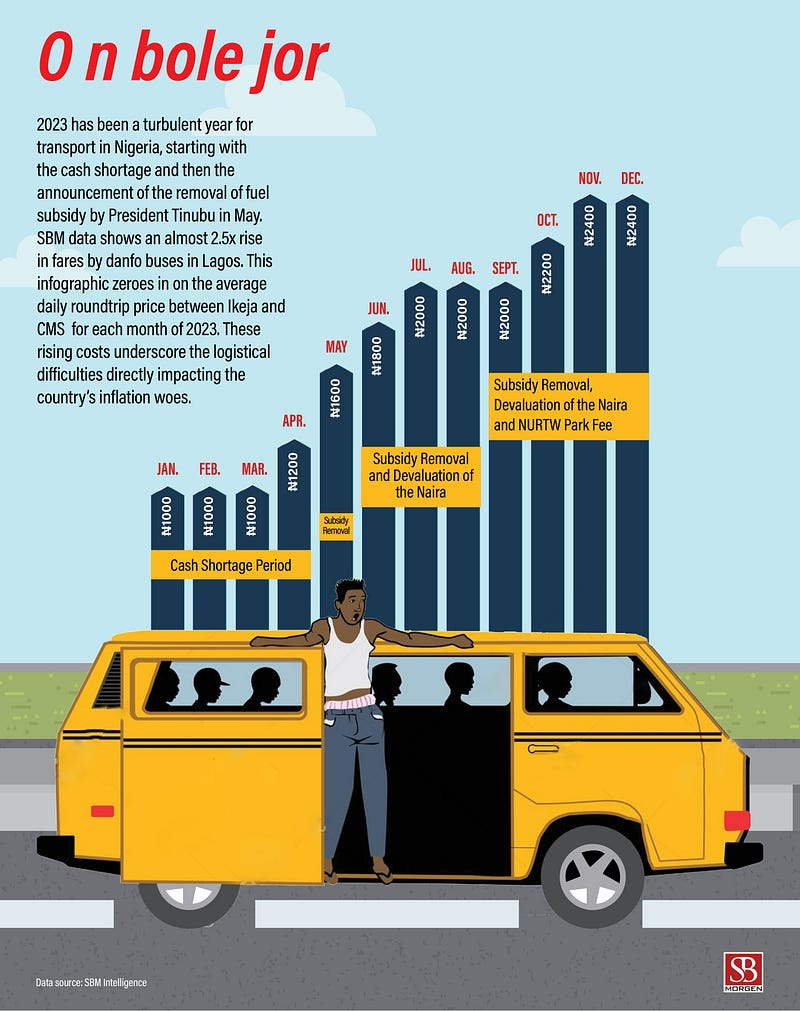
This data from the country’s statistical office draws attention to the impact of policies implemented by the Bola Tinubu administration. The twin policies of subsidy removal and naira devaluation have reduced purchasing power and increased the cost of living. In 2023, transport costs increased significantly following President Tinubu’s announcement of the removal of petrol subsidies and a rise in global crude oil prices. After food, transport is the second-highest item Nigerians spend their income on, according to the Nigerian Bureau of Statistics. However, this looks only at the direct spending on transport. In some parts of the country, transport costs constitute up to 20% of the final cost of food, and it rises as high as 35% in other parts. A December 2023 chart from SBM Intelligence details what the average commuter in Lagos endured. Moreover, airline operators typically opt to raise fares to mitigate the impact of escalating operational costs and prevent diminishing profit margins. Also, as always, transporters keyed into the increased demand during the festive seasons to increase seat prices in aeroplanes and buses. Some justify that the demand is usually one-way hence they send buses near-empty or half-full back to locations of high demand. For example, Lagos sees high demand at the start of the festive season, while that demand plummets at the end. Transportation is so pivotal that simply improving its cost will decrease the prices of many other items. The primary driver of the increased transport prices is the increase in fuel prices, as earlier mentioned, but issues like poor infrastructure, wrong infrastructure, limited options, lack of utilisation of cheaper alternatives for bulk transport and the lack of storage and extortion contribute to transport costs. And these, unlike the cost of fuel, are within the government’s control. Given their vital role in national development, prioritising this population segment should be a cornerstone of the government’s agenda in 2024.