
Prodigal states
Despite raking about ₦15.8 trillion from the Federation Account Allocation Committee (FAAC) in less than four years, most state governments…

Despite raking about ₦15.8 trillion from the Federation Account Allocation Committee (FAAC) in less than four years, most state governments are reeling in huge debts. In the first half of 2023, ₦1.15 trillion was disbursed to the sub-national entities. In July, they received ₦966.1 billion; in August, ₦1.1 trillion; in September, ₦903.4 billion and in October, ₦906.9 billion. While the state governors wait for Abuja every month, their Internally Generated Revenue (IGR) potentials are ignored or sub-optimally utilised. While they received ₦8.8 trillion from 2020 to 2021, their combined IGR stood at ₦3.46 trillion or less than 40 percent of their FAAC allocations.
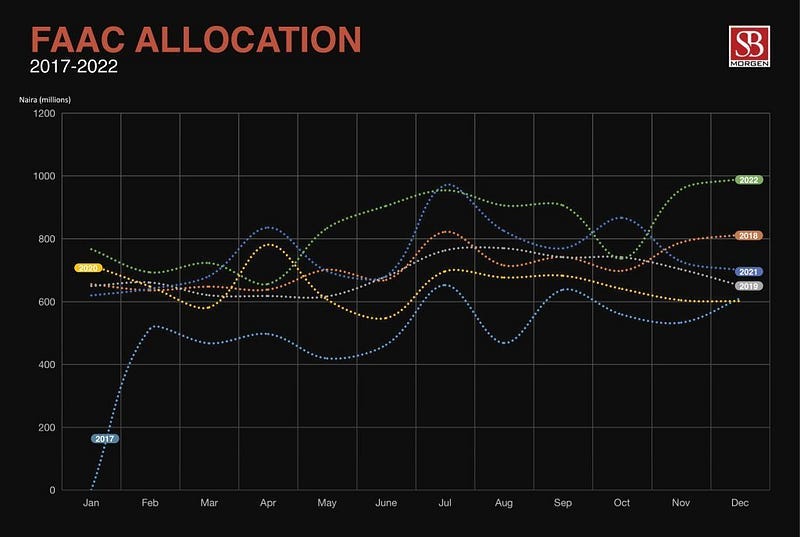
On the surface, these amounts look large. However, in dollar terms, ₦1.15 trillion disbursed to sub-national entities in 2023 equates to about $1.44 billion. That being said, it is important to point out that many of the sub-national entities are highly unproductive. They simply wait for the monthly payout to settle their recurrent and capital expenditures. This system of federating units getting allowances from the federal government disincentivises innovation and risk-based deployment of resources. Each state in Nigeria has the power to collect taxes and explore other sources of generating revenue, court investors and enter business agreements, as well as see to the wellbeing of its people and take loans. An analysis of the numbers over the past few years shows that the political leaders at the state level have majored in the last point and minored in the others. In 2021, funds from the FAAC accounted for over 50% of revenue available to 33 out of the 36 states. In 2022, this figure was 32 out of 36 states. This shows that without the FAAC component, many states would not be able to meet their salary obligations or fund capital projects. Even with the FAAC handouts, some states owe salaries and have not implemented the ₦30,000 minimum wage. This testifies to the lack of consequence in the Nigerian system, which gives political leaders the confidence to act anyhow they want. The state governments have divorced their earning power from their spending behaviour. The governments have very little understanding of the levers in their economies to drive growth, improve government revenue and even control spending. Nigerian states that have been relying solely on the federal government for money are finally realising it’s not going to last forever. As the money gets smaller and smaller, states will have to stop spending like crazy and start being responsible, like proper governments. Or else they’re doomed