
Protein crisis
Costs of feed, animal products and other inputs continue to spiral in Nigeria, trapping the population and the farming community in a…

Costs of feed, animal products and other inputs continue to spiral in Nigeria, trapping the population and the farming community in a vicious economic cycle. Coming from the Poultry Association of Nigeria (PAN), there has been an urgent call on the FG to intervene to control escalating feed costs. According to a senior official in one PAN chapter, feed that cost ₦8,000 (US$9.11) for a 25-kg bag in November is now selling for ₦10,950. To remain in business, poultry farmers require financial support from the government in the form of grants, he said. Even at low rates of interest, most poultry businesses are in too fragile a state to repay any further loans. Already, many poultry farmers have cut down their bird numbers, while others have closed their businesses altogether.
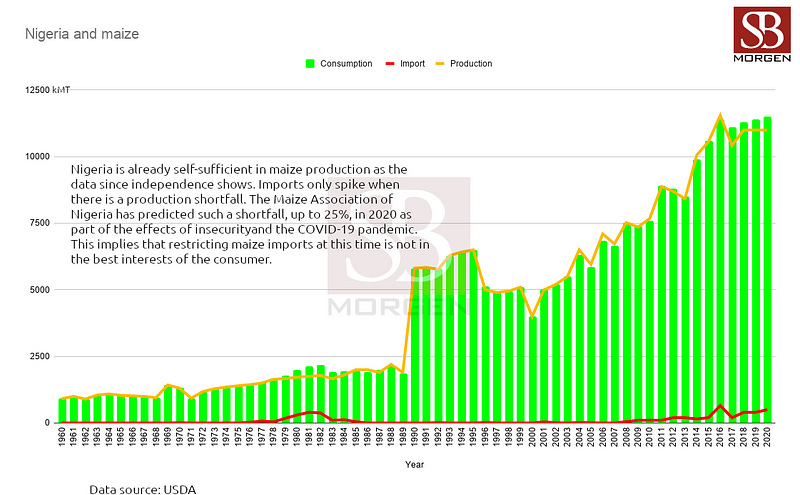
There are several dimensions to the ongoing crisis in Nigeria’s poultry industry. First, is the inability of crop farmers to meet the maize demand for domestic production. This problem is then worsened by insecurity which has hindered farmers from carrying out farming operations. Between October 2019 and October 2020, Nigeria’s maize imports doubled, rising from 500,000 metric tonnes to one million metric tonnes, and leading to a ban. The unintended consequences of the ill-advised ban on maize imports continue to show itself. When that policy was announced, SBM published a chart showing how this would further drive the costs of poultry products and medicines up because maize is a key component in the value chain of both industries. The Cardoso-led CBN has lifted that ban, but the effects still linger for maize, a crop that Nigeria ranked as Africa’s highest producer in 2019. Second, is the demand for a subsidy. A major downside to Nigeria’s subsidy strategy since the 1970s was that wages remained low, as funds were diverted to subsidising consumption. Over time, this led to a growing imbalance between the cost of living and wages, which has now reached a crisis point. The subsidies have now been removed, but wages remain largely unaddressed; hence the vast majority of Nigerians cannot meet their basic financial requirements. Unfortunately, PAN’s call to the government to intervene to control escalating feed costs is not the right way to go. Nigeria must continue the push for free markets, but wages must rise quickly. From a health perspective, the inability of farms to remain open would translate to a drop in egg production, which would lead to a hike in prices. This means that eggs would gradually be out of reach for the poor, and children may not get adequate proteins for growth. Thus, the problem in Nigeria’s poultry industry is not just about businesses or maize farmers. The health of the young population is at stake.