
Pump it up
The Nigerian National Petroleum Company Limited (NNPCL) has adjusted the pump prices of petrol across its retail outlets in line with…

The Nigerian National Petroleum Company Limited (NNPCL) has adjusted the pump prices of petrol across its retail outlets in line with current market realities. The oil marketers who promptly hiked petrol prices are not responding well to the NNPCL’s decision to raise prices on the products they had ordered from the corporation nearly eight months ago. As their inventory runs out, many are now jittery over the reality that if they must remain in business, they would have to source their dollars, import their own crude, and truck it across Nigeria.
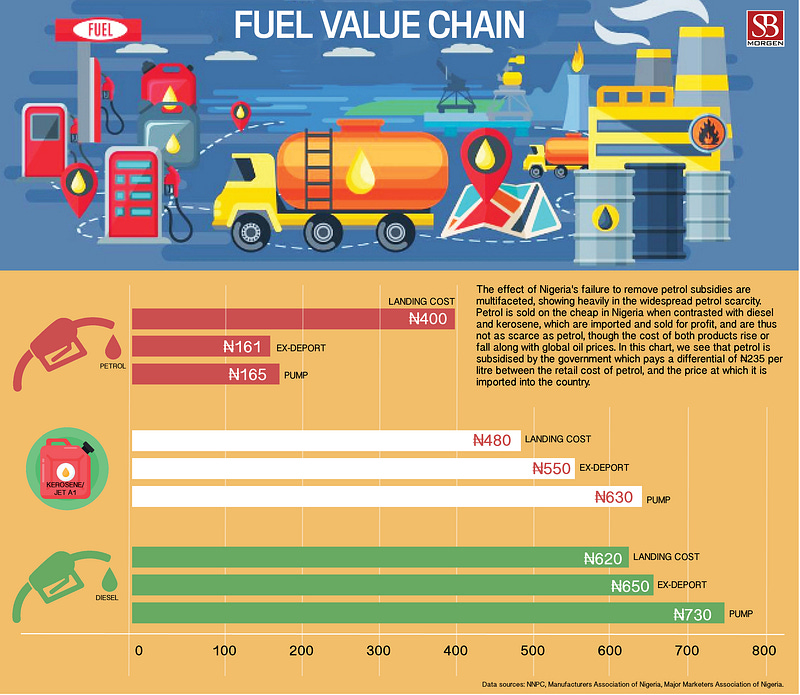
Despite all the main presidential aspirants in the last election stating that they would remove petrol subsidies once sworn into office, Mr Tinubu’s comments on inauguration day that “subsidy is gone” caught many Nigerians off guard. Marketers immediately stopped selling and waited for directives from the NNPCL. The next day, following a meeting of the NNPLC’s GMD and President Tinubu, the company increased pump prices in all its stations across the country, making it clear to all that subsidy was indeed gone. Panic buying started, and it took days before most marketers started to sell the product, causing queues to appear around the country. Tinubu’s move to signal the removal of subsidy without working with the industry regulator created an uncertainty the NNPC and marketers took advantage of to the chagrin of Nigerians. The squabble and confusion over Tinubu’s proclamation help shed light on what we have known but have been unsure of: oil marketers start to bear the cost of petrol brought into the country from the point where smaller vessels begin to pick up the load. This information leaves a lot of questions concerning the relationship between NNPC and the oil marketers and when exactly the marketers became responsible for transhipment. Although the NNPC set a ₦172 ex-depot price from the end of January, Lagos oil marketers/depot owners have sold the product for as high as ₦312, according to a Punch report citing the Major Oil Marketers Association of Nigeria. The main reason they proffered for their inability to sell at the government or NNPC-set price was that the forex component of paying for the transfer of the petrol to a smaller vessel and hiring the smaller ship was not factored in. The template the Petroleum Products Pricing Regulatory Agency published prior had a column for lightering factored into the landing cost before the petrol reached the depot. At the ports, there are other charges the entity offloading the petrol has to bear, including the forex-denominated Nigerian Maritime Administration and Safety Agency (NIMASA) fee. Working with these pieces of information, we can reach a pair of conclusions. The major fees the NNPC has been bearing for a while in the subsidising of petrol are the freight and refining costs. Yet, they set ex-depot prices for marketers that do not factor in the price burdens incurred by these depot owners. The NNPC and these depot owners still go out to play in the last-mile retail space. Could it be that government-owned companies do this to gain some competitive advantage? This abuse can only happen because the authority responsible for regulating how both the NNPC and their partner marketers operate have stayed silent and subservient. Section 206 (2) of the Petroleum Industry Act asks the Nigerian Midstream and Downstream Petroleum Regulatory Authority (NMDPRA) to “monitor the bulk sale of petroleum products and may publish market-based prices to ensure that the transactions are conducted in such a manner that transfer pricing between the supplier and wholesale customer is undertaken on a transparent, arms-length basis.” The failure of the regulator to determine prices during the subsidy era and announce how much the NNPC was undertaking as subsidy per litre has allowed the limited liability company to get away with potentially milking Nigerians for the benefit of a few. Tinubu could have started the subsidy removal process in the background by working with the regulator to come up with a new market-determined pricing template, regulating the consumption rate, and understanding what the relationship between the NNPC and the oil marketers looks like. We expect, without any hope of prosecution, that the Tenth Assembly will answer the questions thrown up by the pickle the NNPC threw Nigerians and marketers into. For instance: at what point in the subsidy process did the depot owners/oil marketers become responsible for transshipment? We know that the line items on the old pricing template still hold, but what we now need to know is how much of that is born by oil marketers and carried by the NNPC. After understanding that, we need to know how much the NNPC has been paying as a subsidy on a litre of petrol since 2021, at least. It is obvious that at some point in this subsidy dance, the NNPC put more of its weight on us. Oil marketers will look for ways to pass down the effects of higher costs to customers. They’ll do it by hoarding and smuggling to benefit from those practices’ extra margins. As of the time of putting this newsletter out, the queues have significantly reduced, mainly because of the reduction in demand for fuel, no thanks to the price increase. While the queues have started shrinking, people have started to feel the impact of an almost 300% increase in petrol prices. There are rumours that NNPC will start issuing import licences for the product, thus ending the company’s days as the sole importer of petrol. When people say that the Nigerian Government should get out of business, it is partly because of the unpredictable dangers that come from the government’s incompetence and callousness that leaves those who do business with it exposed to troubles. The burden will end up on the backs of the retail consumers eventually, so we have to hope that the government competently works out how to make that phase bearable for the people. In the meantime, the fuel subsidy removal eliminates one of the market distortions in the Nigerian economy, thereby correcting the market. It is important that, along with the fuel subsidy removal, the government should roll out a comprehensive plan that will include cuts in government expenditure and palliative measures for the most affected Nigerians. The corollary reform that needs to follow the fuel subsidy removal is the expungement of government subsidies on foreign exchange. While the President also mentioned this in his speech, it is yet to be implemented with the same alacrity the petrol subsidy removal was done. This is critical to levelling the playing field and letting the market determine the true price of these commodities, which Nigeria has little control over.