
Racing against inflation
Nigeria lengthened the run of growth in its factory output to three months in a row in June as manufacturers raced to increase goods in…

Nigeria lengthened the run of growth in its factory output to three months in a row in June as manufacturers raced to increase goods in stock to beat potential spikes in inflation. According to Stanbic IBTC Bank Nigeria’s Purchasing Manager Index (PMI) issued on Monday, an end to a popular but expensive fuel subsidy scheme in Africa’s biggest economy recently caused price pressures to quicken last month, slowing the pace of rise in new orders. At 53.2, the headline PMI — an indicator of private sector manufacturing firms’ performance and business conditions — is weaker when set beside May’s 54.0.
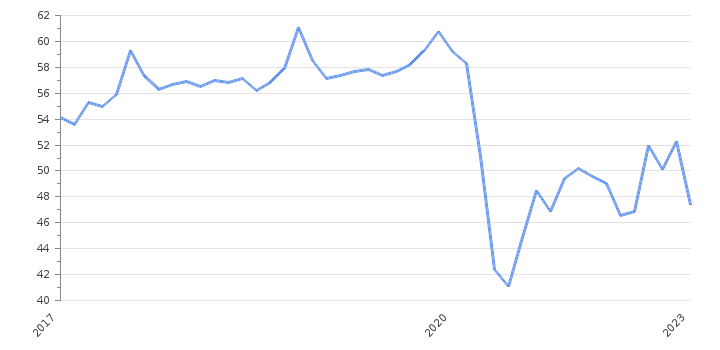
It is natural for supply to rise in an inflationary market, as the incentive is for the firms to attempt to cash in on high prices, increasing supply. However, the structural issues that have led to the prior decline in output linger. Access to FX, despite market liberalisation, is still a challenge. As expected, the initial reaction to the liberalised FX market is a capital flight of those whose monies have been trapped due to the previous FX demand management capital controls. The task now is to keep the market supplied long enough for the private sector FX to return and improve supply for the real sector. Many Nigerian investors have repeatedly maintained that the unavailability of FX, rather than the cost of purchase, was the major FX-related hindrance to production in Nigeria. A downside is that naira devaluation will lead to increased operational costs for some companies, which will be passed on to consumers. The increase in factory output in anticipation of higher production costs is a worrying situation because the Nigerian economy will soon have to deal with the impact of higher production costs interacting with reduced purchasing power and rising inflation. Higher input prices for fuel and other materials will lead to higher production costs for businesses, which would be passed on to consumers through higher prices, suggesting an acceleration of inflation over the next few months. The fuel subsidy had been used to keep petrol prices (and overall production costs) artificially low, but the Nigerian government would do well to also deal with the factors that keep the production costs of Nigerian businesses artificially elevated, such as high taxes and levies, inefficient bureaucracy, poor infrastructure, security challenges, and corruption. Hopefully, Nigeria can ride the immediate storm and come out on the other side better and stronger.