
Rays of disruption
Nigeria's solar panel imports fell by 89% in Q1 2025, as government policies boost local manufacturing to meet demand.

Nigeria saw an 89% drop in solar panel imports in Q1 2025, falling to ₦125.3 billion from ₦237.3 billion in Q4 2024, according to the National Bureau of Statistics’ (NBS) data. The sharp decline follows the federal government’s push to strengthen local solar panel production and reduce reliance on imports. The country’s manufacturing capacity has grown from 110 megawatts to 600 megawatts, with a new 100-megawatt Light Photovoltaic (LPV) plant in Lagos now fully operational. In March, the government announced plans to ban solar panel imports, positioning the National Agency for Science and Engineering Infrastructure (NASENI) as a key player in expanding off-grid clean energy through domestic innovation and industrialisation.
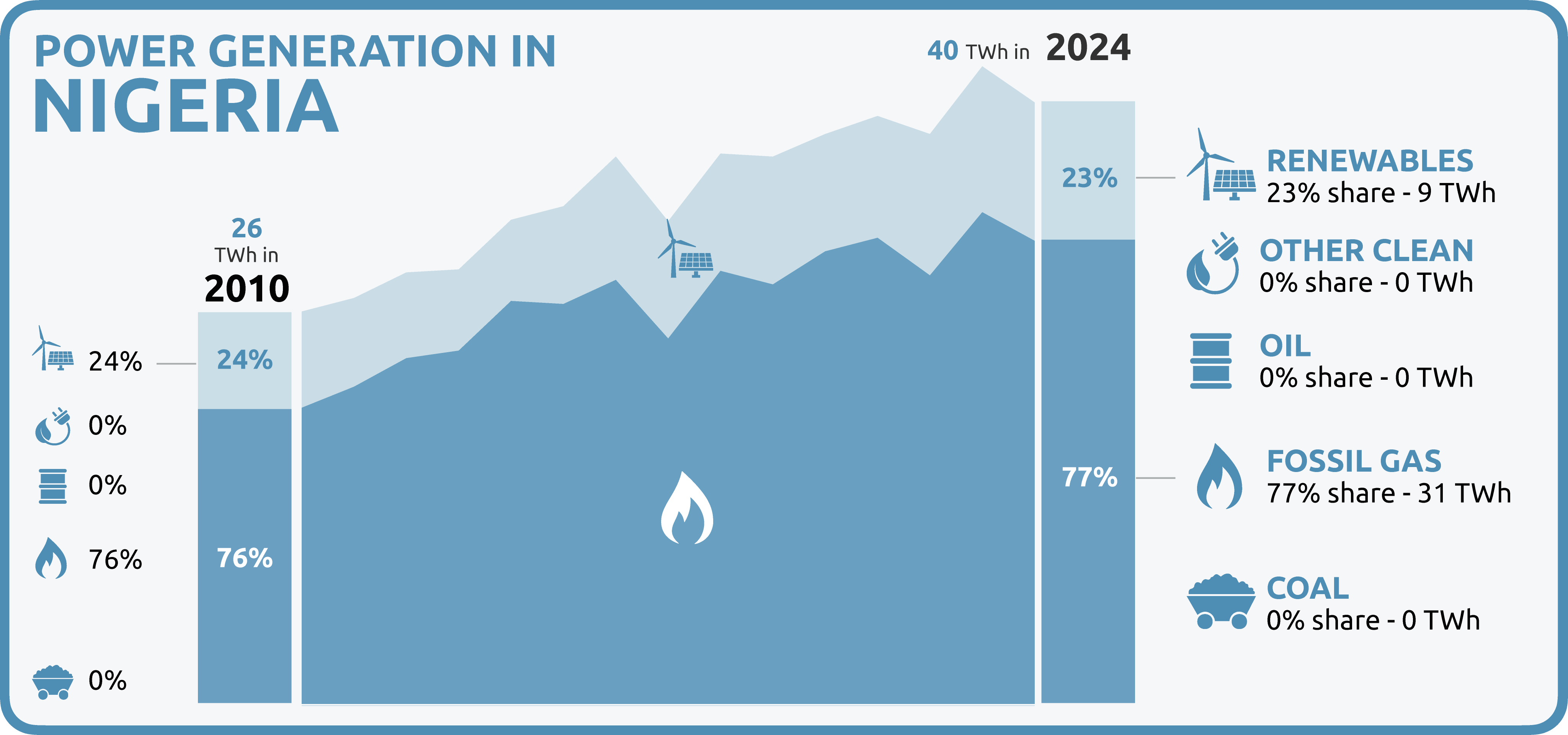
The sharp devaluation of the naira over the past two years has made virtually everything more expensive in Nigeria, with the solar energy market being a major casualty. The cost of installing solar panels and inverter systems has risen dramatically, making clean energy solutions unaffordable for many households and businesses. While some have suggested that a recent improvement in the national grid has reduced demand for solar energy, the consensus is that this is largely a seasonal effect, driven by increased rainfall that boosts hydroelectric output, rather than the result of any structural reform. Moreover, this marginal improvement has not been felt uniformly across the country, with many regions still grappling with unreliable power.
Against this backdrop, the government's decision to ban solar panel imports has contributed to a dramatic decline in import figures; however, it follows a familiar and flawed policy pattern: restricting imports before domestic production capacity is sufficiently established. The underlying assumption is that local manufacturers will quickly scale to meet demand. In reality, this approach often triggers sharp price increases, worsened by supply shortages and market uncertainty. In the solar sector, these risks are already fuelling black market activity, where both imported and locally produced units are sold at significantly inflated prices, further undermining access to clean energy. A key question, which requires further assessment, is whether the new locally manufactured panels are genuinely more affordable than their imported counterparts.
A more effective and sustainable strategy would have been to provide targeted incentives to support local manufacturers first. Measures such as tax reliefs, subsidies, or concessional loans would have allowed them to build capacity, improve quality, and compete with imports in a phased manner. Once domestic production had reached a viable scale with sufficient market penetration, import restrictions could then have been gradually introduced. This would have ensured a smoother transition towards self-sufficiency while minimising the immediate inflationary impact on consumers who desperately need reliable energy alternatives.