
Reforms in action
Nigeria's business activities have seen their fastest growth since 2024, thanks to successful economic reforms.

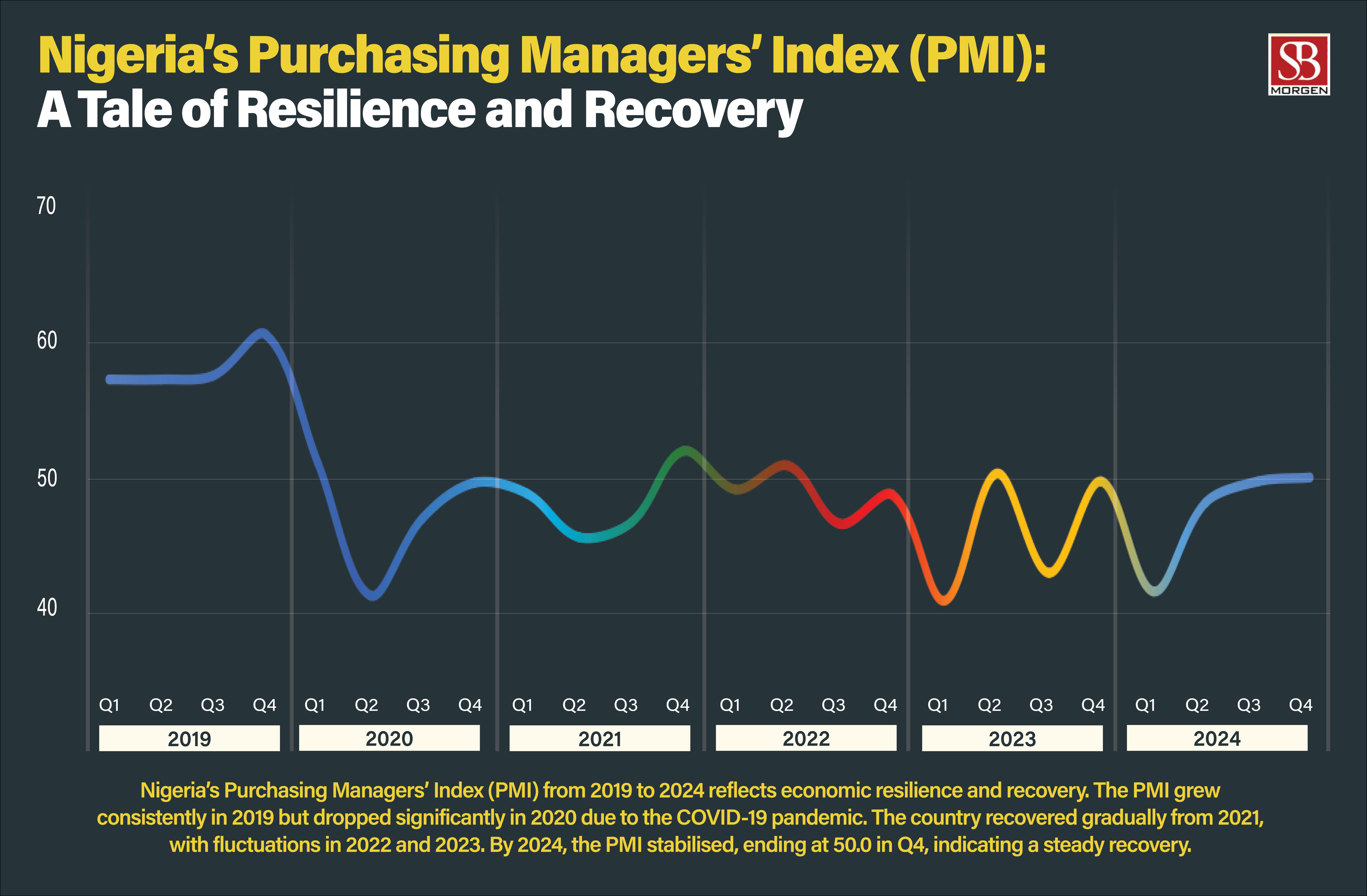
Thanks to economic reforms paying off, Nigeria’s business activities have seen their fastest growth since 2024. The latest PMI report from Stanbic IBTC Bank shows a headline index increase to 53.7 in February, up from 52.0 in January. This signals a solid improvement in business conditions, with growth in output, new orders, and purchasing activity across agriculture, manufacturing, services, wholesale, and retail sectors. New orders increased markedly, with customers more willing to commit to new projects. Inflationary pressures also moderated, with Nigeria’s inflation rate dropping from December 2024’s 34.80% to 24.48% in January. However, employment rose only marginally due to cost pressures.
For years, SBM has argued that Nigeria’s extensive subsidy regime functioned like driving on a motorway with the handbrake engaged—hampering economic efficiency and distorting market fundamentals. With significant reductions in fuel, electricity, and exchange rate subsidies, the economy is now adjusting to a more market-driven framework where prices of goods and services largely reflect supply and demand dynamics.
This transition has not been without pain, as consumers initially struggled with the shock of rising costs. However, inflationary pressures have begun to moderate, aided by a high base effect. The latest PMI report from Stanbic IBTC Bank underscores this shift, with business activity experiencing its fastest growth since 2024. The headline index climbed to 53.7 in February, up from 52.0 in January, signalling improved conditions across key sectors such as agriculture, manufacturing, services, wholesale, and retail. New orders have surged as businesses and consumers adjust to the current economic reality, fostering greater confidence in long-term planning.
As inflation trends downward—from a peak of 34.8% in December 2024 to 24.48% in January—businesses and investors are gaining better visibility into costs and revenues. This stability enhances the ability to attract long-term capital, as both government and private sector players can now model expenses with greater predictability.
However, while business activity expands, employment growth remains sluggish due to persistent cost constraints. Ultimately, these reforms are laying the groundwork for a more sustainable economic trajectory. While the road ahead may still present challenges, Nigeria is gradually moving towards a system where economic fundamentals—not artificial price controls—drive growth and investment decisions. If this momentum is sustained, the country could unlock new opportunities for industrial expansion, job creation, and overall economic resilience.