
Rigged-up
Nigeria’s oil rig count rose 85 percent within the last six months to its highest level since January 2020, according to the Organisation…

Nigeria’s oil rig count rose 85 percent within the last six months to its highest level since January 2020, according to the Organisation of the Petroleum Exporting Countries (OPEC), signalling that Nigeria is no longer playing on the margins. This upsurge has translated to increased oil production by 23,000 barrels per day (bpd) to 1.258 million bpd in January and increased by 48,000bpd to 1.3 million bpd in February, according to OPEC data. This does not include condensate production, which puts the figure closer to 1.6 million bpd.
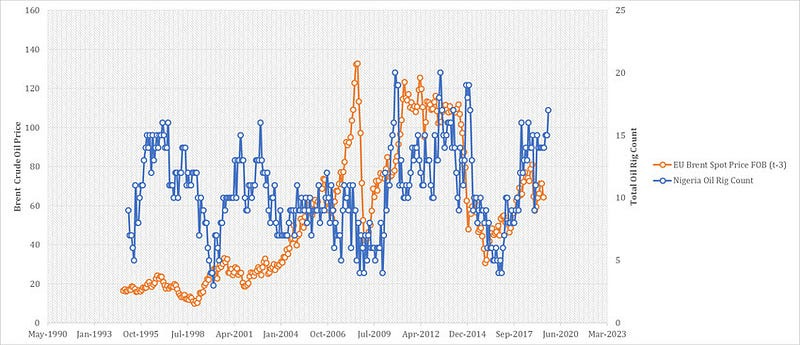
Nigeria’s recovery from historic lows in oil production numbers is a positive development. While well behind the country’s OPEC quota of 1.8 million barrels per day (bpd), it is still a significant improvement from the under one million bpd it fell to as recently as September 2022. More importantly, five new offshore rigs by Shell and First E&P in Bonga OML 118 and Madu OML85, scheduled to be active in the country in 2023, represent a much-needed fruition of the injection of new investments in the sector and ensures that Nigeria’s offshore industry will maintain the momentum of drilling activity it saw in 2022. Sustained investment in the sector is needed to restore production to the OPEC quota levels fully. The execution of these new contracts is thanks to a restored sense of calm in the Niger Delta due mainly to a negotiated deal with militants. Shell has announced more than a dozen contracts for 2023. These new projects have increased Nigeria’s rig count from seven in 2020 to 13 as of January. Many oil industry watchers believe that a combination of factors, from growing global demand to supply uncertainty and the need for low-carbon oil operations, means that 2023 could be a big year for Africa’s oil industry. European governments, in particular, are seeking alternative oil suppliers to Russia, while China’s reopening post-pandemic means that demand from such producers as Nigeria is likely to keep growing. The question is whether Nigeria can quickly ramp up production volumes to meet its OPEC quota. The NNPC chairman says his company intends to surpass this quota, hitting 2.2 million bpd this 2023. Without solving the security challenges that continue to hinder the sector and bringing the main actors involved in the massive oil theft of the past few years to book, it will be difficult to achieve. If production remains high and the incoming government has the gumption to proceed with the burial of fuel subsidies, government collections will rise. In the most optimistic of scenarios, many of those benefits get channelled down to the average Bisi and Ahmed. We will be the first to admit that many ifs are riding on that outcome.