
Royal rivals
Tensions rise in Kano as rival emirs plan Sallah durbar processions amid ongoing emirship dispute.

Tensions rose in Kano as rival emirs, Aminu Ado Bayero and Lamido Sanusi, planned Sallah durbar processions amid an ongoing emirship dispute. Bayero, removed in May and legally challenging his dismissal, operates from a mini palace, while Sanusi occupies the main emir’s palace. Governor Abba Yusuf has instructed emirate councils to prepare for the event and ensure security measures. Bayero also notified security agencies of his durbar, marking his fifth anniversary. The four-day Sallah Durbar, a major cultural event, attracts thousands, raising concerns over possible clashes between their supporters. Security agencies are on high alert to prevent unrest.
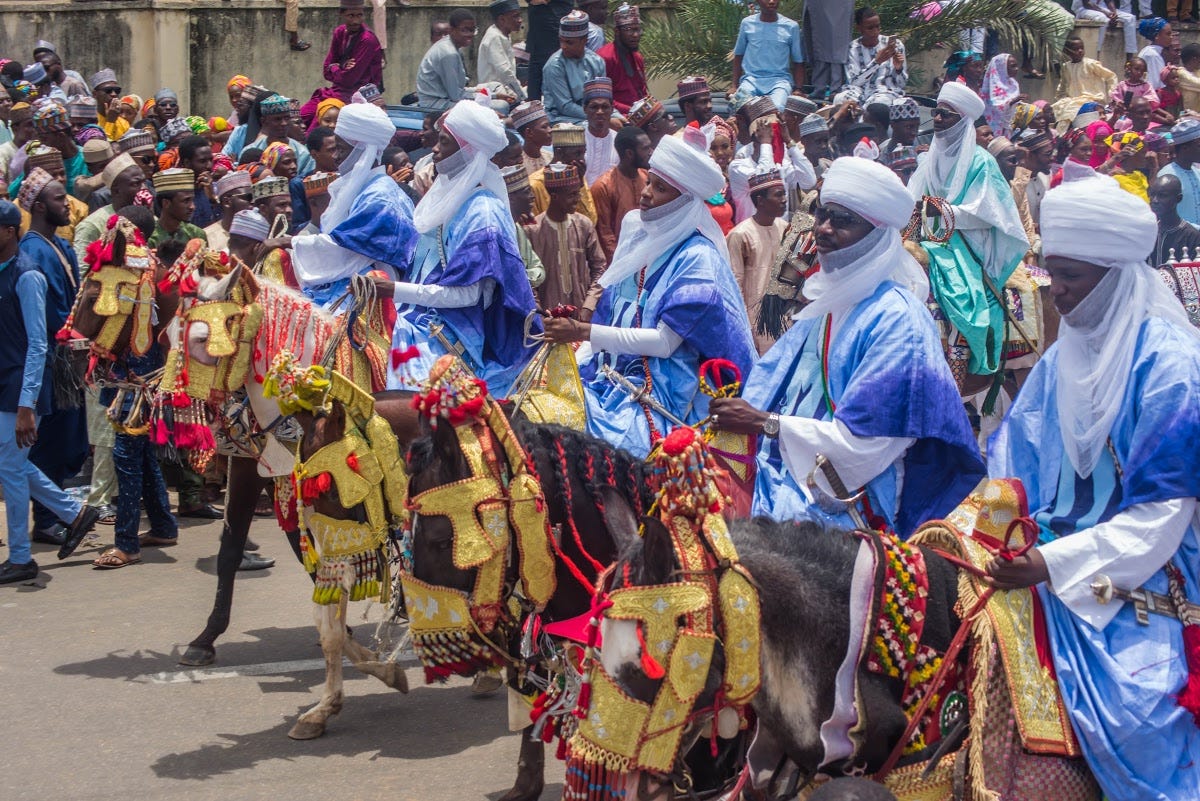
The emirship tussle dates back at least six years to 2019, when then-state governor (and now national chairman of the All Progressives Congress) Abdullahi Ganduje removed Lamido Sanusi II as the Emir of Kano, despite him having been there for just five years. Mr Sanusi, a former governor of the Central Bank of Nigeria, was exiled to a smaller palace in Nasarawa State in Nigeria’s Northcentral.
The politics behind the Kano emirate leadership is a proxy contest between two men—Mr Ganduje and his former boss, Rabiu Kwankwaso, the national leader of the New Nigeria Peoples Party. These men back both emirs. It is also a political intrigue that has exposed the simmering complexities of Nigeria’s judiciary.
The current iteration began with the repeal of the Kano Emirate Council Law of 2019 by the Kano State House of Assembly in May 2024 under Governor Abba Kabir Yusuf, a protege of Mr Kwankwaso. This repeal dissolved the five emirates (Kano, Bichi, Gaya, Rano, and Karaye) created by Ganduje, reinstating Sanusi as Kano's sole Emir and dethroned Bayero and the other emirs. The Court of Appeal in Abuja overturned a Federal High Court ruling from 20 June 2024, which had nullified the Kano State Government’s actions under the 2024 repeal law. The appellate court upheld the validity of the repeal and Sanusi’s reinstatement, stating that the Federal High Court lacked jurisdiction over chieftaincy matters, which fall under the Kano State High Court’s purview.
This was seen as a victory for Sanusi and the state government. Following the January ruling, Aminu Babba Dan Agundi, a kingmaker supporting Mr Bayero, appealed to the Supreme Court and sought a stay of execution from the Court of Appeal. On 14 March 2025, the Court of Appeal granted this stay, halting the enforcement of its 10 January judgment pending the Supreme Court’s decision. This ruling effectively maintains the status quo ante bellum (the situation before the repeal), creating ambiguity about the current emirship status. The Kano State Government argues that this stay does not overturn the January ruling but merely preserves the situation until the Supreme Court rules.
This matters because both claimants to the throne have an army of supporters capable of carrying out violence against supporters of the other side. Kano's status as Nigeria’s second most populous state and the economic capital of Northern Nigeria throws up more intrigue, as it is a political battleground in the run-up to who wins Aso Rock or becomes kingmaker. Kwankwaso came fourth in the 2023 presidential election and was in pole position to determine who occupies Aso Rock but chose to grandstand.
The political and economic base enables state politicians to have federal leverage, and the emirs are the most direct threat or fodder to such aspiration. Therefore, it is a matter of concern that rival durbars were planned (Bayero cancelled his for security reasons while this editorial was being written). The planning was a distraction that a beleaguered security force could hardly afford.
Nigeria's traditional institutions, as currently constituted, are a vestige that refuses to acknowledge their actual reality—they are simply employees, civil servants on the state's payroll. As the years go further from the colonial takeover and these types of debacles proliferate, this reality will continue to undermine them until they enter actual obsolescence.