
Runway mystery
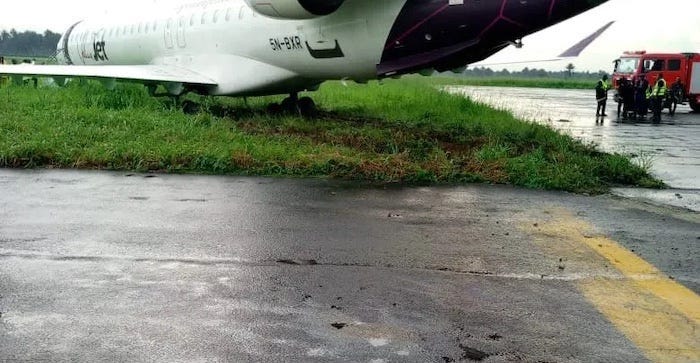
At least 62 passengers escaped death as a ValueJet aircraft skidded off the runway at the Port Harcourt International Airport. The airline…

At least 62 passengers escaped death as a ValueJet aircraft skidded off the runway at the Port Harcourt International Airport. The airline said it was due to algae. Tuesday’s incident is the latest in air accidents in the past months. Last Sunday, a Boeing 737 Jet with registration number 5N-BYQ owned by Aero Contractors Airlines crash-landed at Nnamdi Azikiwe International Airport, which the Nigerian Safety Investigation Bureau (NSIB) classified as “a serious accident.” Another incident occurred last week when a private HS25B aircraft operated by Flint Aero narrowly avoided tragedy as it crash-landed on the runway at Ibadan.
Nigeria’s air travel safety record has been a mixed bag over the past two decades, marked by periods of both notable improvements and unfortunate setbacks. However, the overall trend has been positive, with a significant reduction in accidents during the 2010s. Nevertheless, recent months have raised worries about a potential resurgence of safety issues that should be strongly addressed, considering that most aircraft-related accidents are caused by human mistakes. The spate of near-fatal air mishaps in the country is indicative of one thing: the aviation sector is not just on a ticking time bomb, it is also one step away from a major disaster. Although it is quite plausible that algae could be responsible for the Port Harcourt incident, it is quite hasty that ValueJet put out a statement essentially killing concerns before the Nigerian Safety Investigation Bureau could do so. Given the very Nigerian way of doing things, that statement is effectively an end to a matter that the NISB has to investigate. In July, the Nigerian Civil Aviation Authority suspended domestic flight of Max Air’s Boeing 737 fleet following safety concerns raised in journalist David Hundeyin’s report about sharp practices (the use of adulterated fuel, in Max Air’s case) by airline operators in disregard of safety procedures. That suspension was lifted merely two weeks later, without clear evidence of how the airline has satisfactorily complied with safety measures. It is concerning that several aircraft in Nigeria’s airline fleet have been in operation for over 30 years, significantly increasing the risk of mechanical failures and accidents. Also, the quality of maintenance practices in Nigeria’s aviation industry has raised concerns, as inadequate upkeep can lead to severe safety hazards. Additionally, reports indicate a shortage of qualified pilots in Nigeria, raising questions about the standard of pilot training in the country, and the Nigerian Civil Aviation Authority (NCAA) has faced criticism for its oversight of the aviation industry. The recent spate of aviation accidents since late July has cast a harsh light on the state of aviation safety in Nigeria. It suggests that the country’s aviation authorities, particularly Aviation Minister Festus Keyamo, have failed to take decisive action against violators of safety regulations. This lack of enforcement could plunge Nigeria back into the dark days of frequent plane crashes. Over the years, recommendations for improvement have been made, and the government and regulatory bodies need to address this negligence with aplomb, to avoid worse and more devastating incidents.