
Same old circus
Nigeria’s opposition agreed to a single candidate for 2027, but Obi and Kwankwaso defected, while GEJ mulls a run.

Nigeria's opposition is undergoing dramatic realignments ahead of the 2027 elections. At an April summit in Ibadan, parties including the People's Democratic Party (PDP) and the African Democratic Congress (ADC) adopted the Ibadan Declaration, agreeing to field a single presidential candidate to challenge President Bola Tinubu and the ruling All Progressives Congress (APC). Key figures, including Atiku Abubakar and Peter Obi, backed the coalition while expressing concerns about the Independent National Electoral Commission's (INEC) neutrality. However, unity proved elusive. In a swift reversal, Peter Obi and Rabiu Kwankwaso quit the ADC, citing "endless court cases, internal battles, suspicion, and division". They have now joined the Nigerian Democratic Congress (NDC), intensifying uncertainty across opposition ranks. Adding further complexity, former President Goodluck Jonathan is facing mounting pressure to join the 2027 race. While meeting with the Coalition for Jonathan 2027, he said he was "consulting widely" on the matter, leaving his political future tantalisingly open.
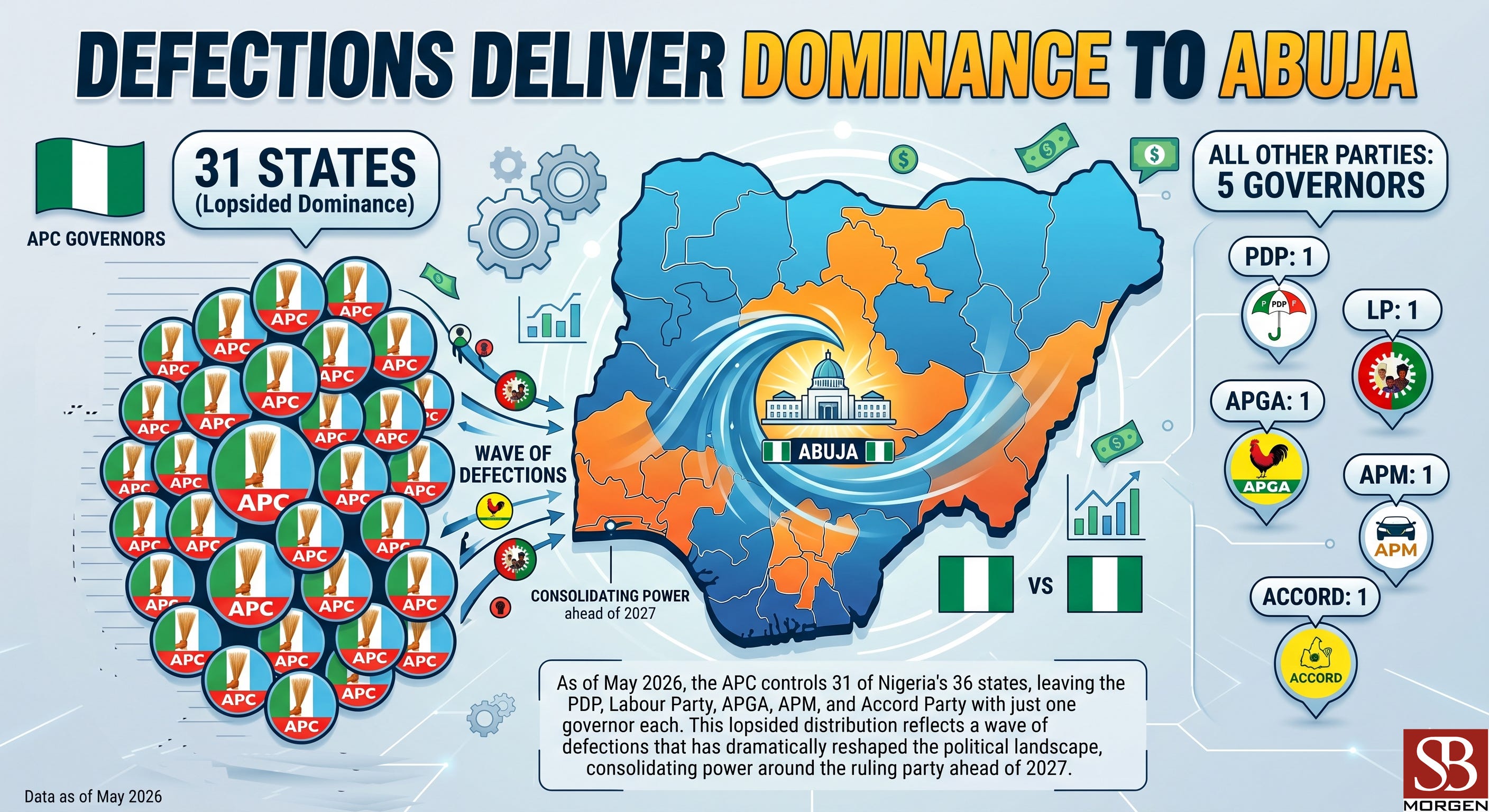
Nigeria’s opposition entered 2026 with more momentum than it had managed in years. In July 2025, a coalition of heavyweights, including former Vice President Atiku Abubakar, former Kaduna governor Nasir El-Rufai, and ex-Transport Minister Rotimi Amaechi, adopted the African Democratic Congress as a unified platform to challenge President Bola Tinubu in the 2027 election. Peter Obi subsequently joined, and the coalition eventually staged a public show of force: leaders including Atiku, Obi, Amaechi, and Kwankwaso marched on INEC headquarters together last month to submit a formal petition demanding the resignation of INEC chairman Joash Amupitan, accusing him of misconduct and abuse of office after the commission had temporarily de-recognised the David Mark-led ADC leadership in a move opposition figures described as deliberate interference. The ADC argued that the real question was not whether Nigeria remained a multi-party state in theory, but whether INEC’s actions in practice were systematically undermining opposition parties’ ability to organise and function. This was a charge that resonated beyond the ADC, with observers noting that similar crises had plagued the PDP, Labour Party, and NNPP, where judicial interventions have often been contradictory and procedurally questionable, triggering prolonged leadership disputes and institutional uncertainty.
The legal saga at the heart of the ADC’s troubles exposed just how fragile the coalition’s foundations were. INEC announced it would not recognise any faction within the ADC until the courts delivered a final verdict, effectively leaving the party without a recognised leadership structure at a critical time and sparking protests among party members. One faction warned that INEC would prevent the ADC from fielding candidates unless courts resolved the leadership dispute by 10 May, the deadline for submission of membership registers. The dispute was eventually, temporarily, resolved when the Supreme Court affirmed David Mark’s leadership of the ADC on 30 April, after which INEC reversed course and restored the party’s recognition, but by then the damage to internal cohesion had already been done.
Throughout the crisis, APC figures publicly called on INEC to deregister the ADC entirely, further feeding opposition suspicion that the judicial and regulatory machinery was being deployed strategically to weaken challengers ahead of the vote.
The coalition’s survival was ultimately undone not by external pressure alone, but by the unresolved internal question that had always threatened it: who would get the presidential ticket. Obi and Kwankwaso supporters believed that a ticket with their principals could defeat President Tinubu within the ADC. They were all very convinced that the whole thing working was down to Atiku giving up his ambition. But Atiku Abubakar’s presence, influence, and ambition meant that, from the perspective of Obi’s team, the party machinery was being aligned in his favour, so their exit from the ADC was no surprise. Obi and Kwankwaso formally joined the National Democratic Congress, with the ADC itself acknowledging that their departure was a setback for the coalition’s structure. The Ibadan Declaration, signed by 14 opposition parties on 25 April to field a single candidate, is now, in our view, on life support.
The arithmetic of what this means for 2027 is bleak for opposition prospects. In 2023, Tinubu won with approximately 8.8 million votes, while Atiku received roughly seven million and Obi around six million, a combined opposition total that more than doubled the winner’s figure. A united opposition had the numbers; a divided one hands the ruling party a walkover. With Atiku now expected to fly the ADC banner and Obi anchoring the NDC, those same dynamics are set to repeat. Essentially, the opposition itself can kiss 2027 goodbye, Ibadan Declaration or not. Meanwhile, former President Goodluck Jonathan faces mounting pressure from northern elements desperate to oust Tinubu. We think he is unlikely to run, but if he does, his entry would only further fragment the opposition, effectively guaranteeing Tinubu’s re-election. The question Nigerian opposition supporters should be asking is whether their leaders have learned anything from 2023. The evidence so far suggests not.