
Same old song
On 25 July, the Central Bank of Nigeria (CBN) raised its benchmark interest rate, the Monetary Policy Rate (MPR), by 25 basis points to…

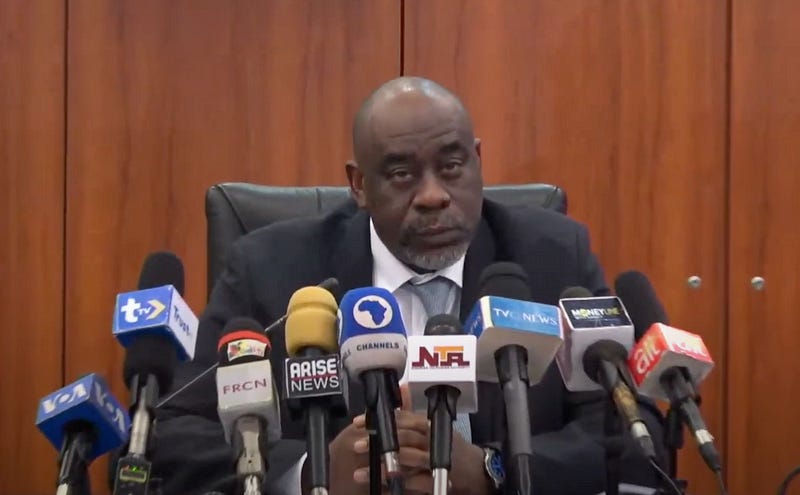
On 25 July, the Central Bank of Nigeria (CBN) raised its benchmark interest rate, the Monetary Policy Rate (MPR), by 25 basis points to 18.75 percent. The decision came after the two-day Monetary Policy Committee (MPC) meeting in Abuja, with acting governor Folashodun Shonubi announcing a moderate rate hike. The move aims to support investments, anchor inflation expectations, narrow the negative interest rate gap and boost investor confidence. The Cash Reserve Ratio (CRR) and liquidity ratio were unchanged at 32.5 percent and 30 percent, respectively, while the asymmetric corridor was narrowed from +100/-700 to +100/-300 basis points.
Nigeria has been a pressure cooker for businesses since maybe the eighties, but the heat has been turned up higher too frequently for adjustment since 2017. Before that year, the country was dealing with a slump in oil prices, which worsened into a recession. Then came the pandemic, followed by an unnecessary cash crunch. This year alone, Nigerians have had to adjust to the removal of fuel subsidies, the managed float or devaluation of the Naira, a tripling of fees for entering into government-owned secondary and tertiary institutions, which would reduce disposable income for families, and more tax hikes. The executive’s reaction to drastically hardening people’s lives has been to cannibalise the 2022 supplementary budget, which was approved to provide reparation for flood victims and repair infrastructure damaged by the water surges. In the appropriation bill, former President Buhari submitted to the Ninth Assembly, which was passed in December 2022, ₦69 billion was allocated to the Ministry of Agriculture and Rural Development, ₦704 billion to the Ministry of Works and Housing, ₦30 billion to the Federal Capital Development Authority, and ₦15.5 billion to the Ministry of Water Resources. Citing a Premium Times publication, Tinubu sent an amendment to the Tenth Assembly, which the House of Representatives has now approved; it reads: “₦19,200,000,000 to the Federal Ministry of Agriculture to soften the impact of the massive destruction to farmlands across the country during the severe flooding experienced last year; ₦35 billion to the National Judicial Council; ₦10 billion to the Federal Capital Territory Administration for critical projects; and ₦70 billion to the National Assembly to support the working conditions of new members.” Now, the bulk of the money, ₦500 billion, is now to be deployed as palliatives for vulnerable Nigerian households. This amendment is coming seven months into the execution of the act. This raises questions on whether tenders have been made for projects under the supplementary act, whether contractors have been selected, and whether these companies have been mobilised. Moreover, under this cloud of uncertainty where the government can wake up and change its mind impulsively, the CBN has, for the eighth time, increased the cost of funding for Nigerian businesses. While admitting that fiscal policies are necessary to halt inflationary headwinds, the CBN, in its May communique announcing the interest rate increase to 18.50%, said that its rate surges since 2022 had reduced the likely inflation rate by 800 basis points. Without its intervention, the inflation rate in April, 22.22%, would have been 30.48% instead, according to its in-house statisticians. This time, the decision to increase the interest rate was largely hinged on the potential disbursement of ₦8,000 to vulnerable households. “The members also expressed concerns that the recent policy decisions around subsidy removal, exchange rate liberalisation and disbursement of palliatives would have pass-through effects to inflation,” the Central Bank said while weighing its options. It noted the dampening effect of its decision on output growth but went ahead to make the increase anyways. As of June 2023, the average maximum lending rate for businesses, entities considered to have low credit ratings, was 28.94%. It has hovered in the 28% bracket since February, a merciful drop from 29.13% in December. The CBN will need to readjust its lens on inflation if it is ever to come down. The cost of funding for Nigerian businesses at home and abroad is prohibitive. The USA, where most of Nigeria’s tech funding comes from, also resumed rate hikes. It increased its interest rate by 25 basis points, just like Nigeria, to a floor of 5.25%. Already facing pressures from oil price volatilities, gas fluctuations, and increased cost of funds, Nigerian businesses will keep passing the buck to Nigerian consumers. Nigerian companies would be far from competitive if there were an active African continental trade market in this clime. The CBN’s decision to continue seeing inflationary pressures from the prism of demand-pull could keep the country’s economy in an inflation spiral. This is a “let’s keep doing the same thing and hope for a different outcome” approach. Interest rates are not the big driver of inflation. Hence their impact is minimal. Considering the second stated objective of attracting investments, inflation is still higher than this high-interest rate, so it does not address this problem. The CBN and Ministry of Finance would need to either stop increasing the cost of borrowing or find a way to use tax breaks and subsidies to bring down prices. Argentina’s inflation rate touched 100% this year, and so can Nigeria’s if interest rate hike remains the only go-to mechanism.