
Sealing the gold’en leaks
Ghana's Parliament receives L.I. 2462 to curb galamsey, stripping President's power to grant forest reserve mining licenses.

Ghana’s Parliament has received Legislative Instrument (L.I.) 2462, set to strip the President of the power to grant mining licenses in forest reserves. The L.I., effective after 21 sitting days, aims to curb illegal small-scale mining (galamsey). Meanwhile, Finance Minister Dr Cassiel Ato Forson met UK-Ghana Gold Programme officials to combat gold smuggling, which saw 60 tonnes worth $1.2 billion smuggled in 2022. Plans include establishing the Ghana Gold Board to oversee trade and purchasing 3 tonnes of gold weekly. The 2025 Budget will also abolish the 1.5% withholding tax on unprocessed gold to encourage formal trading.
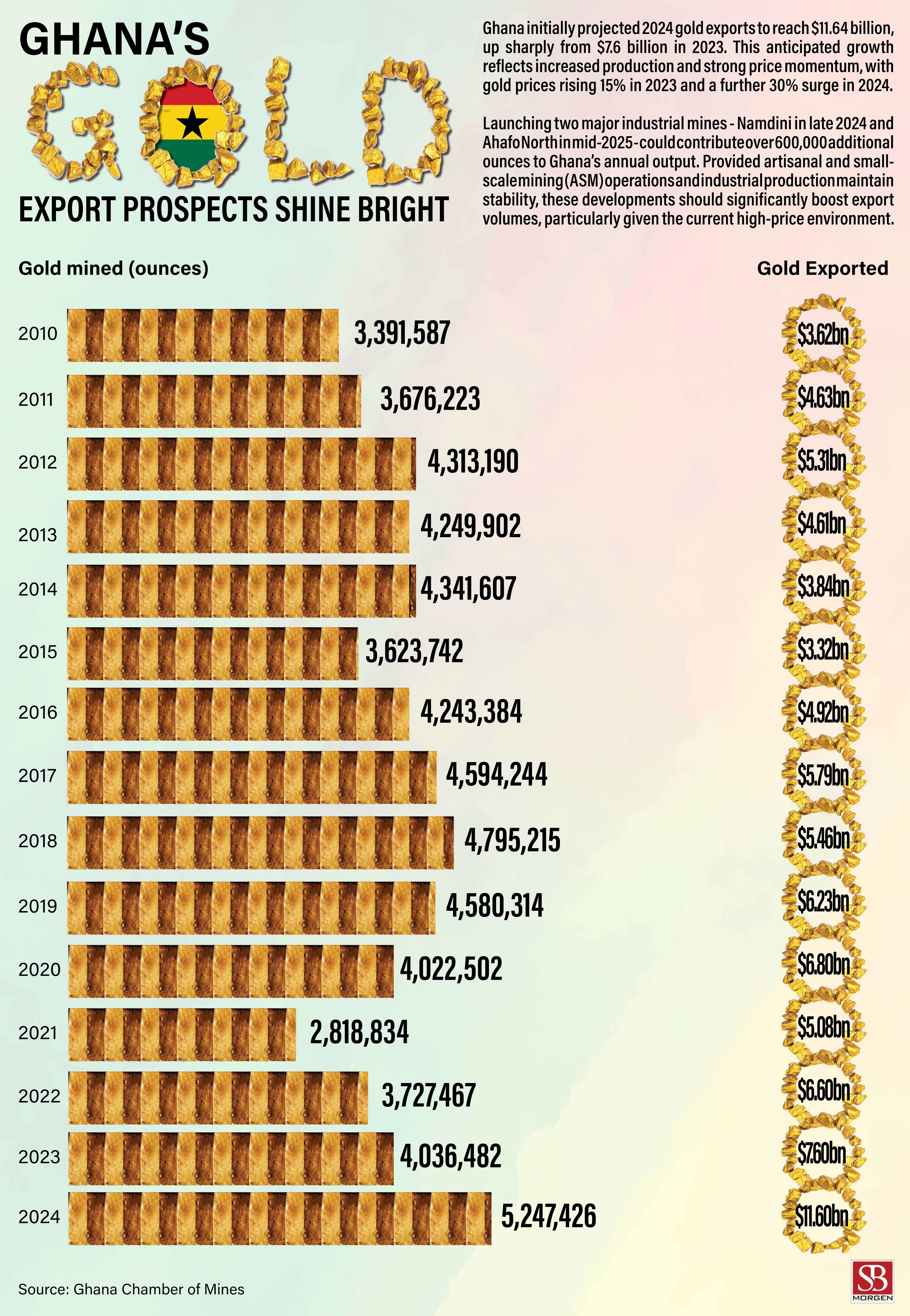
Ghana's position as Africa's largest gold producer (with output reaching 4.2 million ounces in 2023 and projected to hit 5.2 million in 2024) starkly contrasts its paltry domestic benefits. The country's gold exports have surged from $3.6 billion in 2010 to a projected $11.6 billion in 2024 – a 221% increase – yet this wealth remains alarmingly concentrated in foreign hands. While industrial mines like the soon-to-open Namdini and Ahafo North projects (expected to add 600,000 ounces annually) boost production figures, Ghana retains shockingly little: less than 10% of export value reaches national coffers, with mineral royalties stubbornly below $500 million annually.
This haemorrhage of wealth occurs alongside environmental carnage. Illegal mining operations, enabled by a disastrous 2016 policy permitting mining in forest reserves, have devastated 60% of Ghana's forest cover since 2000. The political calculus behind this ecological sabotage becomes apparent when examining enforcement failures – multiple government reports implicate politicians and elites in illegal mining syndicates, creating a culture of impunity where 35% of gold production (worth ~$3.5 billion annually) operates outside regulated channels.
The proposed Gold Board initiative, modelled after Ghana's successful Cocoa Board, could disrupt this status quo. By centralising gold purchases and exports, it aims to recapture value from the $7.6-11.6 billion export pipeline while curbing smuggling. Yet the solution requires more than new institutions – it demands dismantling the political-mining complex that allowed Ghana's golden goose to be plundered while leaving its people with poisoned water and denuded landscapes.