
Shifting gears
Guinea has released its draft constitution, which is expected to pave the way for elections and a return to constitutional rule. Published…

Guinea has released its draft constitution, which is expected to pave the way for elections and a return to constitutional rule. Published online by the National Transition Council, it will be voted on before the year’s end. It proposes a bicameral system with a National Assembly and Senate and retains banning the death penalty and female genital mutilation. It mandates that anyone arrested be informed of the reasons. The draft enforces a two-term, five-year limit for the presidency. Still, there’s ambiguity regarding General Mamady Doumbouya’s eligibility to run in future elections, as the transition charter prohibits it, but the draft constitution does not.
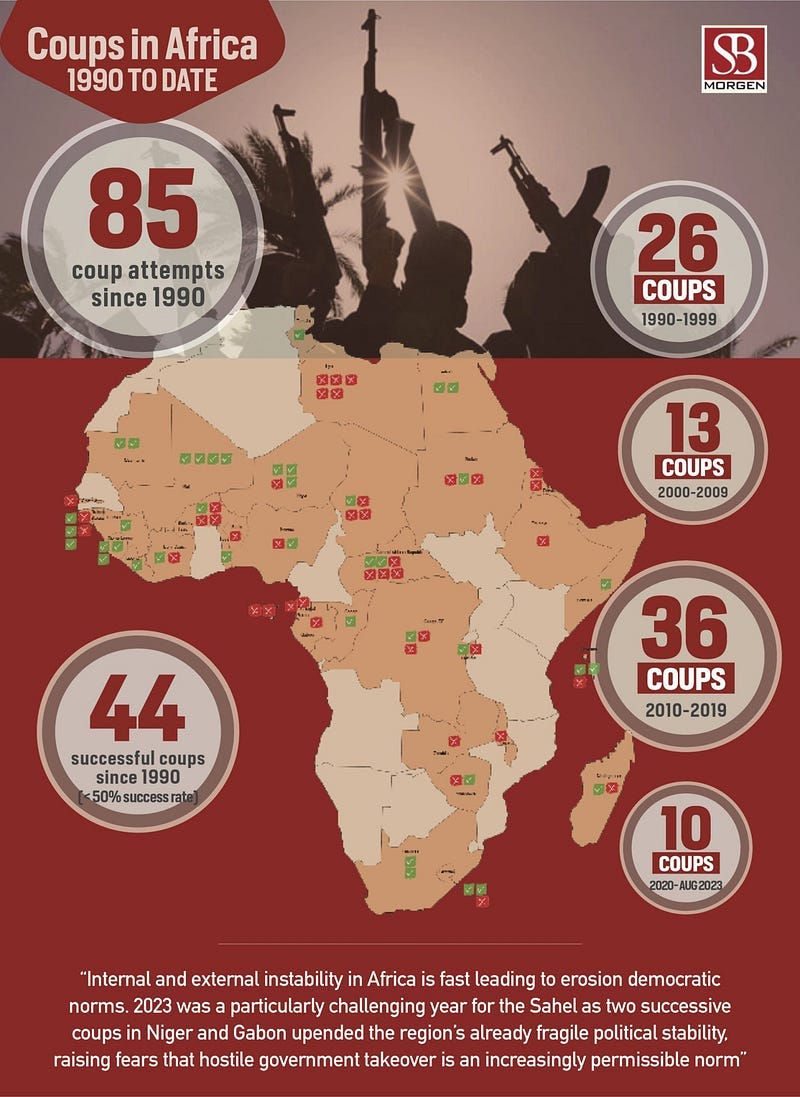
The ambiguity surrounding General Mamady Doumbouya’s future political role poses a substantial risk to Guinea’s democratic development. If Doumbouya or any military leader were to run and win, it could undermine the transition to civilian rule and erode public trust in democratic processes, leading to a continuation of military influence in politics. This situation could follow an undemocratic path where military leaders, after staging coups, maintain power through legal frameworks they help design. This scenario occurred in Ghana in 1992 when the coup leader, Jerry John Rawlings, became the first President of Ghana’s Fourth Republic. Such a scenario might discourage genuine democratic participation and the development of strong, independent institutions that are essential for sustaining democracy in the long term. Guinea’s decision to transition back to democratic governance holds significant geopolitical implications for the broader West African region, where several countries are currently under military rule or have experienced coups. Countries like Burkina Faso, Mali and Niger, which have also seen recent military takeovers, are closely watching Guinea’s transition. If Guinea successfully transitions to democracy and holds credible elections, it could set a positive example and pressure other military regimes in the region to follow suit. This could catalyse a wave of democratisation across West Africa, especially if international bodies, such as the Economic Community of West African States (ECOWAS) and the African Union, bolster these efforts with diplomatic support and sanctions on non-complying states. However, if Doumbouya is permitted to run, it could encourage military leaders in other countries to entrench themselves in power under the guise of democratic transitions. This would weaken regional stability and undermine efforts to promote constitutional rule across West Africa. It could also lead to a scenario where military governments across the region use similar tactics to maintain power, thus creating a cycle of coups and pseudo-democratic governance.