
Shifting sands in the Sahel?
A UN report links Boeing 727s to RSF weapons and Colombian mercenaries; HRW accuses Russia's Africa Corps of killing eight Mali civilians.

A UN report has concluded that Boeing 727 aircraft linked to networks supporting Sudan’s Rapid Support Forces (RSF) were used to transport fighters, weapons and foreign mercenaries, while also citing evidence that Colombian mercenaries fought alongside the RSF. In Mali, Human Rights Watch accused Russia’s Africa Corps of killing eight civilians, including three children, in an air strike, prompting calls for an independent investigation. Separately, former Prime Minister Moussa Mara was released after serving a one-year prison sentence over a social media post critical of the country’s military rulers.
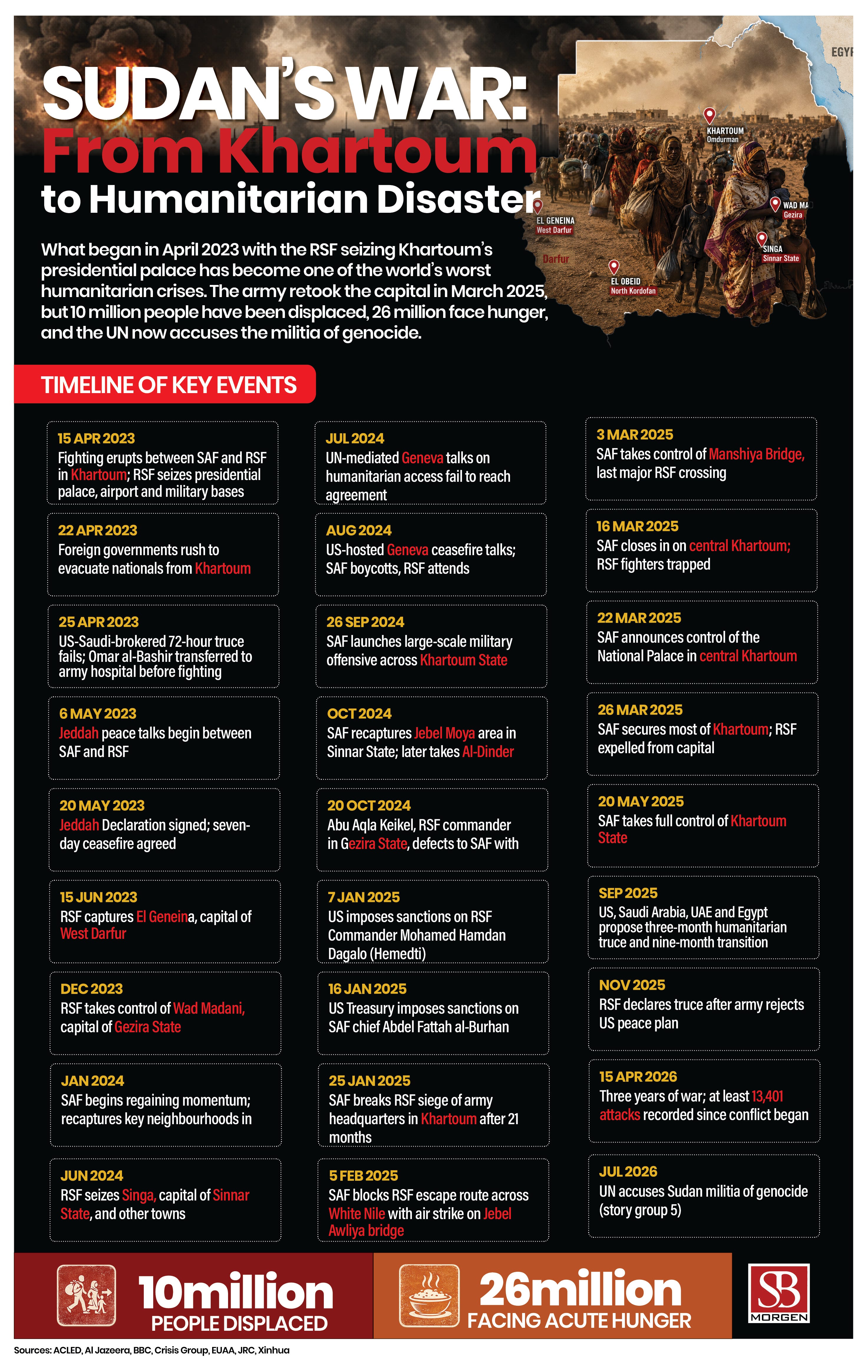
The common thread across all three developments is the steady erosion of accountability in African conflicts. Foreign military actors are increasingly shaping the battlefield with little meaningful oversight, while domestic voices capable of questioning those operations face legal or political repression. The result is a security environment where violence becomes easier to outsource and progressively harder to scrutinise.
Sudan’s war ceased to be solely a Sudanese conflict long ago. The UN Panel of Experts’ draft report, expected in September, concludes that Boeing 727 aircraft linked to commercial networks supporting the Rapid Support Forces transported fighters, drones, weapons and foreign mercenaries into Darfur from late 2024, largely through Chad before landing at Nyala under the cover of darkness with their transponders switched off. The report also estimates that between 1,500 and 2,000 Colombian mercenaries were recruited through the UAE-registered Global Security Services Group and operated under the name Desert Wolves from March 2025. Their reported involvement extended beyond combat to drone operations and operational planning around al-Fashir, a campaign that the United Nations has separately determined involved acts of genocide. Chad’s decision to place information relating to the aircraft under defence secrecy only deepens questions about state complicity and demonstrates how modern proxy warfare increasingly relies on commercial aviation, private military contractors and deniable logistics rather than conventional interstate intervention.
Mali illustrates the same phenomenon in a more overt form. Human Rights Watch attributes the 15 June airstrike on Kyrnia, which killed eight civilians including three children, to Russia’s Africa Corps operating alongside the Malian Armed Forces. Approximately one hundred JNIM fighters were reportedly present in the wider area, yet none were struck, reinforcing longstanding concerns over intelligence quality and targeting procedures. This is not an isolated incident. Malian human rights organisations documented at least 278 civilian deaths during joint Africa Corps and FAMa operations in northern Mali between June and December 2025, while intensified air operations this year have further increased the risks to civilian populations living in areas where insurgents deliberately embed themselves. Every civilian casualty strengthens JNIM’s narrative that the state and its foreign partners are unable or unwilling to distinguish militants from the communities they claim to protect, providing the group with one of its most effective recruitment tools.
The release of former Prime Minister Moussa Mara should therefore not be mistaken for evidence of political liberalisation. Mara completed the custodial portion of a two-year sentence imposed over a July 2025 social media post expressing solidarity with political detainees after his appeal failed earlier this year. The remaining suspended sentence continues to constrain his public activity, while his first remarks after release focused on the disappearance of his own lawyer. His case fits a broader regional pattern in which military governments in Bamako, Ouagadougou and Niamey have dissolved political parties, detained journalists and narrowed civic space in the name of national security. The objective is less to silence one individual than to deter future criticism by ensuring that legal consequences continue long after imprisonment ends.
Taken together, these developments expose a widening accountability deficit across parts of the Sahel and Sudan. Foreign military contractors, proxy forces and external partners now influence conflicts that increasingly transcend national borders, yet independent oversight remains weak, and responsibility for civilian harm is routinely obscured. At the same time, domestic institutions capable of demanding transparency, from opposition politicians and journalists to civil society organisations, face growing restrictions. The consequence is a dangerous imbalance: the more internationalised these wars become, the fewer mechanisms exist to scrutinise either those fighting them or those authorising their conduct.