
Slammed
Nigeria upheld a hefty fine on WhatsApp and Meta for data discrimination, confirming the regulator's power and consumer rights.

Nigeria’s Competition and Consumer Protection Tribunal has upheld a $220 million penalty against WhatsApp and Meta Platforms for data discrimination practices, along with an additional $35,000 to cover investigation costs for the Federal Competition and Consumer Protection Commission (FCCPC). The ruling affirmed the FCCPC’s authority and procedures, rejecting Meta’s appeal and validating the commission’s findings that the companies’ privacy policies violated Nigerian law. The case followed a 38-month investigation into WhatsApp and Meta’s practices. The FCCPC welcomed the judgment, reaffirming its commitment to protecting consumer rights and ensuring fair business practices in Nigeria.
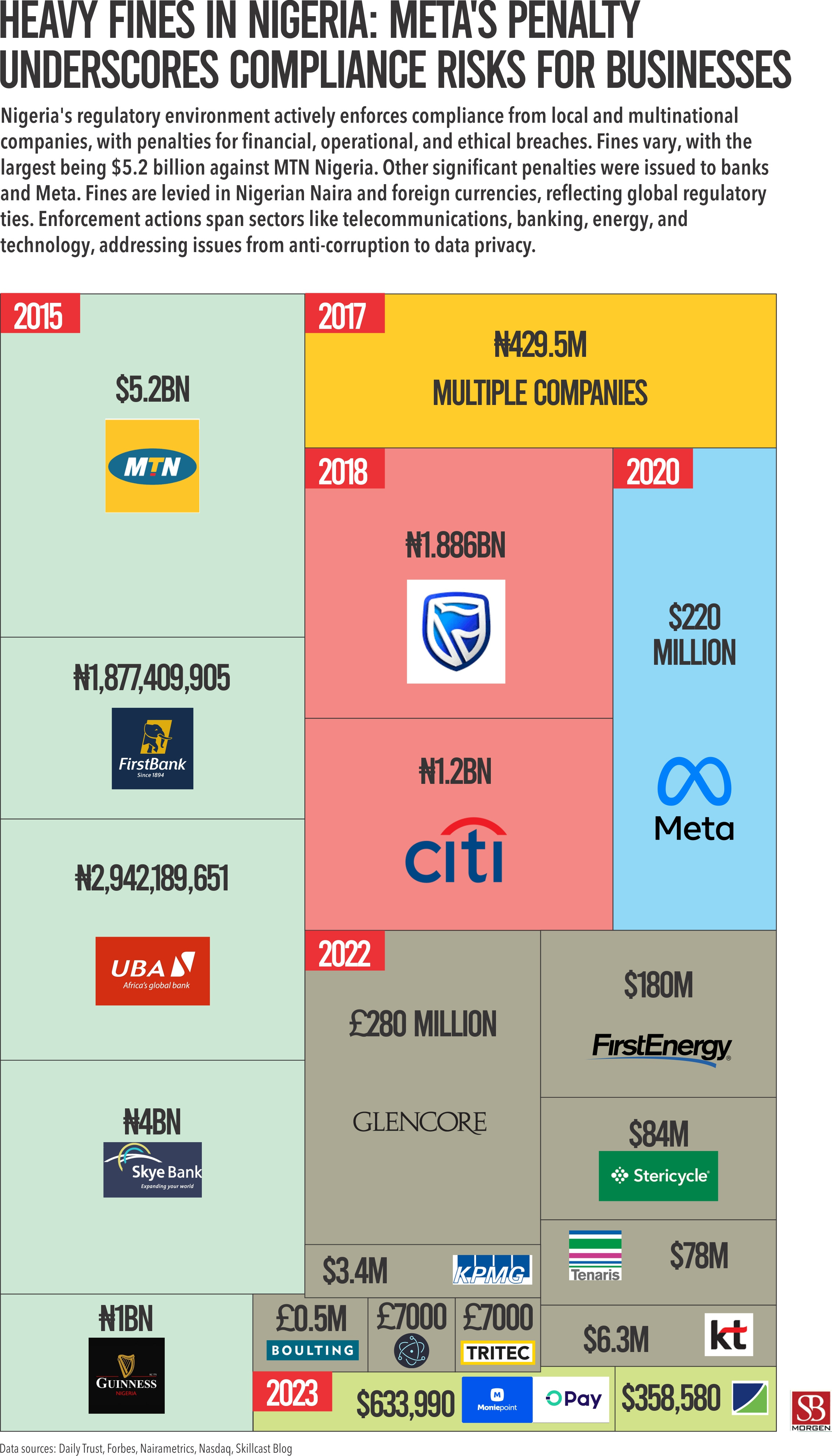
US tech giants have found themselves increasingly in the regulatory crosshairs globally. The recent hefty fines levied by the European Commission on Apple and Meta – €500 million and €200 million respectively – underscore a concerted effort to enforce the EU’s digital competition rules more rigorously. Yet, when considering the scale, Nigeria’s recent $220 million penalty against Meta stands out as particularly significant for a decision originating from a single nation. This substantial figure hints at a potential negotiation space, a path Meta is arguably more inclined to explore than a complete market exit, given Nigeria's status as Africa's largest digital economy by data penetration.
The ruling by Nigeria’s Competition and Consumer Protection Tribunal (CCPT), which upheld this considerable fine against Meta Platforms and WhatsApp for data discrimination, represents a pivotal moment in the development of digital governance within Africa’s most populous nation. The additional $35,000 awarded to the Federal Competition and Consumer Protection Commission (FCCPC) for investigation costs further underscores the seriousness with which Nigeria is treating this matter. This decision is more than just a punishment; it signals Nigeria’s growing determination to assert its regulatory authority over the powerful global tech firms operating within its boundaries. The core issue at hand – the breach of Nigerian law by Meta and WhatsApp’s privacy policies – resonates with global concerns surrounding Big Tech’s data practices, especially in regions where regulatory frameworks are still evolving. The FCCPC’s extensive 38-month investigation highlights both the intricate legalities involved and the government’s commitment to ensuring that multinational corporations adhere to domestic regulations. Meta’s unsuccessful appeal further solidifies the tribunal’s faith in the FCCPC’s procedures and its interpretation of data rights under Nigerian law.
For Meta, this ruling carries significant reputational and financial implications, marking a crucial turning point in its engagement with emerging markets. It presents an opportunity, albeit a forced one, to reconsider its operational strategies in these regions. Looking ahead, Meta and its counterparts will likely need to adopt a more localised approach to privacy policies, user agreements, and data protections to ensure greater alignment with national legislation and local expectations.
However, the effectiveness of this landmark ruling hinges on Nigeria’s capacity to enforce it. While the CCPT has delivered a strong message, the practicalities of compelling a multinational giant like Meta to pay such a substantial fine remain a significant hurdle. Nigeria’s experience with the 2021 Twitter ban serves as a pertinent reminder. Despite the government’s firm stance, enforcing its demands on a powerful global tech company proved to be a protracted and complex affair. Should Meta choose to resist payment, Nigeria might find itself in a similarly challenging position, highlighting a potential gap between regulatory intent and enforcement capability.
The rising tide of public and regulatory unease towards tech companies globally underscores a crucial need for emerging markets to shape their digital governance frameworks proactively. The behaviour of tech giants, often perceived as prioritising global standards over local nuances, necessitates a more assertive stance from these nations. It's not merely about imposing fines; it's about building robust regulatory bodies with the teeth to ensure compliance. Emerging markets need to develop clear, context-specific digital regulations and the mechanisms to effectively enforce them, sending a clear message that the rules of digital engagement can no longer be unilaterally dictated from Silicon Valley, Brussels, or Beijing. Instead, these rules must increasingly be co-created and enforced in places like Abuja, Nairobi, Accra, and across the burgeoning tech landscapes of the African continent. This case with Meta, while significant, will ultimately be judged by Nigeria’s ability to translate this legal victory into tangible compliance and payment.