
Small business woes
62 percent of small businesses in Nigeria earn a median monthly revenue lower than ₦300,000 ($341), while 47 percent earn lower than…

62 percent of small businesses in Nigeria earn a median monthly revenue lower than ₦300,000 ($341), while 47 percent earn lower than ₦200,000. This is according to a report published by the Financial Access Initiative (FAI) Research Centre of New York University in partnership with the National Bureau of Statistics and the Lagos Business School. The report, which got its findings from 161 firms across three states, Enugu, Lagos and Kaduna, was conducted for 12 months between August 2021 and August 2022.
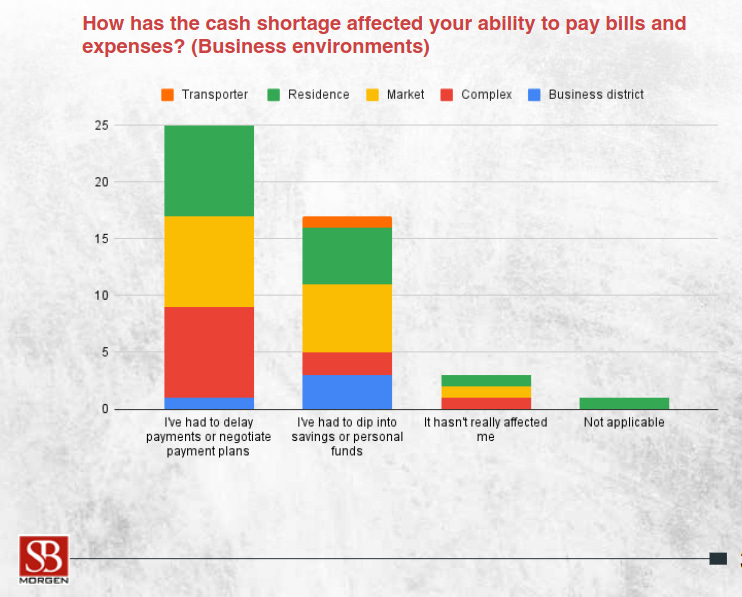
There are too many negatives to take from this report, but one stands out — Nigeria is an unpredictable environment to do business in. While unpredictability is a fact of life, many businesses try to build resilience by depending on a financial institution that can keep them going in tough times until they can bounce back. Unfortunately, if business owners try that with Nigeria’s financial institutions, they will be out of business. As we reported in our last newsletter, Nigeria’s banking industry’s maximum prime lending rate is pushing on 30%. In a climate where credit ratings are uncommon, and harassment is a loan recovery tool, few businesses have the network and collateral strength to rely on a market that charges usury in double digits. In the NYU-NBS-LBS consortium report, only 3% could ask for loans to deal with the country’s business volatility. 48% of the surveyed businesses depended more on savings. This is not different from what business owners and traders told SBM when we studied the effects of the left-field Naira redesign policy. If business proprietors were not putting their hands into personal funds or savings, they were renegotiating supply contracts that they may pay later — probably with penalties. When a business is always checking into hospital or strapped to a barely functional life support, its staff are the first to be dismissed, often without pay, before the few assets accrued in its lifetime are disposed off to pay creditors. It is unsurprising that more than 30% of businesses SBM surveyed said they had to lay off staff members in the six weeks of Naira scarcity. The challenges small businesses have to put up with are countless. For repeated emphasis, let’s just choose one — volatility in energy costs. Nigeria has stopped subsidising petrol, allowing market forces to determine the price. Businesses are now without cover from the burp in the Chinese economy or US market. Russia and Ukraine have been the game changers. In the diesel market, where demand and supply have ruled since 2009, a litre of the fuel was ₦288.09 as of the end of 2021. In June 2023, it was ₦815.83, a swing of more than ₦500 in 18 months. Prices appear to be coming down but not fast enough. Despite being Africa’s largest economy, Nigerians’ low purchasing capacity is worrisome.