
State of flux
Delta Governor Oborevwori's shock defection from PDP to APC, citing state development, adds to Niger Delta tensions alongside the Fubara-Wike power struggle in Rivers.

In a major political shift, Delta State Governor Sheriff Oborevwori has defected from the PDP to the APC, citing broad consultations and the state’s long-term development. Both events signal rising tensions and shifting alliances that could reshape political dynamics in the Niger Delta. Meanwhile, last week, a former Niger Delta militant leader Tompolo voiced confidence that suspended Rivers State Governor Siminalayi Fubara will soon return to office, amid an ongoing crisis with his predecessor, Nyesom Wike. However, Wike disputed this, insisting that Fubara has not sought forgiveness from those he offended, while emphasising actions such as legislative interference and court defiance. The standoff has led to political gridlock and instability in Rivers State.
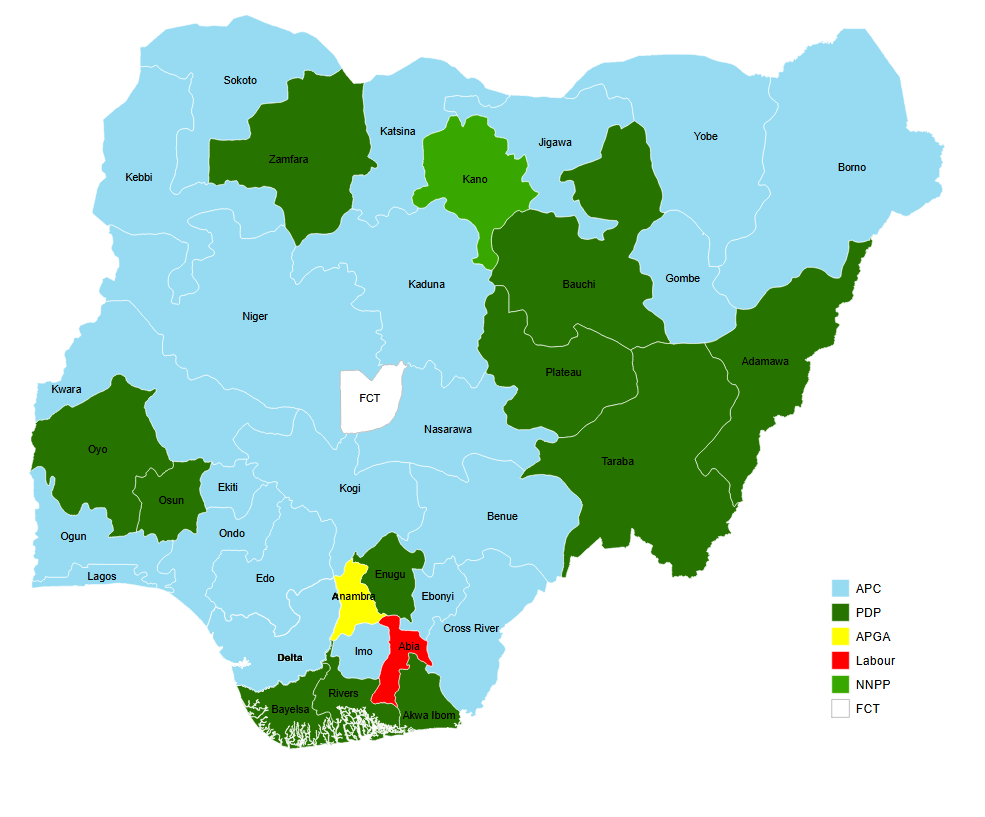
The defection of Delta State Governor Sheriff Oborevwori from the opposition PDP to the ruling APC marks a significant shift in Nigeria’s political dynamics, particularly in the oil-rich South-South region. Coming amid the ongoing crisis in neighbouring Rivers State, this move suggests a coordinated strategy by President Bola Tinubu’s administration to consolidate power in the Niger Delta. With the APC now controlling nearly all major oil-producing states except Bayelsa – and with Lagos already firmly in its grip – the ruling party appears poised to dominate the South-South ahead of the 2027 elections.
This regional realignment coincides with notable political gains for Mr Tinubu in the Southeast, where recent defections and strategic appointments have strengthened the APC’s foothold. However, this southern consolidation contrasts sharply with growing dissatisfaction in Northern Nigeria, where economic hardship and perceived marginalisation have eroded the President’s support base. These developments raise the prospect of Nigeria’s next general election becoming an increasingly polarised North-versus-South contest.
The Rivers State crisis is a part of this calculus and has emerged as a critical test case in this evolving political landscape. President Tinubu’s handling of the conflict between Governor Siminalayi Fubara and his predecessor, Nyesom Wike, reveals an interesting balancing act. After declaring a state of emergency that appeared to favour Mr Wike, Tinubu’s subsequent private meeting with Mr Fubara in London just last week – excluding Wike – suggests a strategic recalibration. Reports that Fubara may defect to the APC indicate Tinubu is keeping both factions in play, employing his trademark tactic of maintaining rival power centres to preserve his own dominance.
The crisis has now transcended Rivers State, taking on broader regional dimensions. The intervention of ex-militant leader Government Ekpemupolo (Tompolo), who has thrown his weight behind Fubara, highlights the ethnic undercurrents at play, pitting Ijaw against Ikwerre interests. Such involvement raises the spectre of wider unrest in Nigeria’s volatile oil heartland, even as political elites jockey for position.
These developments expose the fragility of Nigeria’s opposition politics. As the PDP loses influential governors from revenue-critical states, its capacity to mount credible national challenges diminishes significantly. The APC’s growing dominance in the South-South and Southeast, combined with its existing strongholds, could herald an era of one-party hegemony at the federal level.
Yet this centralisation of power comes at a cost. In Rivers State, governance has effectively been suspended, with administration conducted through federal appointees while political elites wage their battles. This pattern – where governors prioritise national political manoeuvring over local service delivery – has persisted since 1999, leaving citizens to bear the consequences of elite ambition.
As Tinubu prepares for further negotiations between the Rivers factions, Nigeria faces profound questions about its democratic trajectory. The 2027 elections may ultimately pivot on a North-South divide, but the more immediate concern is whether the country’s institutions can withstand the pressures of personalised politics and regional realignments. The Rivers crisis serves as both a microcosm of these challenges and a warning: without stronger mechanisms to prioritise governance over political expediency, Nigeria risks institutional hollowing on an unprecedented scale.
For ordinary Nigerians, the stakes extend far beyond elite power struggles. As political actors realign and regional blocs consolidate, the fundamental question remains whether the system can still deliver democratic accountability – or if it will succumb entirely to the centrifugal forces of ethnic calculation and personal ambition.
How can you say that the State of Emergency favored Wike? Wike was about to impeach Fubara, and then the state of emergency was declared.
You need to look beyond the noise made on social media for analysis of these issues.