
Sunshine at midnight
The Nigerian Army said it had rescued two additional Chibok girls nine years after their abduction by Boko Haram — the Theatre Commander…

The Nigerian Army said it had rescued two additional Chibok girls nine years after their abduction by Boko Haram — the Theatre Commander of Joint Operation Hadin Kai (OPHK), Maj.-Gen. Ibrahim Ali said Hauwa Maltha and Esther Marcus were rescued on 21 April by the 114 Task Force Battalion Bitta troops at Lagara. “Since their rescue, they have undergone thorough medical examination along with their babies and are adequately resuscitated and will be handed over to the Borno State Government for further administration,” Ali said. This brings the number of Chibok girls rescued recently to 14.
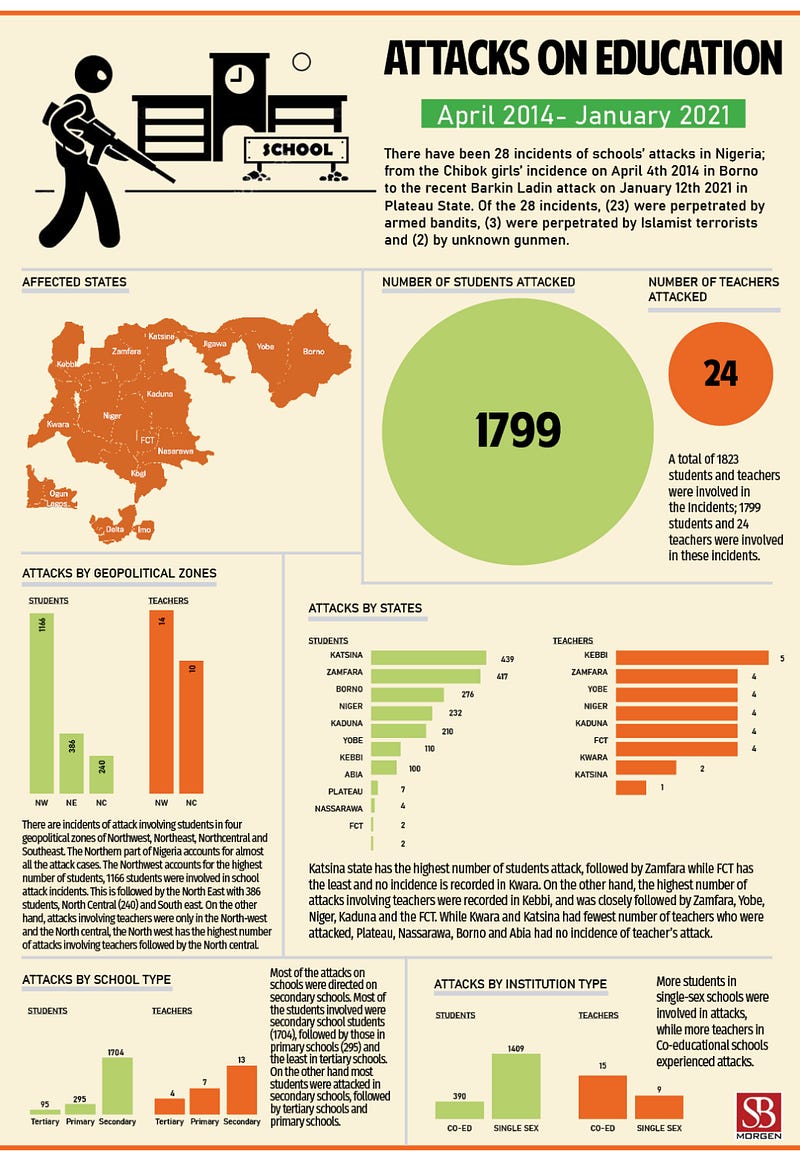
In house fires, smoke inhalation is the leading cause of death, accounting for around 50–80% of fire-related deaths while being responsible for long-term health consequences, such as an increased risk of lung cancer and other respiratory diseases. How is this relevant to the topic of the constant targeting of young girls by terrorists and bandits? It helps us know that often, the secondary effects of a disaster are much more damaging and sustainable than the immediate ones. In one of the most heartbreaking stories to ever come out of Nigeria, the Chibok girls’ abduction in 2014 remains far from resolved nearly a decade on. This is due to several factors that could have been addressed with proper government accountability. While the Jonathan Administration remains culpable for failing in its duties to protect and rescue the abducted school girls, its successor’s failure to rein in the ruins, resulting in multiple Chibok-style abductions (Kagara and Kankara come to mind) has made such stories a running commentary on state failure. In addition to the Chibok attack, other attacks, such as the Dapchi girls’ abduction, have devastated the population and education of girls in the region. These attacks have increased Nigerian out-of-school children, estimated by the UN to make up 20% of the population, and led to a decline in girls’ enrollment and school attendance, as parents are concerned about their daughters’ safety. The reminder of their vulnerability has increased the rates of gender-based violence, sexual violence and early marriages, which has impeded their educational attainment and development. In addition to these issues is the psychological impact these events have on their minds, manifesting as trauma, anxiety and depression. With each story of a “rescue” hitting the news, it is important to take into account that most, if not all, of the victims “rescued” were actually Chibok girls who escaped Boko Haram custody and found their way to military officials. As far as credits go, the military deserves its flowers in stepping up kinetic pressure against Boko Haram, which has forced mass defections and relocations that have made these escape stories possible. However, the fate of the “rescued” remains debatable. Coming against the backdrop of a Reuters investigation into forced abortions on female Boko Haram victims and wives, which the military has denied, there is little guarantee that the fate of pregnant victims of the insurgency would be any different. While the story of the freed school girls is an ear-pleaser, the Nigerian state cannot be trusted to reintegrate them as fully functioning members of society. That may be the ultimate (and tragic) legacy of one of the world’s most brazen attacks on childhood innocence.