
Tariff-free
Nigeria's AfCFTA tariff submission aims for zero tariffs on most goods, boosting trade, growth, and its regional commercial leadership.

Nigeria has submitted its ECOWAS Schedule of Tariff Offers to the African Continental Free Trade Area (AfCFTA) Secretariat, marking a major step towards deeper trade integration across Africa. This initiative will enable zero tariffs on 90% of tariff lines, enhancing Nigeria’s export competitiveness and driving trade, SME growth, job creation, and investment. The phased tariff reduction plan targets a 50% cut on goods from least-developed African nations by 2025. Additionally, Nigeria is reinforcing its leadership in digital trade by streamlining e-commerce and payment systems. These efforts position Nigeria as a key player in regional commerce and support its drive for export-led economic growth.
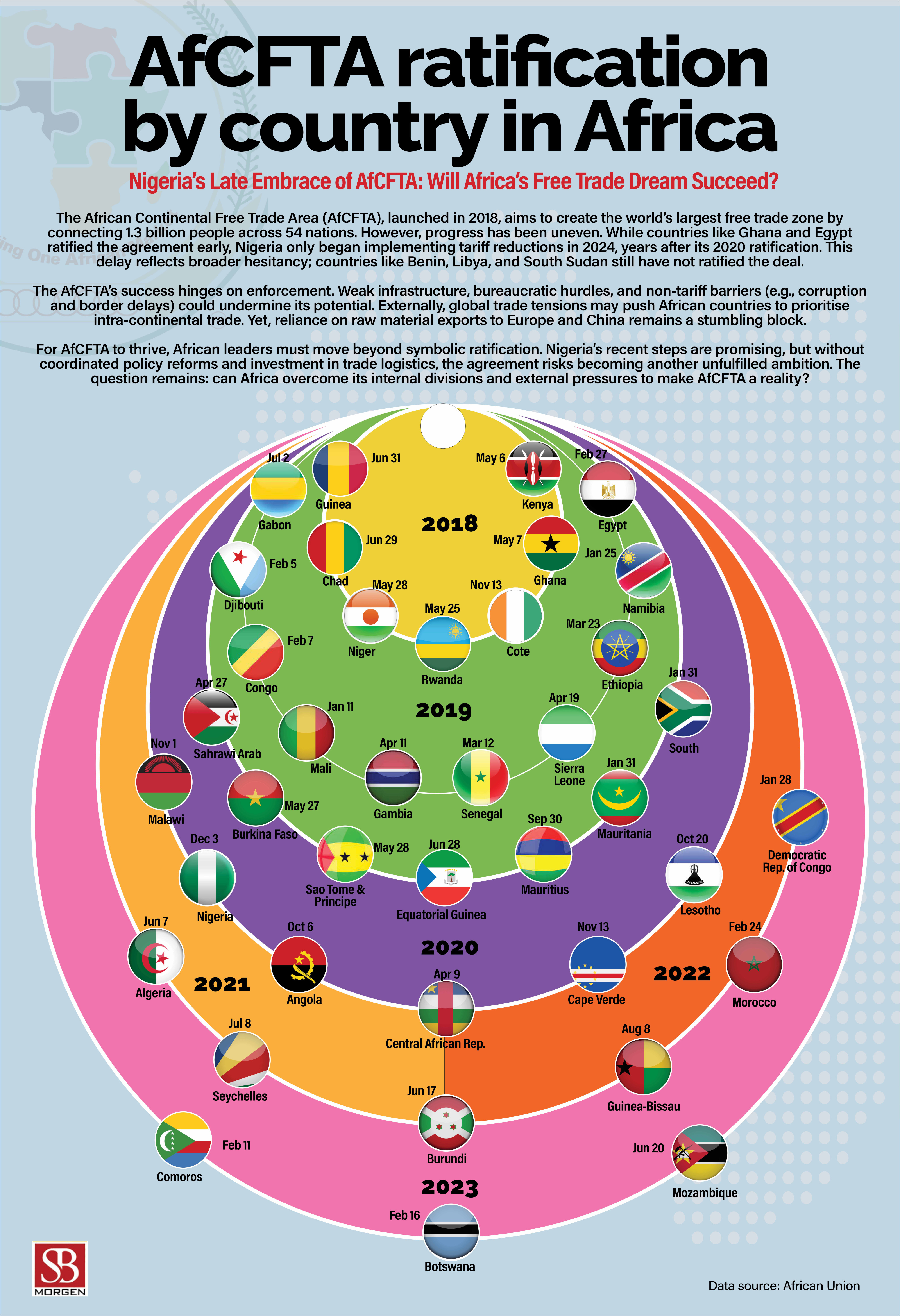
The African Continental Free Trade Area (AfCFTA), launched in 2018 to create the world’s largest free trade zone spanning 54 countries and 1.3 billion people, represents a transformative opportunity for the continent. However, progress has been uneven. While early adopters like Ghana and Egypt moved swiftly, Nigeria only began implementing tariff reductions in 2024 – four years after ratification – reflecting broader hesitancy across the continent, with Benin, Libya and South Sudan yet to ratify the agreement.
Nigeria’s recent submission of its ECOWAS Schedule of Tariff Offers under the AfCFTA framework is a necessary step towards boosting intra-African trade, but it is far from sufficient. While tariff reductions lay important groundwork, they address only part of the challenge. The more persistent obstacles to continental trade include inadequate infrastructure, insecurity, mismatched production and demand between neighbouring countries, cumbersome cross-border payment systems, and burdensome domestic bureaucracy. These structural barriers continue to constrain Africa’s trade potential far more than tariffs alone.
The AfCFTA’s ultimate success hinges on robust enforcement and complementary reforms. Weak transport networks, corruption, and prolonged border delays – all classic non-tariff barriers – threaten to undermine the agreement’s potential if left unaddressed. Moreover, Africa’s trade patterns remain heavily influenced by colonial-era divisions, particularly the Francophone and Anglophone blocs within ECOWAS, which continue to hinder deeper regional cooperation.
External pressures add urgency to the initiative. With global trade tensions escalating – evidenced by unilateral tariff hikes from the United States and others – AfCFTA offers African countries a pathway to greater economic resilience and reduced dependency on volatile external markets. However, the continent’s persistent reliance on raw material exports presents a significant structural challenge to reorienting trade flows.
For AfCFTA to fulfil its promise as a tool for sustainable growth, African governments must move beyond symbolic ratification and tariff commitments. What is required is sustained, coordinated action: significant investment in infrastructure and trade logistics, genuine policy reforms to create business-friendly environments, and determined efforts to overcome historical divisions. Nigeria’s recent steps are welcome, but without this broader commitment, AfCFTA risks joining the list of Africa’s unfulfilled ambitions. The critical question remains whether African countries can transcend both their internal fragmentation and external pressures to finally unlock the potential of their combined markets.