
Taxing times
The General Secretary of the Ghana Food and Beverages Association of Ghana (FABAG), Samuel Aggrey, has raised alarm over Ghana’s…

The General Secretary of the Ghana Food and Beverages Association of Ghana (FABAG), Samuel Aggrey, has raised alarm over Ghana’s increasingly dire economic situation. Speaking to JoyNews, Aggrey highlighted the exodus of multinational companies due to the prevalent unfavourable taxation policies and economic conditions. “If you look at the taxation policy that we have in this country, it is actually not helping some of these businesses who have come in and invested so much,” he said. He stressed the importance of re-evaluating existing policies to make Ghana a more attractive destination for multinational corporations.
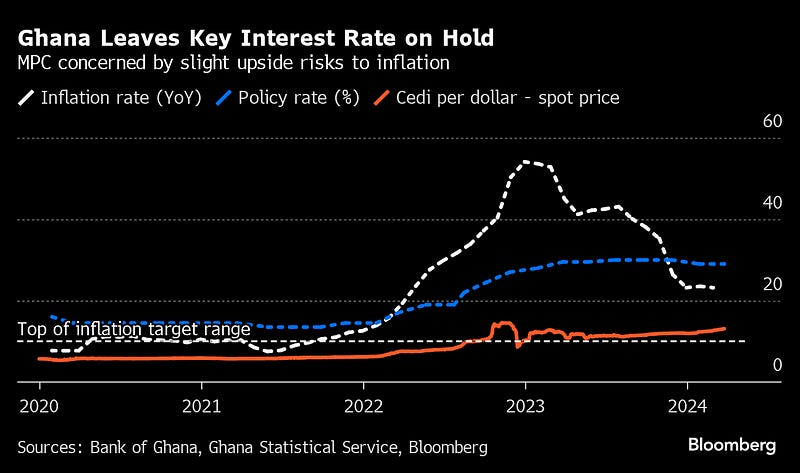
Ghana’s quest to solve its historic economic crisis may have done more harm than good to local and multinational private firms. A request for debt restructuring disrupted investor confidence, resulting in limited access to international capital markets and the subsequent restructuring of local bonds held by businesses and commercial banks. Although inflation has stabilised from a peak of more than 54% in December 2022 to 25% in April 2024, other strong adverse winds like the accelerated depreciation of the cedi against major trading companies have put enormous pressure on the cost functions of business in the country. In less than two years, about eight firms, including Nivea, Dark and Lovely, Game and BIC, have all left the Ghanaian business space, citing depreciating profit margins and high production costs as key factors. Recently, delivery giant Glovo indicated it would leave the space this year, citing similar reasons. There are also rumours that the French bank, Societe General, will soon exit. The stringent taxation environment, increasing electricity costs, and junk local currency make it very difficult for businesses to thrive. Multinational organisations that have to convert their end-of-year profit into dollars have witnessed a persistent drop in their profit in dollars. For instance, cedi lost about 10% of its value against the dollar in the first three months of this year, which negatively impacted shareholders’ dividends. Beyond this, businesses operating in the Ghanaian space find themselves embroiled in a challenging fiscal battle, competing with the government for the limited funds available in the T-bill space. The government’s move to raise interest rates on T-bills above 30% made it more appealing for commercial banks to lend to the government rather than private entities. Recent data from the Bank of Ghana revealed that commercial banks continued favouring short-term investments and overextending credit due to heightened lending risks amid worsening macroeconomic conditions and the impact of the Domestic Debt Exchange Programme (DDEP). This crowding-out effect was evident as private sector credit shrank by 7.5% in October 2023, a sharp contrast to the 57.3% growth in October 2022. In real terms, credit to the private sector plummeted by 31.6% relative to a meagre increase of 3.0% over the same period. Despite promotional offers, banks persisted in offering loans to private entities at rates as high as 28%, with standard rates rarely dipping below 31%.