
Tense transition
Mozambique's new parliament was sworn in under tight security amid opposition protests and a general strike led by Venancio Mondlane, who alleges electoral fraud in the October 2024 elections.

Mozambique’s new parliament was sworn in under heavy security amid protests and a general strike led by opposition leader Venancio Mondlane, challenging alleged electoral fraud from the October 2024 elections. Opposition parties Renamo and MDM boycotted the swearing-in, leaving about 30 seats vacant, while Podemos MPs attended, criticising the boycott. Protests in Maputo included barricades and burning tyres, with police using tear gas to disperse demonstrators, and businesses in some areas closed over looting fears. Incoming President Daniel Chapo urged unity, and new Speaker Margarida Talapa vowed to foster a parliament “open to dialogue.”
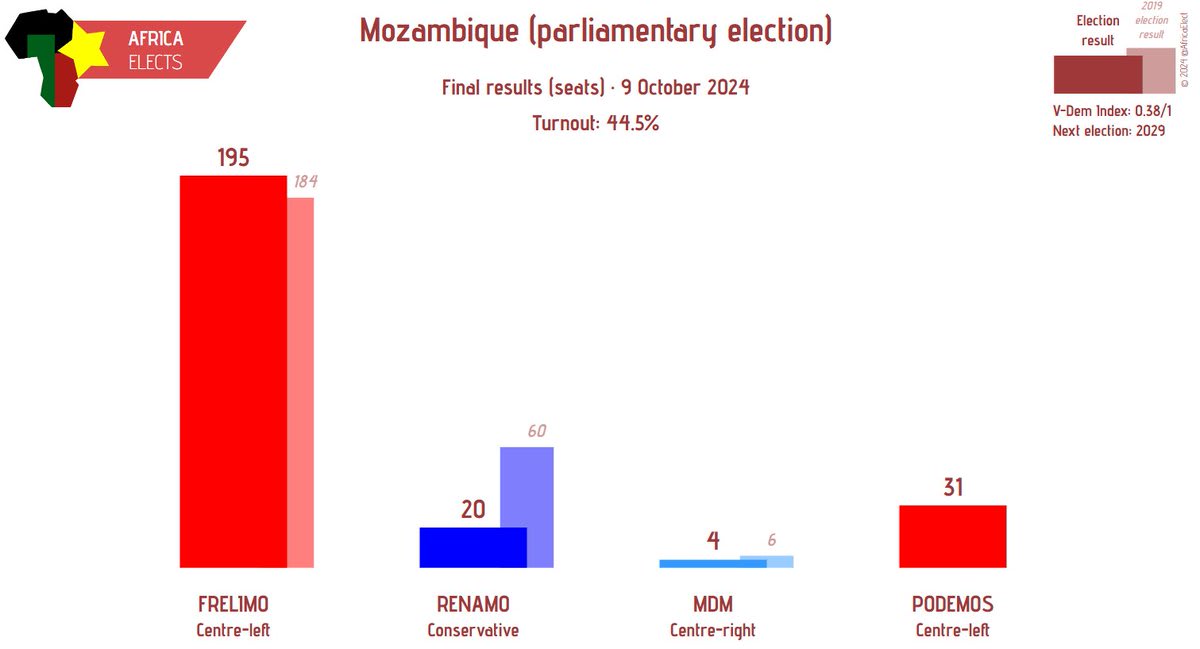
This week’s swearing-in follows the Constitutional Council’s ruling that affirmed FRELIMO’s Daniel Chapo as the October election winner. Provisional results from the electoral commission, which has not addressed fraud allegations, showed Chapo winning the presidency by a landslide while FRELIMO increased its parliamentary majority. However, Western observers deemed the election neither free nor fair.
FRELIMO has consistently denied accusations of vote-rigging. The Council’s seven-judge panel declared Mr Chapo the winner with 65% of the vote, revising the initial figure of nearly 71% without explaining the methodology behind the adjustment. Analysis of the Constitutional Council highlights potential partisan bias rooted in its structure. Five judges are selected by the FRELIMO-controlled National Assembly, one by the FRELIMO-affiliated President, and one by RENAMO. This composition, alongside the historical ties of several judges, including Council President Lucia Ribeiro, to FRELIMO, raises concerns about impartiality. Past decisions have consistently favoured FRELIMO, even when independent observers and polling officials presented evidence to the contrary. This pattern undermines confidence in the council’s ability to act as a neutral arbiter.
The opposition’s disunity is another indicator of Mozambique’s political trajectory. Podemos, a smaller opposition party, criticised the boycotting parties as “cowardly” and attended the swearing-in despite calls for unity. This boycott by opposition parties sends a strong message of dissatisfaction with the electoral process but weakens the parliament by depriving it of diverse voices essential for robust governance.
The political crisis has again spilt into the streets, and demonstrators’ grievances were met with police force, including tear gas, which has only heightened tensions. Such violent confrontations risk escalating unrest and further polarising an already divided society. Peaceful protests called for by opposition leader Mondlane have yet to materialise, reflecting fears that the government may suppress dissent through incentives and intimidation. As a result, resistance to FRELIMO’s rule may be more subdued than the initial wave of pro-opposition protests seen since October.
Speaker Margarida Talapa’s pledge to keep parliament open to dialogue is promising, but it will require genuine effort and compromise to transform rhetoric into meaningful reconciliation. For the new government, the primary challenge lies in unifying the country—a task it has shown little interest in pursuing—while addressing pressing social and economic issues.
According to the African Development Bank (AfDB), Mozambique’s real GDP is projected to grow by an average of 5.2% over the next two years, driven by the extractive sector, especially gas production. Agriculture, private consumption, and foreign direct investments will support growth. However, acute food insecurity remains a critical issue, with 63 cyclone-affected districts, accounting for 39% of the country, severely impacted.
The government’s biggest test will be its handling of the Islamist insurgency in the mineral- and gas-rich Cabo Delgado province. This challenge could define its ability to govern effectively. Since 2017, the insurgency, led by Ansar al-Sunna, an ISIS-affiliated group, has destabilised the resource-rich region. The conflict has claimed thousands of lives and displaced over one million people, disrupting communities and threatening the development of Mozambique’s lucrative liquefied natural gas (LNG) projects. Although regional forces, particularly from the Southern African Development Community (SADC) and Rwanda, have provided military support, the insurgency remains a persistent threat due to its evolving tactics and deep-seated local grievances, including poverty, unemployment and marginalisation.
Compounding the Cabo Delgado crisis is the broader issue of state capacity. While Mozambique’s security forces are bolstered by foreign support, they are often criticised for poor coordination, inadequate training, and allegations of human rights abuses, which risk alienating local populations. Strengthening the military and police while addressing the root causes of radicalisation, such as economic disparity and governance deficits, will be essential for sustainable peace. The new parliament in Maputo has its work cut out.