
The Algorithm and the Ballot Box
AI, misinformation, and the political information environment ahead of Nigeria's 2027 elections

Two-thirds of Nigerians are alarmed about artificial intelligence being used to mislead voters in the 2027 election. Yet the zone most exposed to manipulation, the South East, is the least concerned. That contradiction sits at the heart of this report.
The report draws on a survey of 829 respondents across eight states and six geopolitical zones, combined with extensive desk research. It finds that 66.5% of Nigerians are extremely or very concerned about AI-generated political misinformation. This alarm cuts across age, gender and education; it is not an elite concern.
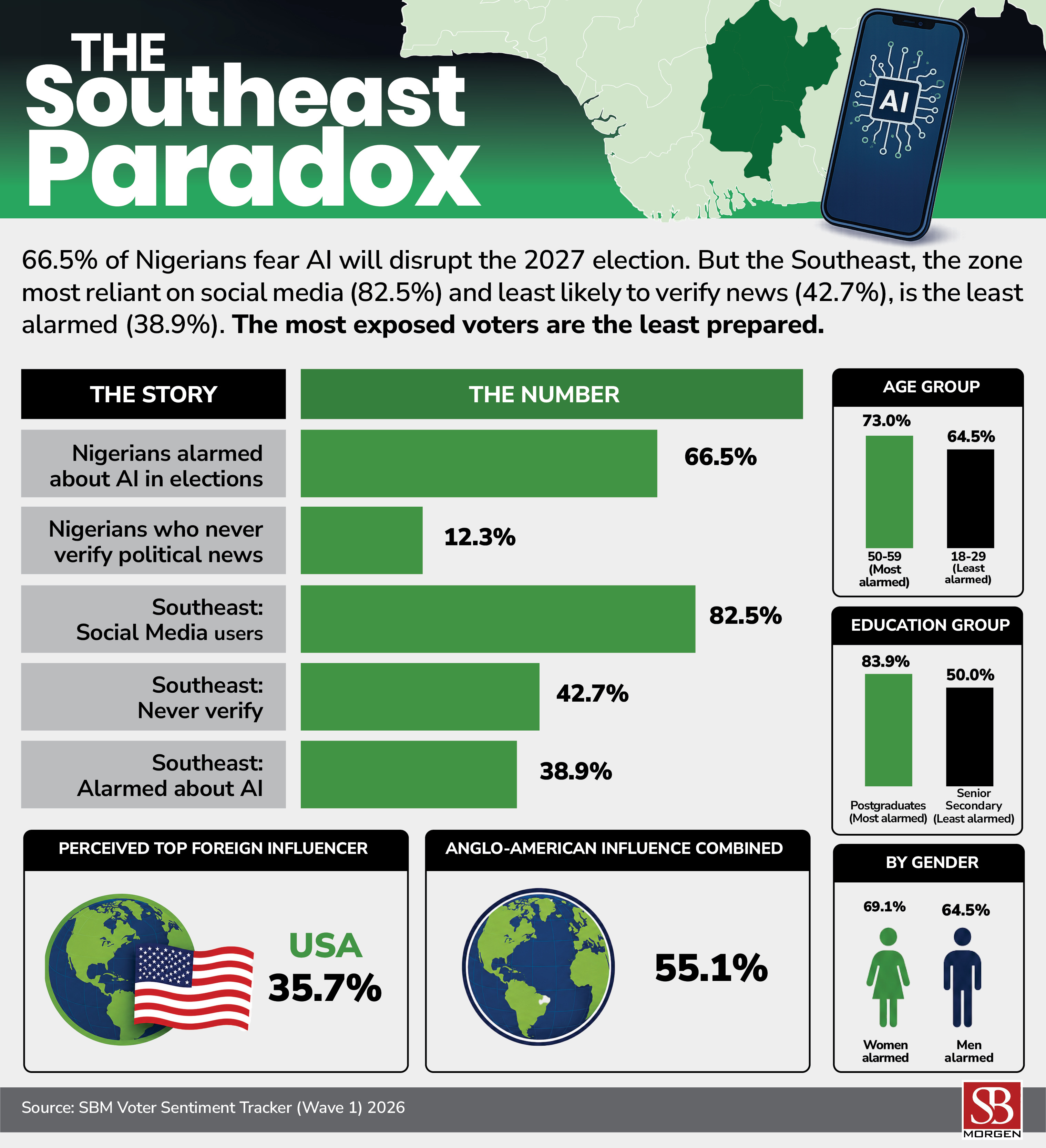
The most urgent vulnerability is in the South East. The zone has the highest social media reliance at 82.5% and the highest non-verification rate at 42.7%. Yet it records the lowest AI concern in the country, at 38.9%. A zone where almost no one cross-checks what they read is also a zone where almost no one thinks checking is necessary.
Social media, dominated by WhatsApp, is the primary news source for 52.1% of Nigerians. On most platforms, especially in African markets, AI content moderation is either absent or ineffective. The pipeline from AI-generated content to mass consumption is essentially unobstructed.
The United States is perceived as the primary foreign influence actor by 35.7% of respondents. China is second at 11%, the United Kingdom third at 7.5%. A further 11.9% express the same concern through the colloquial framing “Dollar”. Together, Anglo-American influence accounts for more than half the electorate’s concerns.
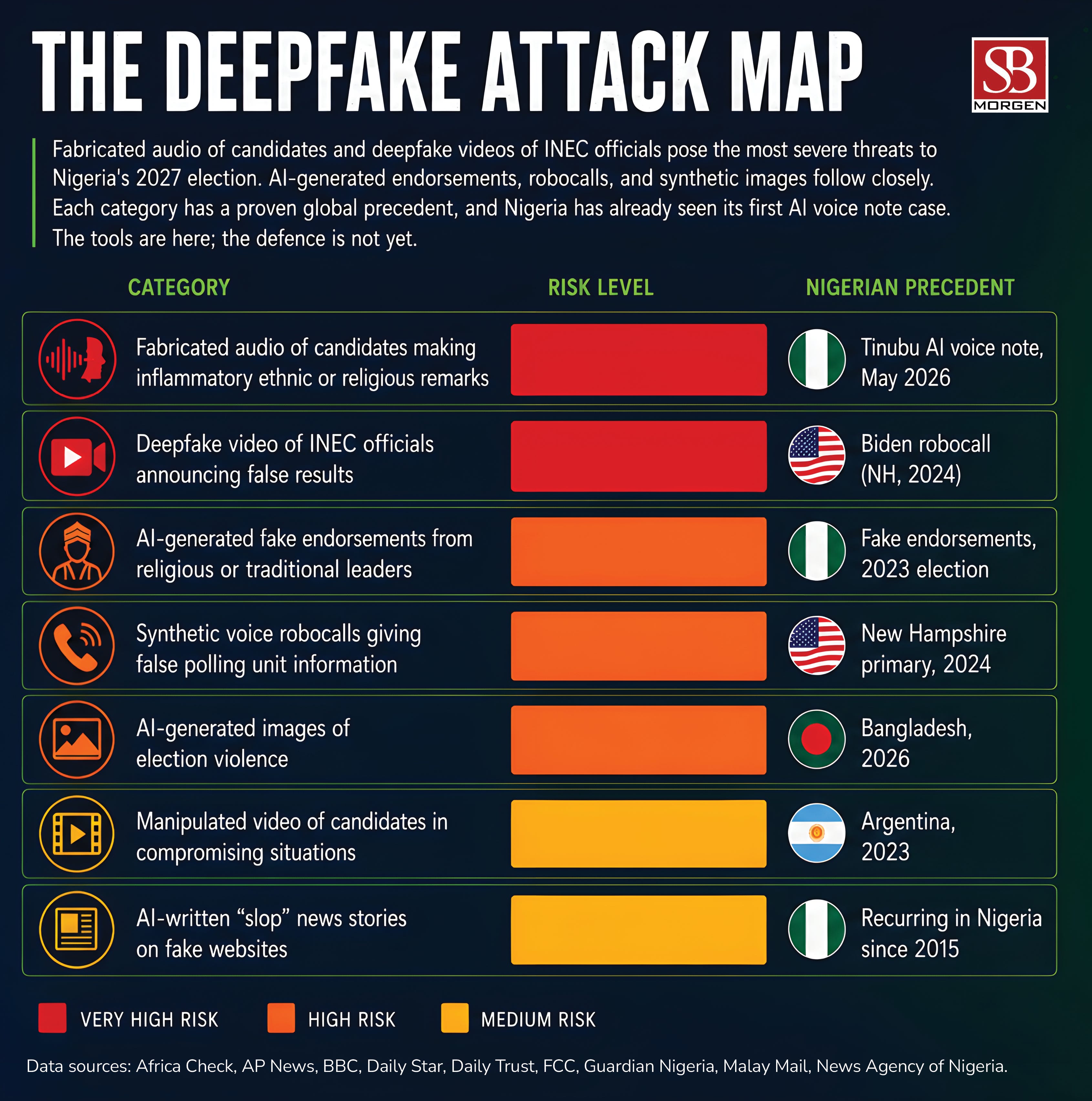
Nigeria’s legal and regulatory framework is structurally unprepared. The Cybercrimes Act was drafted before deepfakes existed. The pending AI Commission bill lacks enforcement provisions. The Independent National Electoral Commission (INEC) held an AI regulatory workshop in March 2026, but this is a start, not a system. The window to build that system before the election is closing.
The Tinubu AI voice note of May 2026 was a warning shot. The technology is not coming; it is here. Nigeria has the institutional knowledge and civil society capacity to respond. What it lacks is organised, resourced, time-bound action before January 2027. The algorithm does not wait for the ballot box to catch up.