
The fallout
Reports claim that Nigeria's ruling party plans to suspend and possibly expel a powerful former state governor due to his criticism of the party.

The All Progressives Congress (APC) reportedly plans to suspend and expel former Kaduna State governor Nasir el-Rufai over alleged anti-party activities. El-Rufai, a founding APC member, has openly criticised the party, accusing it of poor leadership, lack of internal democracy, and abandoning its founding principles. His recent remarks at a national conference, where he described the APC as a “one-man show” and blamed “illiterates and cunning people” for Nigeria’s leadership problems, have angered party leaders. The APC’s National Publicity Secretary dismissed his comments as desperate. Meanwhile, sources reveal plans to suspend him from his ward and expel him to prevent him from leaving the party unchallenged.
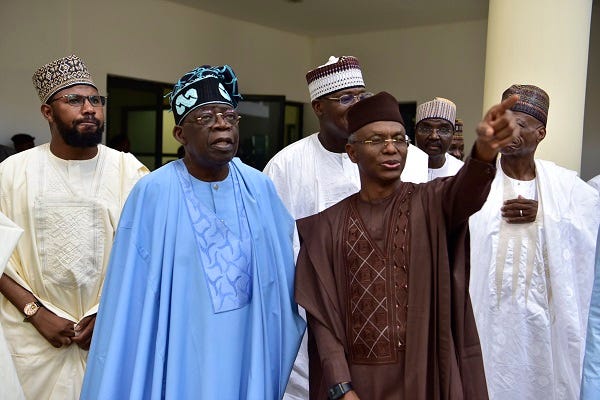
After the high-stakes political manoeuvring that cost Nasir El-Rufai his chance to become what would have been Nigeria’s most powerful minister—a position many believed he was poised to take—it was inevitable that he would shift his focus to his political ambitions for 2027. El-Rufai, a seasoned politician with a reputation for boldness and strategic acumen, is not one to retreat quietly. Instead, he appears to be recalibrating, positioning himself for what could be a defining moment in his career: a run for the presidency in 2027.
And yes, the race for the 2027 elections has already begun in earnest, even though the next general elections are years away. In Nigeria’s political landscape, where alliances are fluid and power dynamics shift like sand, the groundwork for future contests is often laid long in advance. El-Rufai’s recent moves suggest he is not content with remaining on the sidelines. His growing influence and vocal criticism of the current administration have positioned him as a potential rallying point for those dissatisfied with the status quo.
However, El-Rufai’s path to 2027 is fraught with challenges, particularly within his own party, the All Progressives Congress (APC). Unlike the Peoples Democratic Party (PDP), which has struggled to maintain discipline among its ranks—evidenced by figures like Nyesom Wike, who serves as a minister in an APC-led government despite being a PDP member—the APC under the leadership of President Bola Tinubu, is unlikely to tolerate internal dissent. Tinubu, a master strategist known for infiltrating and weakening opposition from within, is expected to respond aggressively to any moves by El-Rufai that threaten the party’s unity or his own political ambitions.
El-Rufai’s recent public criticism of the APC leadership has already put him at odds with the party’s power brokers. Although he was a founding member of the APC and played a pivotal role in its formation in 2013, his outspokenness and independent streak have made him a controversial figure within the party. This tension could complicate his efforts to build a coalition capable of challenging Tinubu in 2027.
Moreover, El-Rufai faces a broader challenge in the northern region, where political unity has been elusive since the departure of former President Muhammadu Buhari. Buhari, a northern icon, was able to galvanise the region into a cohesive voting bloc, but no northern politician has managed to replicate that feat since. El-Rufai, despite his influence and experience, may find it difficult to unify the North’s diverse political interests under a single banner. The region’s political landscape is fragmented, with competing power centres and shifting loyalties, making it a complex terrain to navigate.
Tinubu, on the other hand, is expected to leverage his extensive political network and strategic prowess to counter any emerging opposition. His reputation for weakening rivals from within—often by co-opting their allies or exploiting internal divisions—suggests he will not take El-Rufai’s ambitions lightly. The 2027 election is likely to see the formation of a broad coalition of opposition forces, potentially including figures like El-Rufai, who could unite around a shared goal of unseating Tinubu. However, Tinubu’s ability to disrupt such coalitions, as he has done in the past, could prove to be a significant obstacle.
For El-Rufai, the road to 2027 will require navigating the treacherous waters of intra-party politics and building a broad-based coalition capable of challenging an incumbent with formidable resources and influence. His success will depend on his ability to rally support across regional and ideological lines while also fending off the inevitable countermoves from Tinubu and the APC.
As the political chessboard takes shape, one thing is clear: the race for 2027 is already underway, and the stakes could not be higher. For El-Rufai, it is a chance to redefine his legacy and potentially reshape Nigeria’s political future. But for Tinubu, it is an opportunity to consolidate power and cement his place in the nation’s history. The coming years will be a test of strategy, resilience, and vision as these two political heavyweights prepare for a showdown that could determine the direction of Africa’s most populous country.