
The North’s nightmare
Boko Haram militants kidnapped 42 women in Borno State while gathering firewood in the Jere district. The terrorists initially demanded…

Boko Haram militants kidnapped 42 women in Borno State while gathering firewood in the Jere district. The terrorists initially demanded ₦50,000 ransom per woman, but negotiations led to a lower amount. Earlier, they ambushed security forces guarding farmers in the same area. Separately, in Zamfara, four individuals, including the village head of Nasarawa-Burkullu community, were abducted while Boko Haram took eight farmers in Maiwa village near Maiduguri. The assailants demanded ransoms in both incidents. Conversely, 49 women kidnapped in the Maiduguri area were released after a state official paid their ransom.
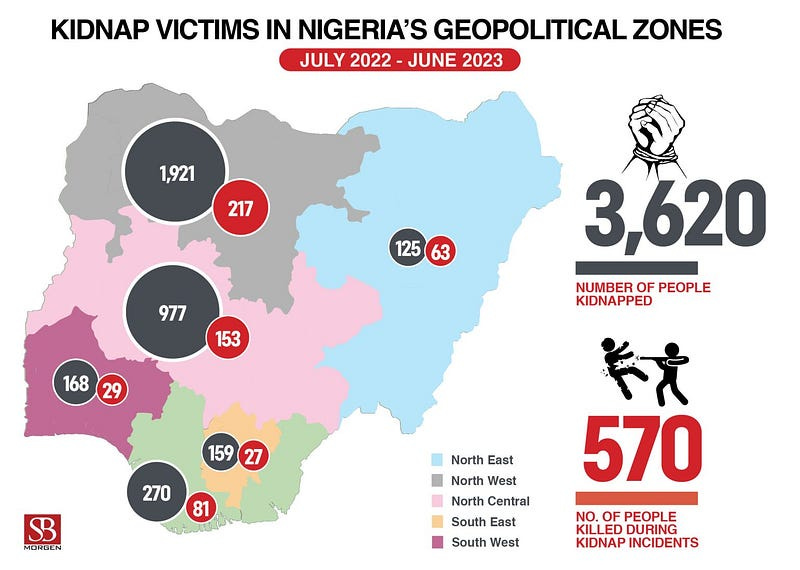
Terrorist groups in Northern Nigeria, particularly groups like Boko Haram, have historically funded their activities through various means, including kidnapping for ransom. Reports from the region estimate that Boko Haram and other terrorist groups in Nigeria made between $100 million and $300 million from ransoms and extortion over the past two years. This estimate is based on various factors, including the number of kidnappings reported, the average ransom demand and the amount of money that is believed to have been paid. This estimate could be an understatement because many kidnappings are not reported, and ransom details are often kept secret. And what does the region get in return for the enrichment of these terrorist groups? Well, according to a 2022 report by the United Nations Office for the Coordination of Humanitarian Affairs (OCHA), the economic damage caused by the activities of terrorists and bandits in Northern Nigeria is estimated to have hit billions of dollars and caused the displacement of millions of people, the destruction of infrastructure and the disruption of economic activity in agriculture, trade and other sectors. The poverty and displacement caused by the conflict are self-reinforcing and have led to increased crime, such as kidnapping, armed robbery, and extortion, as displaced people with no means of sustenance have become vulnerable to recruitment by criminals. This has made it difficult for businesses to operate and discouraged regional investment. Historically, a spike in Boko Haram kidnap activities signals increased pressure from their rivals and the state. With mass defections rocking both factions in the North East, the movement is hard-pressed for resources, which it has sought to mitigate by targeting civilians. Ambushes remain the biggest indicator of perimeter breaches by the military. Lately, such breaches seem to be commonplace. The military has not recalibrated its North East strategy in about four years, which could result from its focus on the success of Operation Safe Corridor. Also, state payment of ransom, which is officially frowned upon by the state, provides the biggest insight into the fluidity of this current situation. It shows that the military and the Borno State government try to paint a picture of total control even though that is not the case, with women and farmers making up the victims’ list in droves. It is also a similar problem in the North West, whose planting season has witnessed farmers getting kidnapped for fun. Nigeria’s poverty rate is striking, so failure to handle this crisis will only worsen the situation and increasingly suck in government resources.