
The perfect storm
The media is reporting that as many as seven people have died after clashes between Nigerian security personnel and citizens on the first…

The media is reporting that as many as seven people have died after clashes between Nigerian security personnel and citizens on the first day of a proposed weeklong nationwide protest against “bad governance” and a cost of living crisis. This came a day after the country’s largest phone network, MTN Nigeria, closed its offices due to customer protests over blocked phone lines. The company had barred lines for users who did not link their national identification numbers (NIN) to their mobile numbers. In response, a Senior Advocate of Nigeria, Ebun-Olu Adegboruwa, said telcos might be trying to undermine the upcoming economic hardship protest. Adegboruwa urged the Nigerian Communications Commission (NCC) to intervene and protect customers’ rights. On Monday, affected subscribers demonstrated at MTN offices, turning violent in some cases. The NCC has ordered telcos to reactivate all blocked SIMs immediately.
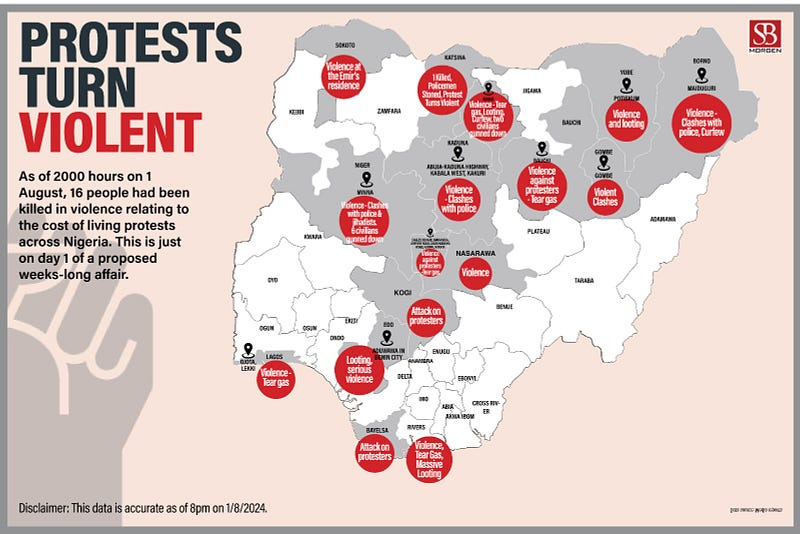
For the first time since the #EndSARS protests in 2020, Nigerians have taken to the streets to register their discontent with the management of the Nigerian state. Political and policy decision-making that has been tone-deaf at best is largely to blame. Despite weeks of political signalling on the part of the government, its political acolytes and the security services, the geographic distribution and the depth of the protests have been substantial but well below what activists and organisers had hoped for. Predictably and unfortunately, properties have been looted, and lives have been lost across the country, mainly in the North. This is not a surprise considering that the three northern geopolitical zones are the epicentre of the country’s cost of living and security crises. For much of the rest of the country, the trauma of participating in the 2020 protests and the ensuing crackdown meant many voted with their feet and stayed home. This means that while this protest season may end up being less deadly than 2020, the economic cost will be no less substantial. This is where the telecom angle takes on even more relevance. MTN’s decision to mass-block SIM cards without adequate preparation or contingency planning exhibited a staggering disregard for the potential consequences of their actions. The timing of the mass disconnection amidst a planned national protest created a volatile situation that could have easily escalated into widespread unrest. The telecommunications giant’s failure to anticipate the public outcry and potential for violence was corporate incompetence. By abruptly cutting off communication for numerous people, MTN effectively severed a vital lifeline for many Nigerians. This action, in essence, created a sense of panic and frustration among the affected population, who were left feeling isolated and powerless. The national protest indicates widespread public discontent, and MTN should have recognised the potential for this action to exacerbate the situation. Disrupting communication channels during such a time could have easily ignited widespread anger and frustration, potentially leading to violent confrontations between protesters and security forces. Furthermore, by drawing the anger of a large population segment, MTN placed its staff and facilities at significant risk. The public backlash was inevitable, and the company should have anticipated the possibility of violent protests and attacks on its offices due to angry crowds of thousands coming to their offices to have their lines unbarred. The incidents of stone-throwing and vandalism were fairly predictable. The company’s failure to foresee the potential consequences of its decision is a serious indictment of its leadership and decision-making processes. MTN and other businesses operating in the country must learn from this experience and implement measures to prevent similar incidents from occurring in the future.