
The Persian Trap Aftermath: Has West Africa Escaped a Deeper Crisis?
Ceasefire brings fuel relief, but West Africa's import dependence and fragile buffers leave it exposed to the next shock.

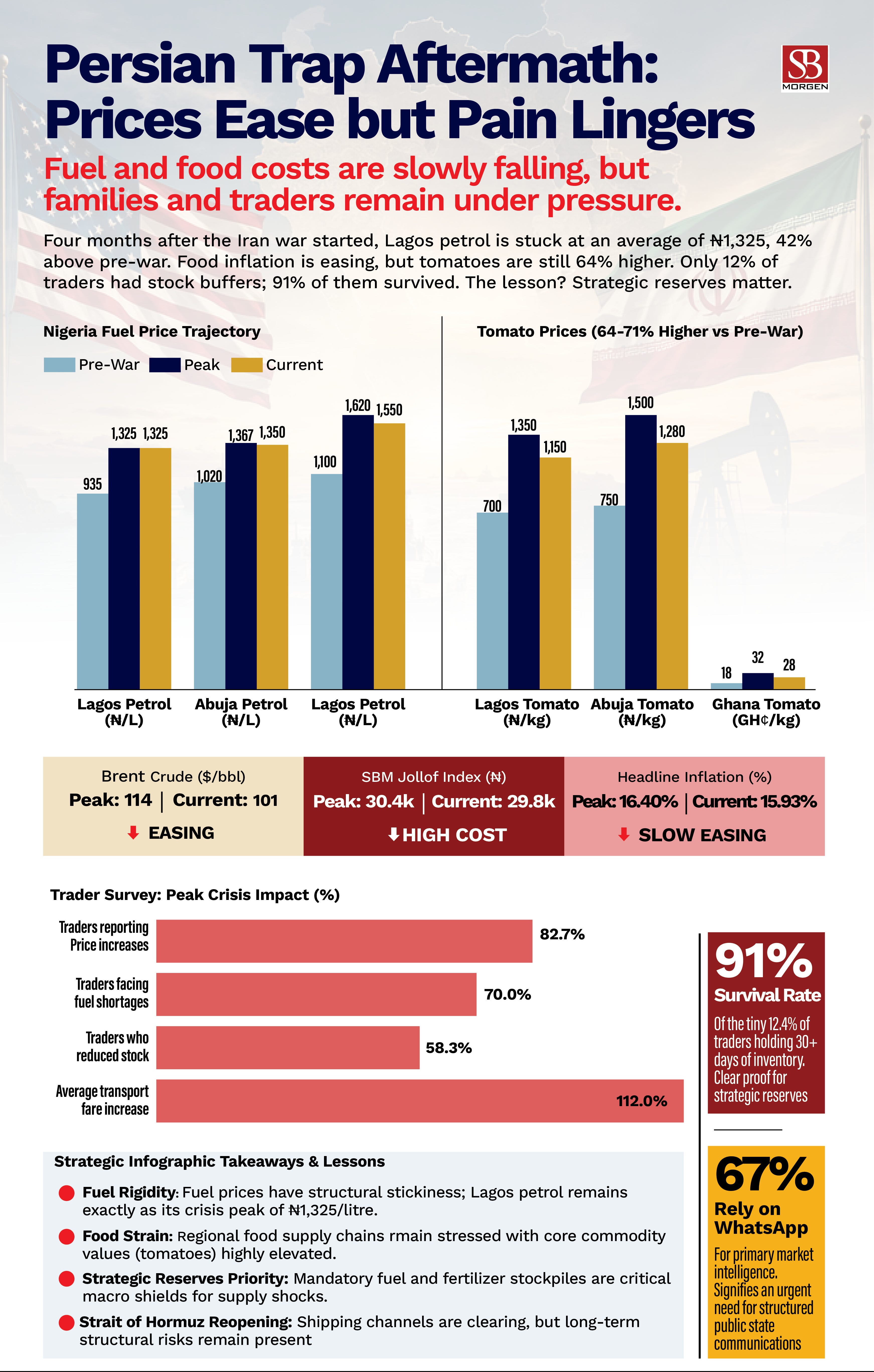
The agreement for a ceasefire between the US and Iran has brought immediate relief to West African markets, with Brent crude falling from a peak of $114 to approximately $101 per barrel. The reopening of the Strait of Hormuz, through which 20% of global oil passes, signals a potential end to the supply shock that sent Nigerian petrol prices from ₦830 to ₦1,325 per litre and diesel from ₦1,100 to over ₦1,600. But the relief is fragile. The ceasefire, though, is a pause, not a cure.
The human cost of the conflict is now quantifiable. An SBM Intelligence survey of 220 traders across nine Nigerian cities found that 82.7% reported price increases directly linked to the war, 70% faced fuel shortages for generators and transport, and 76.4% experienced sharp increases in transport fares. The Jollof Index, a measure of the cost of a standard pot of rice, hit an all-time high of ₦30,435 in April 2026. Food inflation rose to 16.96% year-on-year, and cooking gas prices climbed 34% in Lagos alone. The crisis also exposed Nigeria’s import dependence: despite being Africa’s largest oil producer, the country still imports refined petroleum and buys feedstock at international prices, meaning the Dangote Refinery could not shield consumers from the global price shock.
The conflict’s more serious damage lies in its structural consequences. Nigerian Eurobond yields widened by approximately 150 basis points during the war, raising sovereign borrowing costs. Foreign direct investment stalled, with only the $8 billion Baleine Phase 3 investment in Côte d’Ivoire bucking the trend. Great-power realignment has accelerated: Gulf states are hedging their alliances, and Russia has deepened its influence in the Sahel.
The ceasefire offers a narrow window for West Africa to build resilience. Strategic fuel reserves and fertiliser buffer stocks, financed through import levies and distributed through market associations, would protect traders from future shocks. Regional integration through the African Continental Free Trade Area must be accelerated to develop overland corridors as alternatives to Middle Eastern maritime routes. Investment in solar and off-grid energy is no longer a luxury but a commercial necessity.
The underlying vulnerabilities are unchanged: import dependence, thin fiscal buffers and exposure to chokepoints beyond West African control. The ceasefire is a diplomatic achievement, but the structural realignment of global trade that the war accelerated will persist. Another shock will come. The question is whether West Africa will use this pause to prepare, or simply wait for the next trap to spring.