
Third force
The Peoples Democratic Party (PDP) presidential candidate, Atiku Abubakar, has called on the opposition political parties to merge against…

The Peoples Democratic Party (PDP) presidential candidate, Atiku Abubakar, has called on the opposition political parties to merge against the ruling All Progressives Congress (APC) because, according to him, APC was pushing Nigeria into dictatorship and a one-party state. Atiku noted that Nigeria’s democracy would suffer if there was no viable opposition. “If we don’t come together to challenge what the ruling party is trying to create, our democracy will suffer for it, and the consequences of it will affect the generations yet unborn. The project of protecting democracy in our country is not about just one man,” Atiku said.
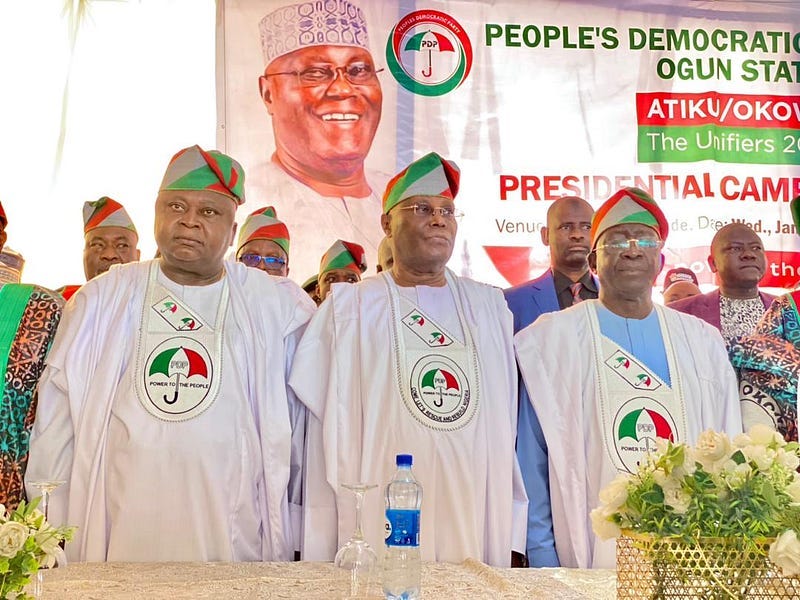
According to SBM’s framework, one of the four essential conditions for defeating an incumbent in an election is the unity of the opposition. In a democratic system, a strong and united opposition plays a crucial role in ensuring accountability, preventing abuses of power and promoting diverse political representation. A divided opposition, on the other hand, can weaken democratic institutions, hinder policy reforms and create conditions for political instability. Atiku Abubakar’s call for a united opposition in Nigeria highlights the importance of a cohesive force to counter the dominance of the ruling APC. By uniting against the APC, opposition parties can amplify their voices, increase their chances of electoral success and hold the government accountable for its actions. The principle of Atiku’s call is, therefore, spot on. However, some questions need to be answered: Why did Atiku not actively pursue such unity in the last general elections? What will the modalities of the execution of such an opposition be? Will Atiku be willing to sacrifice his ambitions to support another candidate, as Tinubu did in 2015 by backing Buhari? These are crucial questions that need to be addressed. Despite the obvious potential benefits of a united opposition, forming such a coalition can be challenging. It is not strange to find Nigerian politicians teaming up for selfish and personal gains; personal ambitions and power struggles can hinder cooperation and cause leadership rivalries. Another issue is resource constraints. It is not clear if Atiku and the team he garners are financially equipped to ramp up a good campaign against the incumbent in the next election. Opposition parties often lack the financial and organisational resources to effectively coordinate their efforts and mount a sustained challenge to the ruling party. To overcome these challenges, this brewing Atiku-led third force needs to demonstrate a willingness to compromise, prioritise the common goal of safeguarding democracy and work towards developing a shared vision for Nigeria’s future. They must also engage in effective resource mobilisation and communication strategies to enhance their visibility and appeal to the electorate. Atiku Abubakar’s call for a united opposition in Nigeria is a timely and critical one because the potential benefits for Nigerian democracy and the country’s future are enormous. If the competing opposition blocs can overcome their ideological differences, foster leadership cooperation and leverage their collective resources, they can create a formidable force to challenge the ruling party and safeguard the principles of democracy in Nigeria.