
Through the roof
Nigerian oil marketers indicated that the cost of petrol would rise to between ₦680/litre and ₦720/litre in the coming weeks should the…

Nigerian oil marketers indicated that the cost of petrol would rise to between ₦680/litre and ₦720/litre in the coming weeks should the dollar continue to trade from ₦910 to ₦950 at the parallel market. They also hinted that dealers seeking to import petrol were being forced to put the plans on hold due to the scarcity of foreign exchange to import the commodity. Meanwhile, the Nigerian presidency has refuted claims that the administration sought to reintroduce fuel subsidies, reassuring citizens that there will be no further hike in the prices of petroleum products.
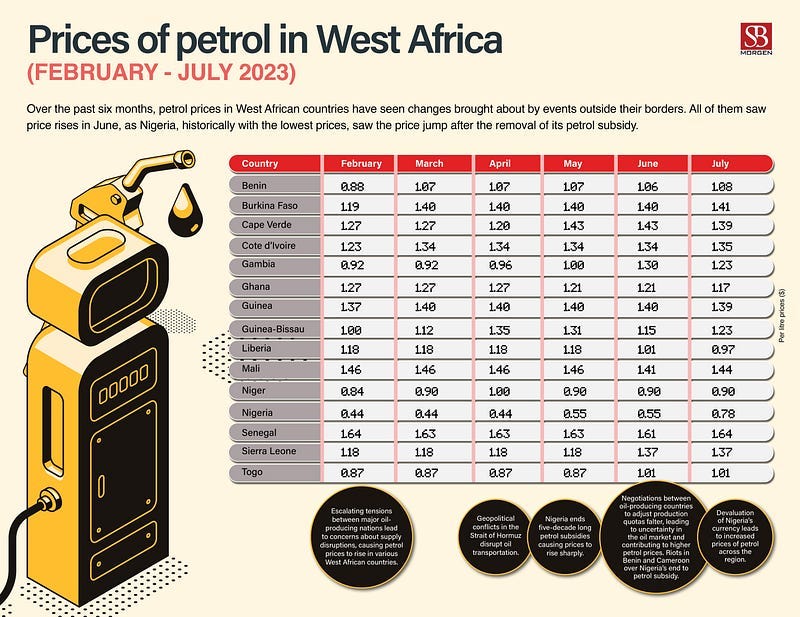
In the current climate, there are essentially two options to consider. The first option entails maintaining a free market approach, where marketers import petrol at prevailing prices and sell it accordingly, only importing what can be sold at these elevated rates. The second option involves the government reintroducing some form of subsidies, either through subsidising foreign exchange for importers or reinstating petrol subsidies, thereby stabilising prices. Regrettably, both choices come with their own share of challenges that the country must endure. But the root cause of this predicament does not solely lie in the necessity of removing the original FX and petrol subsidies, but rather in the manner and execution of these removals. The brash approach of “with immediate effect” in the heady days of the Tinubu administration, while basking in the euphoria of victory, has quickly given way to the realisation that removing these subsidies should have had a comprehensive policy think-through, with clear impact assessment, communication strategies and mitigation plans for emergent risks. This bungled implementation has only done one thing: provide the opponents of subsidy removal with ample ammunition to support their argument while solidifying general mass opposition to such measures, which can lead the country to the edge of a fiscal precipice. The new administration apparently underestimated the extent of issues within the petrol subsidy system. Many market watchers opined that in a fully deregulated market, petrol prices could stabilise between ₦500 and ₦600. Yet, it is apparent that the various factors that affect the price of imported petrol are conspiring to increase prices. Firstly, crude oil price has strengthened to around $82 per barrel mainly due to OPEC’s production cuts, supported by resilient US, China and India demand. Secondly, oil marketers who recently got import licences for petrol are having to source for foreign exchange from the black market due to scarcity in the official window. Thirdly, heightened uncertainty has caused many marketers not to import products, further incentivising price increases among those who import. The Nigerian government is facing a difficult situation as the price of petrol is expected to rise sharply in the coming weeks. This is due to the depreciation of the naira and the scarcity of foreign exchange, which have made it more expensive to import petrol. Instead of denying intentions to reintroduce petrol subsidies, the government should focus on innovative solutions that provide Nigerians with market-friendly fuel prices without resorting to a ruinous subsidy regime. They should identify fuel sources that can be produced locally and cheaply. This would help with the foreign exchange rate problems and give Nigerians fuel prices that are bearable and sustainable. Nigeria is a major producer of natural gas, which can be used to produce petrol and other fuels. Biofuels should be an option, but Nigeria does not make enough for food purposes. The Nigerian government has several challenges to overcome, but by investing in local fuel sources and adjusting the economy to be export-oriented, it can address foreign exchange challenges and make petrol more affordable for Nigerians.