
Transparent
The total unremitted revenues to the Federation Account by some relevant government agencies and companies in the oil and gas sector have…

The total unremitted revenues to the Federation Account by some relevant government agencies and companies in the oil and gas sector have risen to over $9.85 billion according to the 2021 Oil and Gas Industry Audit Report by the Nigeria Extractive Industries Transparency Initiative (NEITI). A compilation of the outstanding financial liabilities due to the Federation by the report indicated that a total of $13.591 million in revenues was payable to the Federal Inland Revenue Service (FIRS) as of 31 July 2023, while the Nigerian Upstream Petroleum Regulatory Commission (NUPRC) had outstanding tax collectible revenues of $8.251 billion as at 31 December 2022. Over 80 percent of these outstanding financial liabilities are owed by Nigerian National Petroleum Corporation Limited (NNPCL), which failed to remit $1.9 billion to the government’s account at the end of 2021.
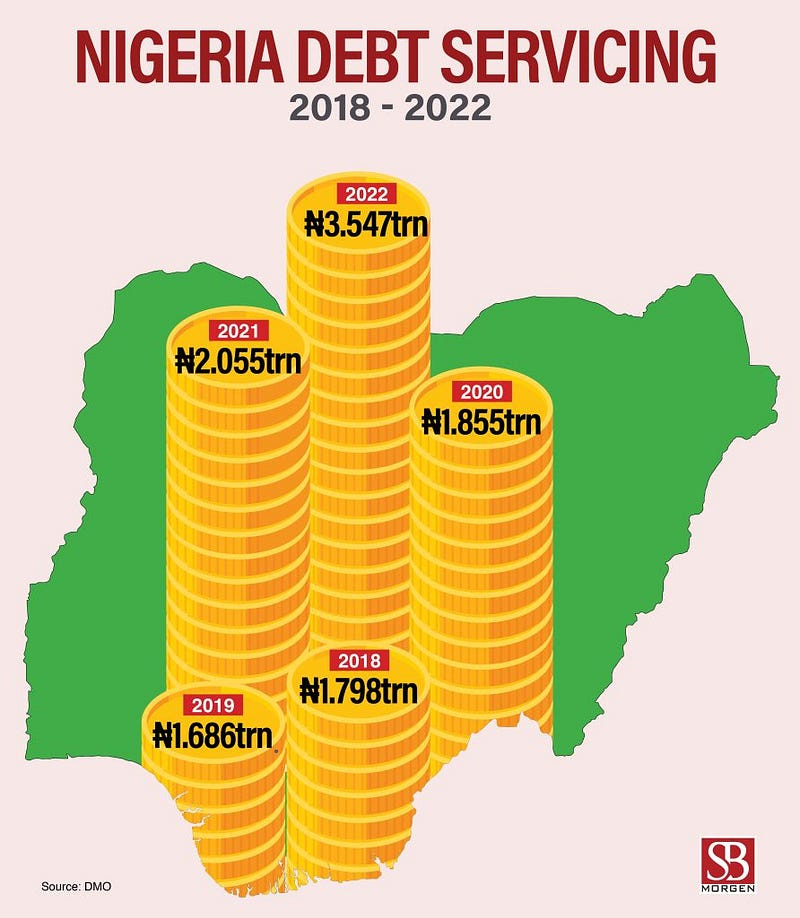
NEITI’s figures constitutes 30% of the government’s annual budget. Every year, NEITI publishes the audit report, but it seems that the government is either powerless or it refuses — the likelier driver — to act. Recently, the NNPC announced it had done a debt deal of $3 billion in order to prepay future taxes to the federal government to enable it to stabilise the Naira. The deal eventually failed to materialise. The key question to ask is why the NNPC is borrowing to pre-pay future taxes when it owes the government arrears. Former British Prime Minister Winston Churchill once described Russia as “a riddle, wrapped in a mystery, inside an enigma.” Perhaps this is the best way to describe the Nigerian oil and gas industry, led by the NNPCL and NUPRC. Despite ceasing to be an industry regulator on paper by virtue of the Petroleum Industry Act, the NNPCL continues to be an opaque behemoth that answers to few. Only recently, the NNPCL was reported to have diverted funding from the national purse to pay for petrol subsidies, which the Tinubu administration was supposed to have discontinued. A lot of figures are being brandished about without documentation or justification. It is unclear who knows what and who calls the shots within the industry. Now, President Tinubu appears to be making the same mistake that past administrations have made by not appointing a substantive petroleum minister. The industry is in dire need of transparency and accountability because Nigeria’s public sector involvement in the oil and gas sector has long been plagued by opacity and corruption. This has hindered the country’s ability to match the success of other state-led oil and gas giants, such as Saudi Arabia’s ARAMCO. The new report simply puts credible figures to a well known problem. The next logical step is to find the political will to address these concerns — a remote possibility if there ever was one. Failure to bite the bullet will ensure Nigeria continues to lag behind its peers and lack the financial muster to adress the yawning socioeconomic challenges it is beset with.