
Truce of necessity
France and Algeria restored ties after a meeting, following months of tension over Western Sahara and Algeria's actions regarding Mali.

France and Algeria have restored diplomatic ties after a two-and-a-half-hour meeting between France’s foreign minister and Algeria’s president following months of tension. Relations soured after French President Macron recognised Morocco's autonomy plan for Western Sahara. Algeria has also taken a tougher stance on Mali, banning flights due to "recurrent violations" of airspace and the downing of a Malian drone. In response, Mali, Burkina Faso, and Niger recalled their ambassadors, accusing Algeria of destabilising the region. The drone was reportedly targeting a terrorist group, which Algeria said posed a threat to the Sahel region.
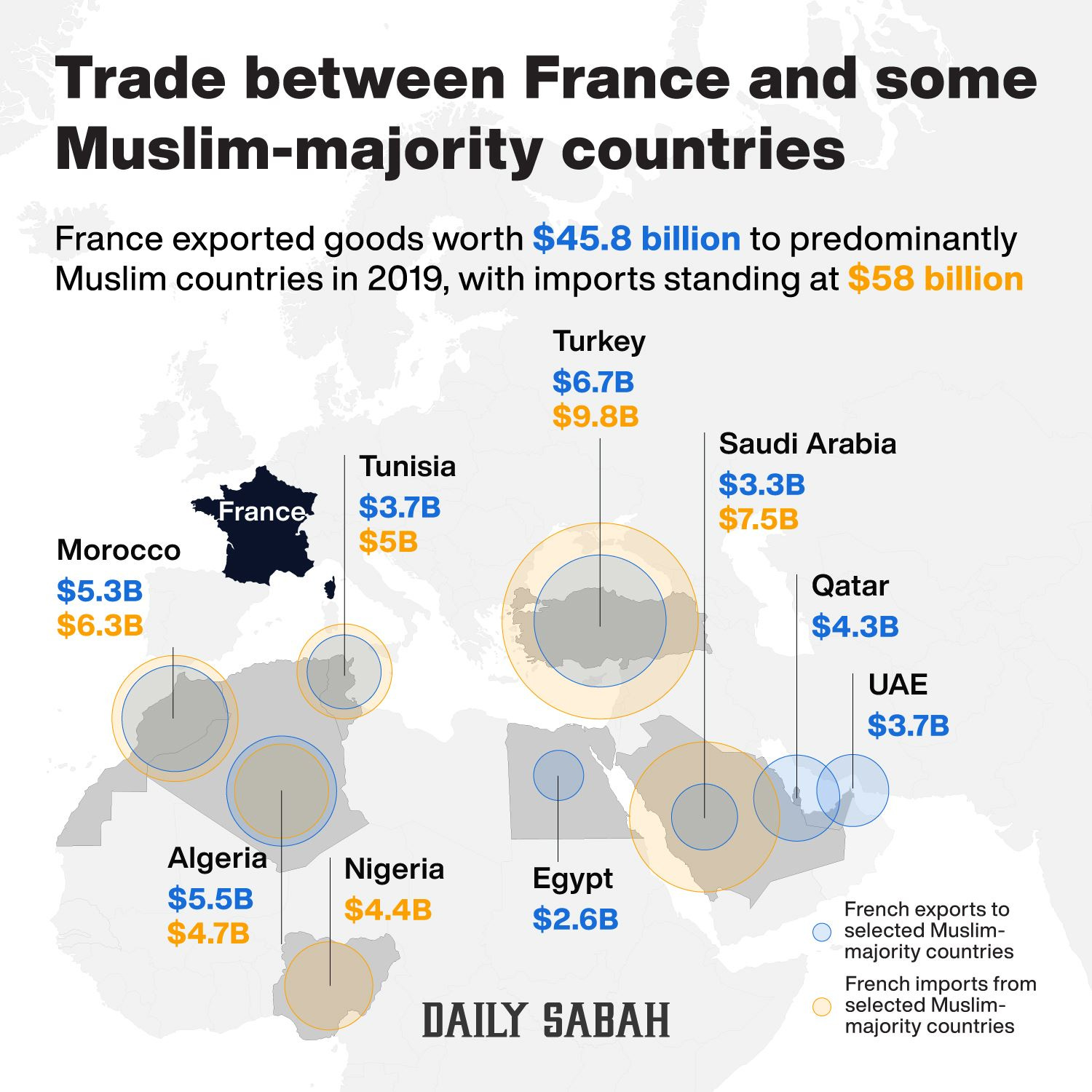
This recent thaw in France-Algeria relations—symbolised by the visit of French Foreign Minister Jean-Noël Barrot and the announcement of a return to “normal” diplomatic ties—reflects a tactical attempt to stabilise this historically fraught relationship. This thaw follows a period of heightened tensions triggered by Macron’s recognition of Morocco’s autonomy plan for Western Sahara, a move that directly contradicted Algeria’s steadfast support for the Polisario Front. President Abdelmadjid Tebboune’s meeting with Barrot signals a resumption of formal cooperation, but this is more accurately characterised as a pragmatic reset driven by mutual interdependence in areas like trade, migration control, and regional security rather than a genuine and comprehensive reconciliation.
Franco-Algerian relations have a complex history, starting with a rough start due to France’s actions during Algeria’s war of independence in the 1950s. The conflict was more than just a war; it represented an asymmetrical struggle between a colonial power and a people fighting for their right to self-determination. France, which had controlled Algeria since 1830, regarded it as an integral part of its territory, not merely a colony, and relied heavily on the pied-noir settlers (European descendants) and resource extraction to maintain its dominance. When the National Liberation Front (FLN) launched its insurgency, France responded with overwhelming force and tactics far exceeding conventional warfare.
In the aftermath of independence, France failed to fully reckon with its actions' consequences. It granted amnesty to its soldiers, downplayed the atrocities committed, and maintained a narrative of a “civilising mission” well into the 21st century. It wasn’t until 2021 that President Macron acknowledged the use of systemic torture, though he stopped short of issuing a formal apology—a move that angered Algerians, who viewed it as an evasion of accountability. The exodus of the pied-noir—nearly a million of whom fled in 1962—left a legacy of severed ties and mutual resentment between the two nations. Algeria’s national identity was forged in this struggle, and France’s reluctance to confront its colonial past has kept that wound open and sensitive.
In addition to this historical damage, Paris’s recent acknowledgement of Morocco’s sovereignty over the Western Sahara has further strained relations. The ongoing diplomatic discussions between both countries likely arise from President Macron’s effort to reset relations with France's former colonies. These talks centre on key areas of mutual interest, including security concerns, migration patterns, and energy resources—all vital interests for France as it confronts a diminishing influence in the Sahel region. Meanwhile, Algeria has been asserting its regional clout, likely pushing back against perceived French interference while simultaneously seeking to enhance its economic leverage.
However, it is notable that both sides have made limited concessions. France has not yet issued an apology for its colonial actions, and Algeria has carefully avoided addressing more contentious issues, such as the disputed Western Sahara. For example, Algeria’s state grains agency, OAIC, has notably excluded French wheat from its tenders since October—a move widely interpreted as geopolitical signalling. While OAIC asserts that all suppliers are being treated equally, it is becoming increasingly clear that food imports have become a tool of diplomatic leverage amid ongoing global supply chain instability. In truth, this situation resembles less genuine reconciliation and more a truce of necessity—France requires regional stability, and Algeria needs sustained trade and economic partnerships.
However, that stability is notably absent along Algeria’s southern border with Mali, where the security situation remains highly precarious. The drone recently shot down by Algeria was almost certainly on a mission targeting the Coalition of Azawad Movements (CMA), given the incident's proximity to the Algerian border near Tinzaouten. The CMA, which includes factions like the National Movement for the Liberation of Azawad (MNLA), seeks greater autonomy or full independence for the Azawad region. They have engaged in clashes with Malian forces and Russian mercenaries, most notably in July 2024, when they claimed to have inflicted significant casualties. The group leverages the desert's complex network of smuggling routes and its proximity to Algeria, where its fighters have historically sought refuge and support.
This recent development along the Mali-Algeria border could prove to be more consequential than either France or Algeria currently realises. Firstly, the Alliance of Sahel States (AES) stands to lose Algeria’s crucial mediation role in the region. Algeria has historically played a key role in brokering peace in the area, most notably facilitating the 2015 Algiers Accord between the Malian government and Tuareg rebels. With Mali’s junta abandoning that pact in 2024 and this recent diplomatic rupture, the AES signals a shift away from traditional Algerian influence, opting for greater self-reliance or increased reliance on Russian backing. Russia’s Africa Corps, already actively present in Mali, could deepen its involvement, offering drones and mercenary support without the conditions typically imposed by Western nations. This trend further accelerates the Sahel’s ongoing post-colonial realignment, distancing it from French and ECOWAS influence.
More broadly, this breakdown in relations poses a significant threat to the already fragile border security in the region. The Mali-Algeria frontier has long been a hub for smuggling operations and jihadist activity, with groups such as JNIM and ISGS operating across its porous borders. Without Algeria’s cooperation and involvement, existing regional counter-terrorism mechanisms, such as the defunct CEMOC, may collapse, potentially allowing militant groups greater freedom to operate. While the AES maintains that the downed drone was targeting terrorist elements, Algeria’s forceful reaction suggests a strong distrust of Bamako’s intentions or military capabilities. Although a full-scale escalation is considered unlikely at this point, the risk of unchecked chaos spilling northward across the border remains a very real possibility, posing direct security pressures on Algeria.
The regional fallout from this situation may create new opportunities for Algeria’s rivals. Morocco, engaged in a protracted cold war with Algeria over the disputed territory of Western Sahara, might quietly seek to leverage the AES-Algeria split to its advantage. Rabat could attempt to establish itself as a counterbalance to Algeria’s influence in the Sahel, although the inherent instability of the AES juntas somewhat limits the potential depth and longevity of such alliances. France continues to find itself increasingly sidelined as its traditional sphere of influence in the Sahel region steadily erodes.
Overlaying all these complex dynamics is Algeria’s growing hostility towards the Alliance of Sahel States—Mali, Burkina Faso, and Niger. The recent drone incident triggered a ban on flights to Mali, officially framed by Algiers as a necessary response to a violation of its sovereign airspace. In reaction, the AES issued strong accusations, claiming that Algeria was actively undermining counter-terrorism efforts in the region, which led to the recall of ambassadors. This breakdown in communication underscores the deeper regional disputes over fundamental strategies for managing insecurity, particularly in light of the expanding role of Russian mercenaries and Wagner Group elements.
In the final analysis, Algeria is currently walking a delicate tightrope—carefully recalibrating its foreign policy to maintain its influence in European and African spheres while simultaneously resisting deeper military entanglements with either Western or Russian security actors. It seeks to project an image of unwavering sovereignty, regional leadership, and resolute independence. The partial lifting of the diplomatic' curtain” with France is thus best understood not as a full reconciliation but as a calculated manoeuvre of convenience. In the Sahel region, Algeria remains firm in its determination to protect its core national interests and maintain its strategic depth. The true test of Algeria's diplomatic skill will be whether it can successfully navigate this complex web of relationships and tensions without further destabilising an exceptionally volatile region.