
Two decades in the making
Nigeria and Abu Dhabi Ports Group have signed an MoU to collaborate on ports and maritime logistics, strengthening economic ties with the UAE.

Nigeria has signed a memorandum of understanding with Abu Dhabi Ports Group to explore strategic collaboration in ports development, maritime logistics and digital solutions, marking a significant step in deepening economic ties with the United Arab Emirates. The agreement was signed on the sidelines of Abu Dhabi Sustainability Week, according to a statement by Osagie Edward, head of public relations at the Nigerian Maritime Administration and Safety Agency (NIMASA). Nigeria’s delegation was led by the Minister of Marine and Blue Economy, Adegboyega Oyetola, while Abu Dhabi Ports Group was represented by its chairman, Mohamed Hassan. NIMASA Director-General Dayo Mobereola was also present at the signing. The delegation later briefed President Bola Ahmed Tinubu on the strategic importance of the deal. Officials said the MoU, which has been under consideration for more than two decades, reflects renewed commitment to cooperation in the maritime and blue economy sectors.
Nigeria’s memorandum of understanding with Abu Dhabi Ports Group is best read as a signal rather than a breakthrough. It reflects a deliberate recalibration of Abuja’s approach to maritime infrastructure. The fact that this agreement was “under consideration” for more than two decades is telling. It highlights how long the country has struggled to turn its coastline into a coherent trade strategy.
The country handles between 40 and 60 percent of its cargo through congested ports. These facilities are inefficient and structurally outdated. At face value, the deal aligns with the Tinubu administration’s push to diversify growth away from oil. It aims to unlock underutilised sectors like shipping and fisheries. Abu Dhabi Ports Group brings technical expertise in modernisation and digital platforms.
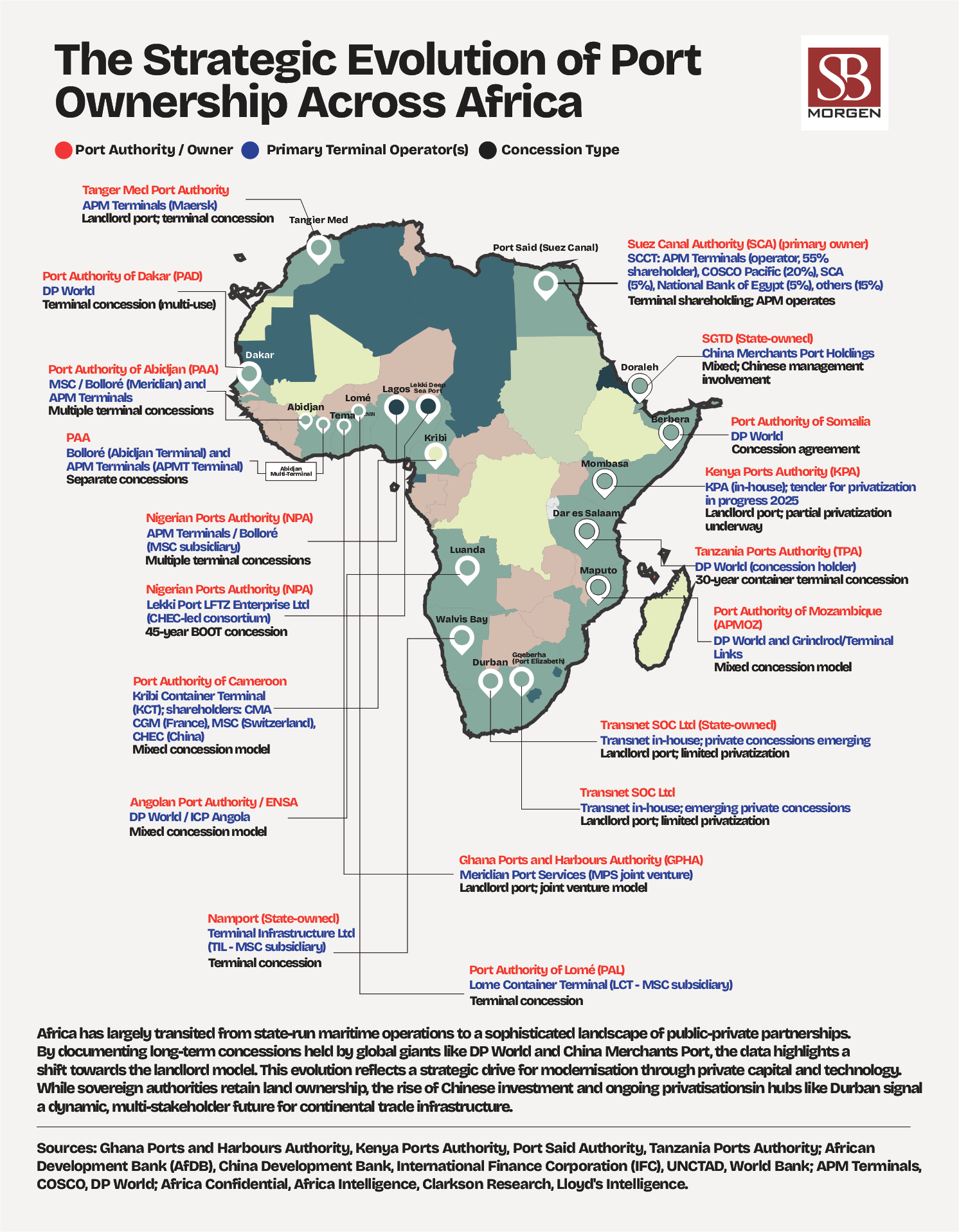
These are precisely the areas where the country’s ports are weakest. Clearance times can stretch to 20 days. The global average is just three days. Bureaucratic overlap and entrenched rent-seeking drive these delays. Even exploratory cooperation signals a recognition that incremental domestic fixes are no longer sufficient. The choice of partner is strategic. The UAE has steadily expanded its footprint across African ports, from Angola to Egypt.
They pair capital investment with operational involvement. The country needs this capital and know-how. More efficient regional hubs like Lomé in Togo are already eating the country’s lunch. They divert an estimated 15 percent of West African cargo. This costs the country about two billion dollars annually in lost trade volume. Yet, this opportunity comes with familiar risks.
Past port reforms delivered mixed outcomes. Some terminals became efficient, but others entrenched monopolies and weakened oversight. The blue economy contributes only about 1.6 percent of GDP. This is far below its potential. Governance gaps remain acute, ranging from weak enforcement of illegal fishing laws to capacity shortfalls. Security considerations further complicate the outlook.
In 2025, reported piracy incidents in the Gulf of Guinea nearly doubled. Kidnappings and hijackings now occur far offshore. The nature of attacks remains violent. This drives insurance premiums to levels about 20 percent above regional norms. These costs erode the viability of logistics investments. Institutional risks also loom. Potential disputes with entities like the NNPC could complicate asset control.
Basic infrastructure gaps, such as inadequate dredging, continue to limit vessel access. The prolonged delay of this MoU reflects these challenges. Bureaucratic inertia and diplomatic frictions, including the recent visa ban, stalled negotiations. The gap between memoranda and material outcomes remains the country’s core problem.
Investors will look beyond intent to concrete follow-through. They need clarity on concession structures and credible action against corruption. If these conditions are met, the partnership could reposition the country as a logistics hub. If not, the MoU risks joining a long list of well-articulated agreements that failed to survive the country’s delivery deficit.