
Unchecked
President Bola Tinubu has requested a $2.99 billion increase to Nigeria's 2025 budget, bringing the total to $35.96 billion, to address the country's critical challenges.

President Bola Tinubu has requested the National Assembly to increase the 2025 budget by ₦4.5 trillion, from ₦49.7 trillion to ₦54.2 trillion. The president’s request was contained in a letter read by the Senate President, Godswill Akpabio, during plenary on Wednesday. The Deputy Speaker, Benjamin Kalu, also read the letter at the Federal House of Representatives. Tinubu attributed the increase to additional revenue generated by the Federal Inland Revenue Service, FIRS (₦1.4 trillion), Nigeria Customs Service, NCS (₦1.2 trillion), and other revenue-generating agencies (₦1.8 trillion). He stated that the extra funds would help tackle Nigeria’s critical challenges.
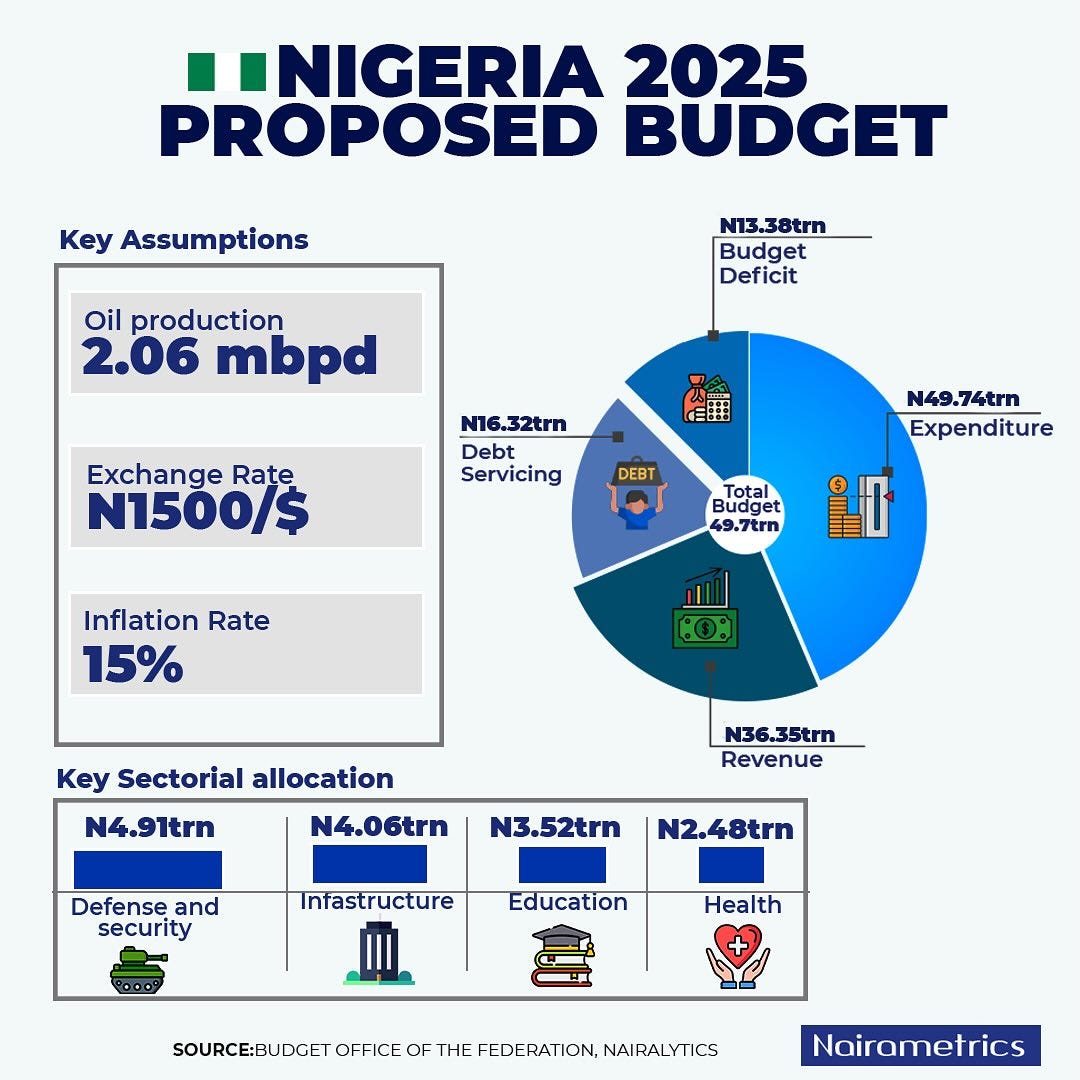
Two months into the year, the request for supplemental budgetary funds casts doubt on the credibility of the annual budgeting process. Although Nigeria's budget process seemingly adheres to established procedures, questions linger about the level of scrutiny President Tinubu's budgets receive. The proposed ₦54.2 trillion ($36.4 billion) 2025 budget, 50% larger than 2024's, presents both an opportunity and a risk. The government now has access to greater funds following significant fiscal reforms, notably subsidy removal.
However, the National Assembly's oversight of how these funds are allocated and spent appears limited. With Nigeria's budget deficit already at ₦13 trillion, there are concerns it could grow further if projected revenues fall short. The 2025 budget's oil benchmark of $75 per barrel is already being challenged by Brent crude's recent dip to $74.37. A potential increase in US oil production, driven by a "drill, baby, drill" energy policy, could further depress prices, impacting Nigeria's revenue. This could necessitate additional borrowing, raising concerns about debt sustainability.
Beyond revenue, the absence of robust accountability frameworks fuels worries about fund misallocation. Efficient management could enable investments in crucial sectors like education, healthcare, infrastructure, and security, potentially improving the lives of many poor citizens. However, the risks of misallocation, inefficiency, and a worsening fiscal crisis remain significant without adequate oversight.