
Under watch
Nigeria's SEC declares unregistered digital asset and forex platforms illegal under ISA 2025, aiming for investor protection and market integrity.

Nigeria’s Securities and Exchange Commission (SEC) has declared it illegal to operate digital asset exchanges or online forex trading platforms without registration, under the newly enacted Investments and Securities Act 2025 (ISA 2025). Signed into law by President Bola Tinubu, the Act expands the SEC’s regulatory scope to cover digital finance, aiming to enhance investor protection and market integrity. The SEC urges unregistered operators to consult its HOD DRM Department for guidance to avoid sanctions. SEC Director-General Dr Emomotimi Agama hailed the legislation as a milestone for creating a more inclusive and resilient capital market while balancing innovation with oversight.
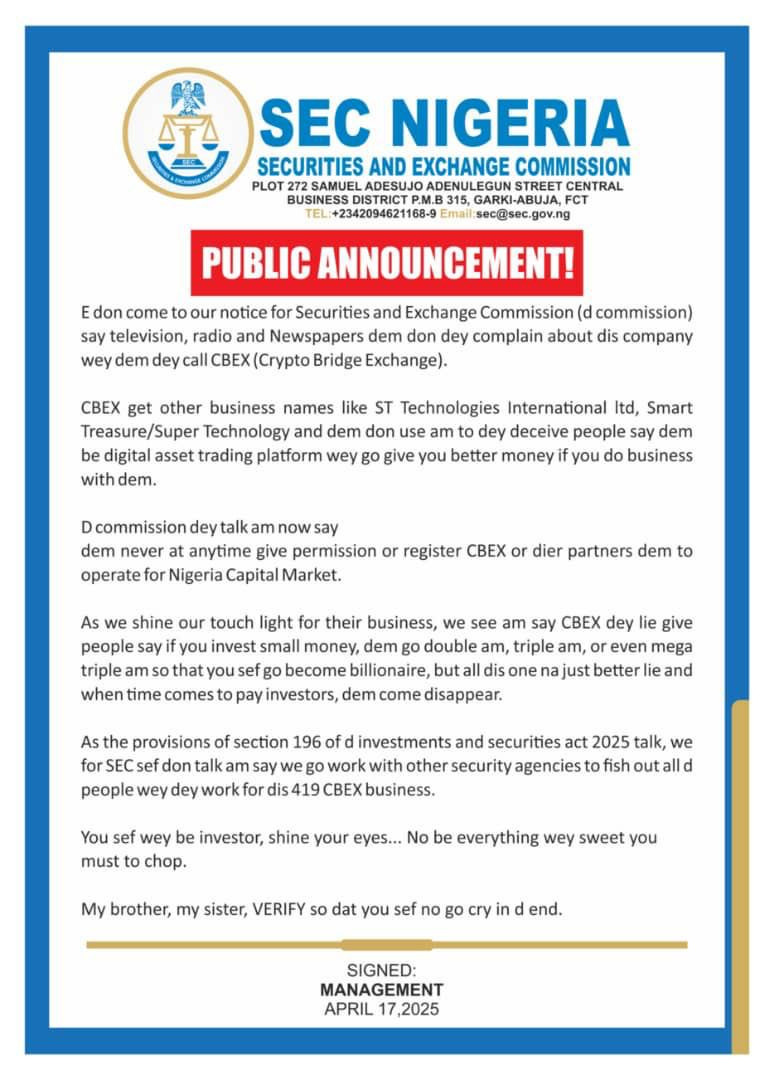
This regulatory development marks a significant step forward for Nigeria’s financial markets. By providing clearer rules, it helps level the playing field and reduces risks for legitimate traders and service providers. However, the Securities and Exchange Commission (SEC) must now enhance its public engagement with investors and platforms seeking to operate within the regulated space.
As the sole regulator with statutory authority and technical expertise to assess firms' credentials, the SEC plays a pivotal role. Its oversight ensures market participants meet required standards and maintain robust investor protections. This responsibility has grown increasingly urgent following incidents like the CBEX collapse, where many Nigerians were misled into believing they were using a government-approved platform. The platform's SCUML (Special Control Unit Against Money Laundering) certification created a false impression of legitimacy, despite its complete lack of SEC registration – the only legal authorisation for capital market activities.
The timing of the Investments and Securities Act (ISA) 2025 could hardly be more opportune. This legislation substantially bolsters the SEC's powers to combat Ponzi schemes and other fraudulent financial operations. Yet challenges persist: too many Nigerians remain susceptible to these scams, lured by promises of extraordinary returns. When greed overrides caution, regulators often find themselves addressing crises only after substantial harm has occurred.
Looking ahead, a successful path requires a harmonious interplay of three key elements. Firstly, there must be a proactive and widespread effort to educate the public about the inherent risks associated with investment. This means clear, accessible information disseminated widely to ensure individuals are equipped to make informed decisions and understand the potential downsides. Secondly, robust and unwavering regulatory enforcement is paramount. The rules and frameworks established must be applied rigorously and consistently to deter illegal activities and maintain the market's integrity. Finally, transparent and timely communication from regulatory bodies and other relevant authorities is essential. Providing clear updates, guidance, and warnings promptly builds trust and empowers investors to navigate the financial landscape with greater confidence. These three aspects, working together, form the bedrock of a safer and more resilient investment environment.
Only through this combined approach can Nigeria safeguard investors and sustain confidence in its capital markets. The framework now exists – its effective implementation will determine whether this regulatory progress translates into genuine market protection.