
Unfinished business
The ICPC Chairman, Dr Musa Adamu Aliyu, disclosed that the commission has tracked over 5,000 uncompleted projects worth ₦74 billion since…

The ICPC Chairman, Dr Musa Adamu Aliyu, disclosed that the commission has tracked over 5,000 uncompleted projects worth ₦74 billion since 2019. After signing an MoU with BudgIT Foundation to enhance transparency in publicly funded projects, Aliyu said that contractors must return to sites to complete these projects. Through the Constituency and Executive Projects Tracking Group (CEPTG), ICPC continues to hold defaulters accountable, with some already arraigned. Aliyu urged Nigerians to report issues concerning constituency projects, assuring that the commission and relevant authorities would address them to ensure project completion and accountability.
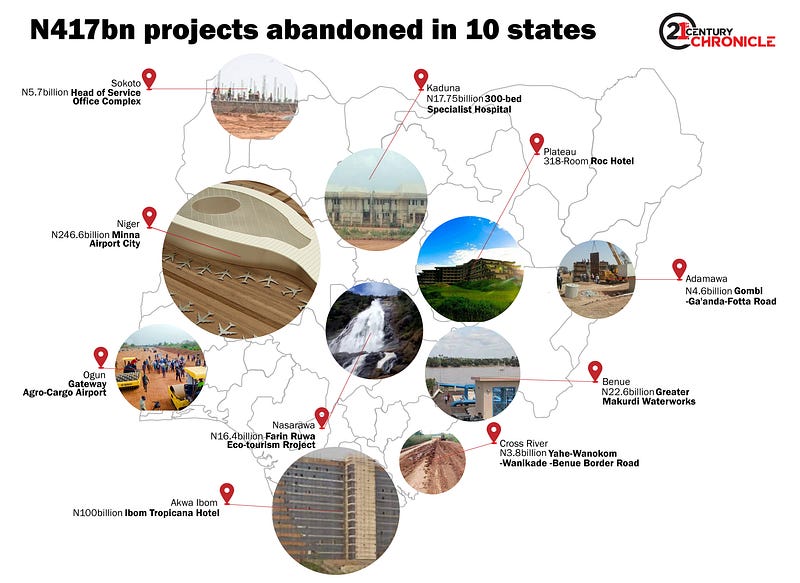
Dr Musa Adamu Aliyu’s revelation sheds light on the entrenched issues of inefficiency and corruption in Nigeria’s public sector and the absence of consequences for bad actions. It shows the lack of integrity and accountability from the previous administration. Notably, this disclosure came from a government organisation rather than private entities like Tracka and BudgIT, which have traditionally exposed uncompleted projects. This shift could pressure project defaulters to complete capital projects. The alarming scale of uncompleted projects underscores the urgent need for more robust mechanisms to manage public resources. To say that the Nigerian political system is wasteful is an understatement. Nigerian politicians buy their way into office and prioritise appearance over substance. They focus on photo opportunities during project commissioning rather than assessing the actual impact of these initiatives on citizens. This is compounded by the unusual practice of allocating funds directly to legislators for constituency projects, resulting in thousands of abandoned initiatives despite funds being fully disbursed to contractors. The ICPC’s effort, mainly through the Constituency and Executive Projects Tracking Group (CEPTG), is commendable as it highlights the importance of proactive monitoring. However, to tackle the systemic issues effectively, the ICPC must also hold accountable the politicians who awarded these contracts without ensuring their completion. Enhancing these efforts with real-time monitoring tools and greater citizen engagement is essential to sustaining success. Technology offers a powerful solution to the challenges of transparency and oversight. Publicly accessible dashboards and geospatial mapping tools could allow citizens to monitor the progress and status of projects in their communities, fostering accountability from contractors and public officials alike. Leveraging artificial intelligence and data analytics to detect irregularities in budgeting and project execution would also help identify and address issues early in the process. By integrating these technological innovations into its strategy, the ICPC could strengthen its ability to ensure public projects are completed on time and within budget. Legal and policy reforms are also critical. Stricter penalties for defaulting contractors and complicit public officials could serve as a deterrent, but these penalties must be coupled with reforms in procurement processes to ensure transparency and competitiveness. For instance, requiring contractors to post performance bonds would provide financial guarantees for project completion, reducing the likelihood of abandonment. At the same time, independent audits of uncompleted projects would provide insights into systemic issues, laying the groundwork for comprehensive reforms. Community engagement and citizen education are equally important. Grassroots awareness campaigns can empower citizens to hold contractors and officials accountable, fostering a culture of civic responsibility. Social audits, where communities actively participate in project monitoring, can ensure that projects align with local needs and expectations. Partnerships with organisations like BudgIT Foundation amplify this approach, bridging the gap between citizens and institutions. Institutional collaboration remains vital to addressing these challenges. The recent Memorandum of Understanding (MoU) between the ICPC and BudgIT is a promising step, but its success depends on clear metrics for impact and scalability. Expanding such partnerships to include other stakeholders, such as civil society organisations, anti-corruption agencies, and the private sector, would create a more robust accountability ecosystem. Legislative bodies must also oversee the projects benefiting their constituencies. To build public trust, the ICPC must be transparent about its successes. Highlighting completed projects and recovered funds showcases the commission’s achievements and reassures citizens that anti-corruption efforts are yielding tangible results. Over time, institutionalising these practices through comprehensive anti-corruption training for public officials and fostering a culture of integrity within government institutions will be crucial.