
Unruly beginnings
Nigerian opposition leaders plan to unite under ADC for 2027 presidency. Talks are near finalisation, despite a chaotic meeting requiring security intervention.

Ralph Nwosu, National Chairman of the African Democratic Congress (ADC), says that talks on forming an opposition coalition to adopt the ADC as a unified platform against the ruling All Progressives Congress (APC) in the 2027 presidential election will be finalised soon. Key figures, including Atiku Abubakar, Peter Obi, and Rotimi Amaechi, attended a Sunday meeting in Abuja to advance the alliance. However, the session turned chaotic when Babachir Lawal’s nomination of a speaker for Jigawa State led to objections from other Jigawa delegates, who stormed the stage. Security operatives, including DSS agents, had to intervene to restore order and prevent further disruption.
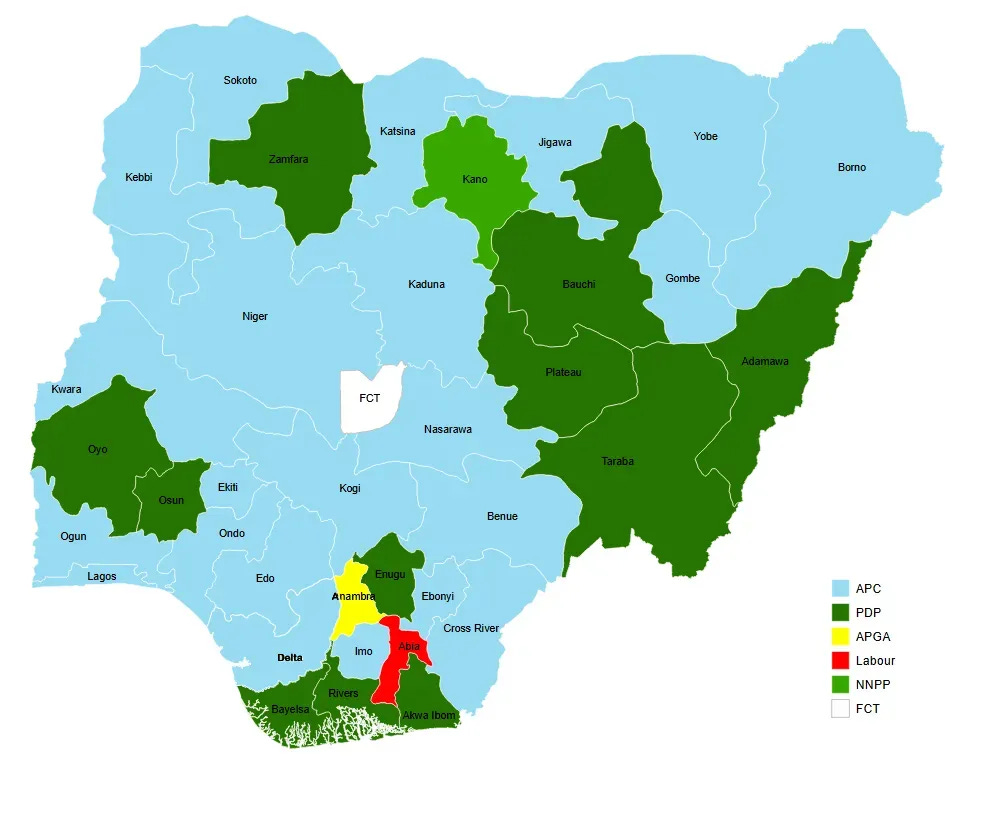
Nigeria's potential opposition coalition, coalescing around the African Democratic Congress (ADC) to challenge the ruling All Progressives Congress (APC) in 2027, marks a significant political development whilst simultaneously revealing the country’s democratic fault lines. This ambitious initiative aims to recalibrate Nigeria’s political trajectory by uniting fragmented opposition blocs – each with its ideological DNA, political base, and strategic calculations – into a credible alternative capable of dislodging the APC from power. However, the recent disruption at Sunday’s high-profile meeting in Abuja not only underscores the coalition’s fragile foundations but also hints at deeper sociopolitical frictions that could define its fate.
The inclusion of heavyweights such as former Vice President Atiku Abubakar, Labour Party’s 2023 presidential candidate Peter Obi, and ex-transport minister Rotimi Amaechi signals a serious political overture, attempting to transcend individual party loyalties and personalities in favour of a united front. The choice of the ADC as the potential vehicle for this alliance is intriguing. Although historically a fringe party with limited electoral success, its neutral standing may make it an acceptable compromise for power brokers reluctant to submit to larger, more established opposition platforms, such as the PDP or LP. However, adopting a relatively obscure platform also raises questions about the coalition’s capacity to mobilise the grassroots machinery, financial resources, and national visibility required to match the APC’s political behemoth.
The Abuja meeting’s disruption, sparked by an intra-delegation squabble involving Jigawa state representatives, points to more than just logistical or procedural failings. It highlights unresolved tensions of political representation, regional sensitivity, and the contest for voice within Nigeria’s multi-ethnic and multi-polar landscape. The swift intervention of security forces may have restored order, but the incident reflects a deeper challenge: the opposition’s need to establish a coherent, unified identity without erasing the legitimate diversity of its members. If the coalition cannot even agree on who speaks for a state delegation, how will it decide on a common manifesto, a single presidential candidate, or a power-sharing formula that respects all parties?
Moreover, the coalition’s prospects are entangled with the reputational baggage and political histories of its key architects. Atiku Abubakar and Peter Obi, for instance, both claim national recognition and reformist credentials, but they also share overlapping constituencies and an unresolved rivalry from the 2023 elections. Rotimi Amaechi, a former APC insider, introduces another layer of complexity, potentially aiming to reposition himself whilst navigating the trust deficit often associated with political defectors. These actors must now answer a difficult question: can they subordinate personal ambition to collective interest? Nigerian politics is replete with the ruins of previous coalitions that failed for precisely this reason.
Still, these talks represent a meaningful evolution in opposition politics. By beginning negotiations early—more than two years ahead of the next general election—the opposition signals an awareness of the strategic groundwork necessary to challenge an entrenched incumbent. The 2023 elections demonstrated that no single opposition party could unseat the APC on its own, despite growing discontent with governance and economic hardship. A coordinated bloc, especially one that can harmonise the North-South divide and address youth dissatisfaction, could prove a potent force in 2027.
The "elephant in the room" for any coalition talk is undeniably the choice of flagbearer for the presidential elections. Former Vice President Atiku Abubakar's presidential ambition remains very much alive, and he would naturally seek to head the ticket, viewing 2027 as his last realistic opportunity given his age. Yet, Peter Obi’s significant presence introduces pressure for him to lead the ticket, as his widespread support is largely personal and unlikely to translate if he is not at the helm. This is the crucial conundrum the coalition must navigate. Furthermore, if the ticket selection proceeds to open primaries, a key question arises: will those who lose out be disciplined enough to remain within the coalition and not defect to run under another party? The simple arithmetic often employed, adding the electoral performance of the PDP and LP from 2023 as a projection for a contest against Tinubu in 2027, fails to account for a critical factor: Tinubu is now the incumbent president and has consolidated power, rendering the APC significantly stronger heading into 2027 than it was in 2023.
Ultimately, the promise of this coalition rests on its ability to transform a loose constellation of personalities into a disciplined, policy-driven alternative. That means navigating ethnic representation without descending into parochialism, resolving disputes through consensus rather than disruption, and communicating a vision of governance that feels fresh, inclusive, and actionable. The coming weeks, when Ralph Nwosu indicates the coalition talks will be finalised, will be pivotal. The coalition’s leaders must decide whether they are building a true movement or merely rehearsing familiar political theatre. Nigeria, gripped by insecurity, inflation, and governance fatigue, deserves the former.