
Up in arms
Petroleum tanker drivers under the Ghana National Petroleum Tanker Drivers Union (GNPTDU) declared a sit-down strike on Monday over the…

Petroleum tanker drivers under the Ghana National Petroleum Tanker Drivers Union (GNPTDU) declared a sit-down strike on Monday over the deplorable condition of the Tema Oil Refinery to Kpone Road. The union’s chairman, George Teye Nyaunu, said the strike will continue until the situation is addressed. In a related development, the Coalition of Individual Bondholders Groups, made up of the Individual Bondholders Association of Ghana (IBHAG) and Individual Bondholders’ Forum (IBF), has notified the Ghanaian government that members of the group will picket the Ministry of Finance from Thursday, 6 July 2023, to demand payments of their bonds.
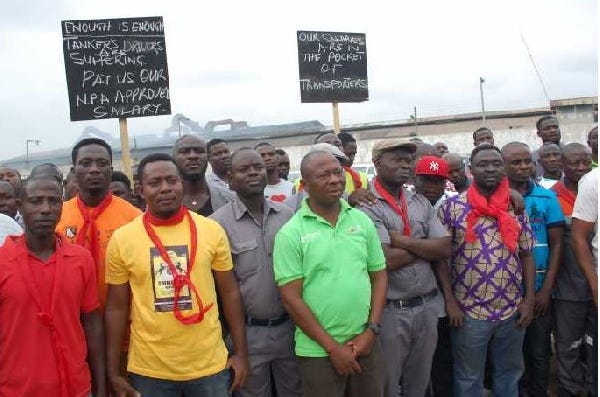
The Ghanaian government has encountered a tumultuous start in July, as unexpected industrial actions have caused significant challenges. Strikes, picketing and threats of power cuts have plagued the government, demanding compliance with various agreements. The first blow came with the petroleum tanker drivers’ strike, which started due to the poor condition of roads used to transport petroleum products, which caused fuel shortages in some parts of Ghana and came after the GNPTRU had spent years demanding that the government fix the roads that were causing damage to their vehicles, putting drivers at risk of accidents, and making the supply of petroleum products harder and costlier. Although the strike was relatively short-lived, lasting less than 72 hours, it required the government to engage in two hours of intensive negotiations with the Tanker Drivers Union to bring the industrial action to an end. It is worrying that a federal government has to face a strike action to be persuaded of the importance of maintaining crucial infrastructure that keeps its economy running. Unsurprisingly, the government’s respite was short-lived, as a coalition comprising the Individual Bondholders Association of Ghana (IBHAG) and Individual Bondholders’ Forum (IBF) announced their decision to picket at the finance ministry. Their demands centred around the government fulfilling payments for maturing coupons and principals. Initially granted voluntary exemption from participating in the Domestic Debt Exchange Programme, the coalition insisted on a complete exemption similar to the type given to pension funds. Despite weeks of protests and negotiations, the group was informed that its members could voluntarily choose not to participate in the debt treatment scheme. Financial experts expressed concerns over the challenges of paying coupons and principals to individuals and institutions opting out of the programme. Data from the finance ministry revealed that over 31 billion cedis ($2.8 billion) worth of restructured bonds were expected to mature this year, accompanied by associated interest payments. But for a successful domestic debt treatment, the Ghanaian government was obligated to service interest payments on domestic loans, amounting to over 31 billion cedis in 2023 alone. Consequently, the government faced an expenditure burden of 62.3 billion cedis ($5.7 billion) solely for domestic debt servicing in the 2023 fiscal year. The amount required to address Ghana’s debt crisis in 2023 alone is nearly twice the anticipated sum to be received under the three-year International Monetary Fund (IMF) Extended Credit Facility Programme. This places Ghana in an exceedingly precarious fiscal position. To overcome this substantial debt burden, Accra must take proactive measures to reach agreements with all domestic and external creditors. Failing to do so would likely lead to further downgrades from credit rating agencies, exacerbating the country’s financial challenges.