
Victory for reforms
Tinubu's four tax reform bills passed the Senate. 1 They'll be harmonised with the House's versions before going to the President.

Nigeria’s Senate has passed all four tax reform bills proposed by President Bola Tinubu, aimed at overhauling Nigeria’s tax administration system. Initially, two bills — the Nigeria Revenue Service Establishment Bill and the Tax Administration Bill — were passed on Wednesday following the review of a report by an ad-hoc committee led by Senator Sani Musa. On Thursday, the remaining two — the Nigeria Tax Bill 2024 and the Joint Revenue Board Establishment Bill — were approved. Senate President Godswill Akpabio announced that a harmonisation committee will align the Senate’s versions with those passed by the House, ahead of presidential assent.
There are no surprises here. As has been repeatedly noted, the tax reform bills are central to President Tinubu’s governance agenda, political strategy, and legacy-building efforts. Securing their passage was a priority, demanding and receiving significant political capital from the President. The intended outcome of these reforms is a fundamental reshaping of Nigeria’s political economy, primarily through a shift in revenue collection responsibilities. This move seeks to address the long-standing issue of traditional revenue agencies facing a conflict of interest, where the pressure to generate revenue has often overshadowed their core regulatory or service delivery mandates.
A key element of this restructuring is the establishment of the Joint Revenue and Budget Enforcement (JRBE) agency, a powerful new body whose leadership is already anticipated to be a highly influential position within Nigeria's political landscape. However, the crucial question remains whether the envisioned improvements in efficiency, the expansion of tax revenue, and the streamlining of administrative processes will indeed materialise. Ultimately, the success of these reforms in delivering tangible benefits for the country is what truly matters.
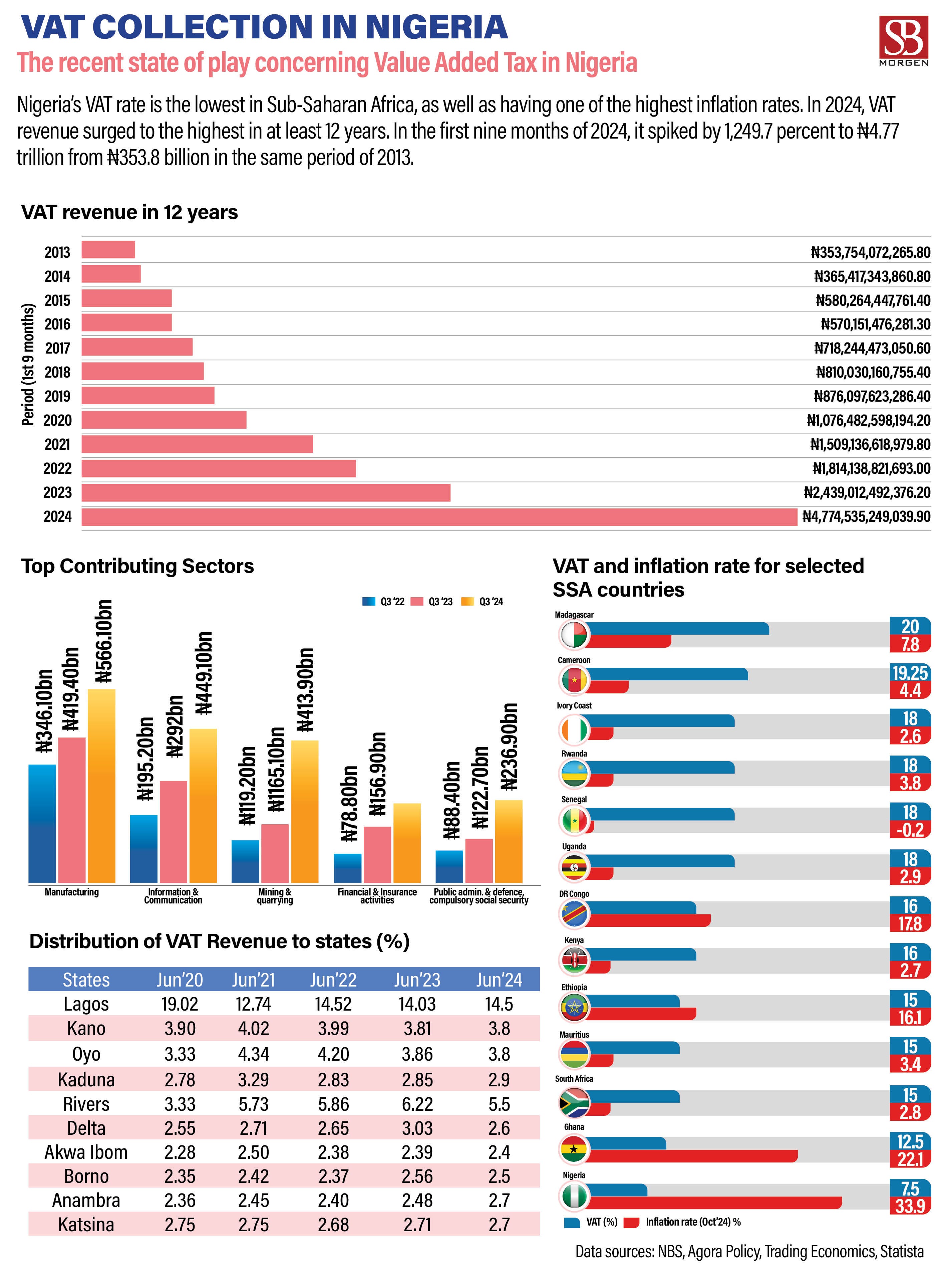
Nigeria's persistent reliance on borrowing is underscored by deeply concerning debt sustainability indicators. The debt-to-GDP ratio has reached a significant 50% milestone, while ongoing discussions revolve around the true extent of the debt service-to-revenue ratio, following the alarming 90% figure reported under the previous administration. Nigeria's stubbornly low tax penetration, estimated to be below 20%, is a fundamental driver of this reliance on debt. The tax reform bills are strategically designed to tackle this issue by expanding the tax base and, as we noted last December, potentially formalising a significant portion of the informal economy. This formalisation could bring a substantial number of currently untaxed individuals and businesses into the tax net.
Furthermore, the reforms simplify the tax system, making compliance easier for taxpayers and potentially reducing the administrative burden. There is a potential for increased digitalisation in tax administration, which could enhance transparency and reduce opportunities for corruption. However, as is frequently the case in Nigeria, the true test lies in the effective implementation of these well-intentioned reforms. The establishment of the JRBE and the envisioned changes to tax collection mechanisms will require robust institutional frameworks, skilled personnel, and a strong commitment to transparency and accountability to succeed. Only time will reveal whether these ambitious tax reforms will translate into the desired impact on Nigeria's fiscal health and overall economic development.