
Violence rocks Bawku
A deadly attack in Bawku, North Ghana, resulted in at least six deaths as gunmen ambushed a market-bound bus in the Binduri District. The…

A deadly attack in Bawku, North Ghana, resulted in at least six deaths as gunmen ambushed a market-bound bus in the Binduri District. The assailants indiscriminately fired on passengers. Hamza Amadu, Bawku’s Municipal Chief Executive, acknowledged the casualty count might escalate. This follows a recent incident on 19 January, where a bus carrying around 45 students from the Presbyterian Nurses Training College, Bawku, was attacked by two gunmen on motorcycles near Binduri, causing multiple student injuries. The injured were swiftly taken to Bawku Presbyterian Hospital for medical attention.
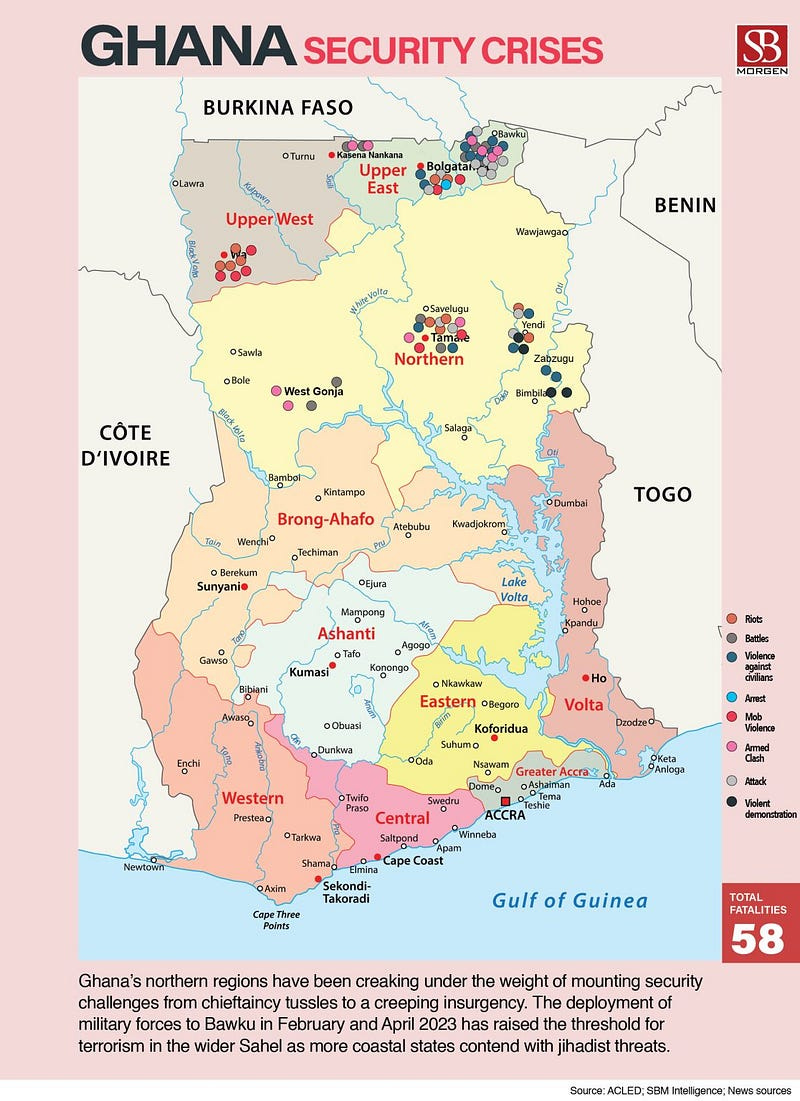
Less than 46 weeks before Ghana’s presidential and parliamentary elections, the long-standing issue of indiscriminate killings in Bawku has resurfaced, causing widespread concern. The conflict, which has been ongoing since before Ghana’s independence in 1957, has resulted in numerous deaths and destruction of property. In less than two weeks, 14 people have been killed and many others injured in the latest outbreak of violence. Reports from the 11 Mechanised Battalion deployed by the Ghana Armed Forces (GAF) in Bawku indicate that factions in the conflict appear to have resumed the escalation of violence with fatal consequences, and the current streak of violence began on Friday, 12 January 2024. The conflict is primarily between the Mamprusi and Kusasi tribes. ECOWAS estimates that Ghana has more than two million small arms and light weapons in circulation, and experts have indicated Bawku is a hotspot harbouring some of these weapons. In fact, the Bawku conflict has moved beyond just ethnic misunderstanding, becoming underpinned by political influence and the illicit trade of arms and gradually attracting terror attacks. A digital forensic analysis has revealed that leaders and perpetrators of the violence have social media groups where they track and celebrate killings. Since security is tight in the Bawku township, a lot of the indiscriminate killing, including the one involving market women, took place outside the main perimeters of Bawku, and this could have a snowballing effect on other tribes. The conflict has also affected the voter registration exercise. From a wider perspective, one defining point of the 2022/2023 security year is democratising the violent insecurity sweeping across West Africa. Between 2012 and 2021, the violence by armed groups was confined to some landlocked countries such as Mali, Burkina Faso and Niger, with Nigeria being the only coastal state suffering such violence. In the past two years, however, the Jihadists have made somewhat successful inroads into more coastal states south of the Sahel, targeting Ghana, Togo, Ivory Coast and Benin. These countries have in common that for now, the violence has been largely confined to the northern parts of the states concerned. In Ghana, Bawku, an area housing a bulk of the country’s Muslim minority population, is the most affected, Since January 2023, terrorists in Burkina Faso have attacked civilians and pro-government militias in the Boulgou Province, forcing thousands of people to flee to Ghana. In response, Ghana deployed 1,000 Special Forces troops to its northern border amid worries that violent extremist groups in Burkina Faso are seeking to expand their influence and territory. Many Burkinabes are entering Ghana close to Bawku, about an hour’s drive from the border. Although Ghana’s security issues will not dominate pollsters’ minds as much as the economy ahead of this year’s presidential election, the new president will have this to deal with and will have to be careful in ensuring that it does not become another Sahelian nightmare. In the meantime, the present government must find a lasting solution to prevent the conflict from escalating further, especially with the upcoming elections.