
Walking on eggshells
Niger’s junta has reversed an anti-migration law, in place since May 2015, that criminalised transporting migrants through Niger. The law…

Niger’s junta has reversed an anti-migration law, in place since May 2015, that criminalised transporting migrants through Niger. The law, aimed at curbing the flow of West Africans to Europe, significantly reduced migration but negatively impacted desert communities reliant on the economy generated by migrants. The junta, facing scrutiny over the coup, is reassessing ties with former Western allies. This move seeks to regain support, particularly in northern desert areas. While the law effectively reduced migration, its repeal acknowledged the economic strain on towns and villages that had fed and housed migrants and sold car parts and fuel to traffickers.
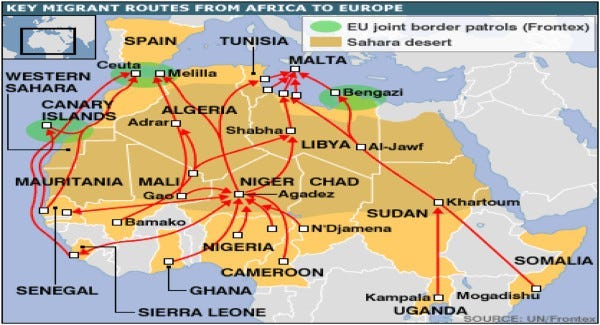
The Tchani regime is capitalising on the migrant crisis, a sore point in European capitals. Governments in France, Italy, the United Kingdom and other countries have employed various strategies to address the migrant crisis, including partnering with African governments to utilise their limited state resources to curtail migrant smuggling. Sudan under Omar Al-Bashir benefited from such deals through the Fortress Europe deal signed with the EU at the start of this century. To address its migrant and asylum challenges, the UK proposed a deal with Rwanda last year, involving the transfer of over £127 million to Rwanda to establish housing and processing facilities for migrants. This year, Italy and the EU tried to recruit Tunisia via a €900 million aid package to stop migration to Europe — a deal which has since faltered. The issue with such agreements is that they are inherently problematic and often lead to other issues, placing a moral burden on their financiers: Fortress Europe’s funding contributed to the rise of the Janjaweed (now known as the Rapid Support Forces), responsible for the Darfur genocide; Rwanda’s destabilisation of Congo is being ignored, despite its ongoing sanctions; and Tunisia’s anti-Black African discrimination remains overlooked. The Niamey regime may be seeking to leverage its strategic location to exert leverage, and by repealing this law, it intends to pressure Western allies into lifting the sanctions imposed following its 26 July coup. Interestingly, such a gimmick has worked before, and there is no reason to believe that the outcome of Niger’s attempt would be different. Having laid this context, it must be said that this decision is awkward. Rather than strategically developing economic programmes along trafficking routes, the repeal seems to subtly encourage illegal migration and human trafficking, exposing tens of thousands of Nigeriens and other Africans to risks reminiscent of the Slave Trade. Engaging with other African governments to address root causes, such as lack of opportunities and economic despair, could foster sustainable growth and discourage people from going on those perilous journeys. Niger’s decision to revoke the anti-migration law underscores the necessity for a thoughtful strategy prioritising economic development over policies inadvertently fostering illegal migration and human trafficking. Building opportunities at home would enhance the country’s economy and protect its citizens from the risks associated with illegal migration.