
The week ahead - Steering without a wheel
Energy inflation jitters wash over West Africa, the US ups visa pressure tactics and tax reforms become reality in Nigeria amid whispers of a sensational political comeback

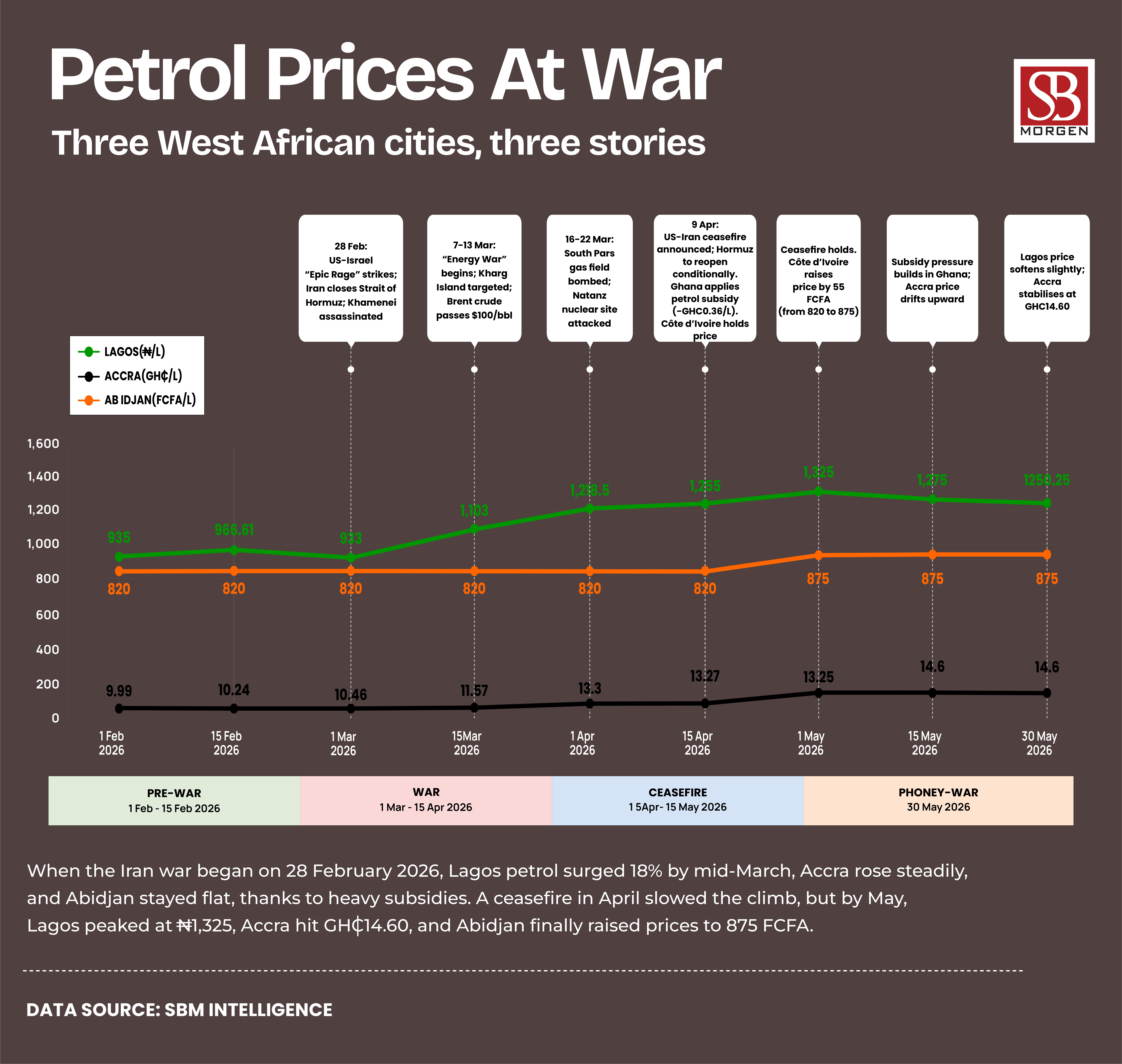
Nigeria’s PDP drafts former President Jonathan as it armour bearer who hasn’t said yes. Tax reforms take aim at a reluctant informal economy. Ghana’s fuel prices go three ways while Abidjan freezes them. America cuts visa hubs. Teachers strike but ransoms are on the cards. Nigerian business says no to a much higher minimum wage. Everyone is steering. Nobody is arriving.
Chart of the week
Podcast
You can follow our podcasts by subscribing here. In this week’s episode, Samuel Atiku talks with Veronica about Nigeria’s teacher protests, employer pushback against wage hikes, and the US plan to slash visa hubs in Africa.
Video
SBM Managing Partner Ikemesit Effiong joined NigeriaInfo FM to discuss the findings of SBM's Quality of Life report, which highlighted, among other insights, the growing affordability crisis faced by residents of Nigeria’s biggest metropolis. You can read the report here.
What we are following this week
A faction of Nigeria’s PDP will hold a special convention to ratify former President Goodluck Jonathan as its 2027 presidential candidate. He has been cleared by a court and granted a waiver, but Jonathan says he is still consulting and has not formally accepted.
Nigeria will begin implementing major tax reforms in mid-2026 under a new law and revenue service. Medium and large businesses must issue electronic invoices, while a unified taxpayer number links individuals to bank records. Small firms below ₦100 million turnover remain exempt.
From early June, Ghana expects mixed fuel price movements: petrol and LPG will rise while diesel drops slightly. Global oil prices currency shifts and policy interventions drive the outlook. The National Petroleum Authority has adjusted benchmark prices.
The United States plans to reduce African embassies and consulates processing visa applications from nearly 50 to roughly 20 from June. The Trump administration’s immigration crackdown aims to reduce overstays but will increase travel costs and wait times.
Teachers across Nigeria staged protests and indefinite strikes in late May and early June following school abductions in Oyo and Borno states. The Nigeria Union of Teachers demanded victim rescues and stronger school security, criticising unequal government responses.
Nigeria’s organised private sector says it opposes making a ₦100,000 minimum wage mandatory nationwide, arguing most SMEs cannot sustain it. Groups like LCCI and NECA call for tripartite negotiations instead, warning that forced hikes risk job losses and business closures.
Côte d’Ivoire has maintained fuel prices for June following increases in May, with diesel at 700 CFA francs per litre and petrol at 875 CFA. The government attributed May’s hikes to Middle East tensions and says its interventions continue to cushion consumers.