
The week ahead - Bridges to nowhere
Nigerian refugees return to uncertainty, fuel policy sparks concern, and Ghana's government faces union resistance. Meanwhile, a South African court dismisses "white genocide" claims.

This week’s developments reflect a pattern of building bridges to nowhere. In Nigeria, thousands of refugees returned home to little or nothing, the fuel regulator introduced a policy poised to spark new challenges, and a political bigwig fell out with his successor—all while the country gears up to finally count itself. Meanwhile, the regulatory bank held interest rates steady, though the numbers whisper a different truth. In Ghana, the government faced union resistance, while a South African court doused the flames of a false alarm.
Chart of the week
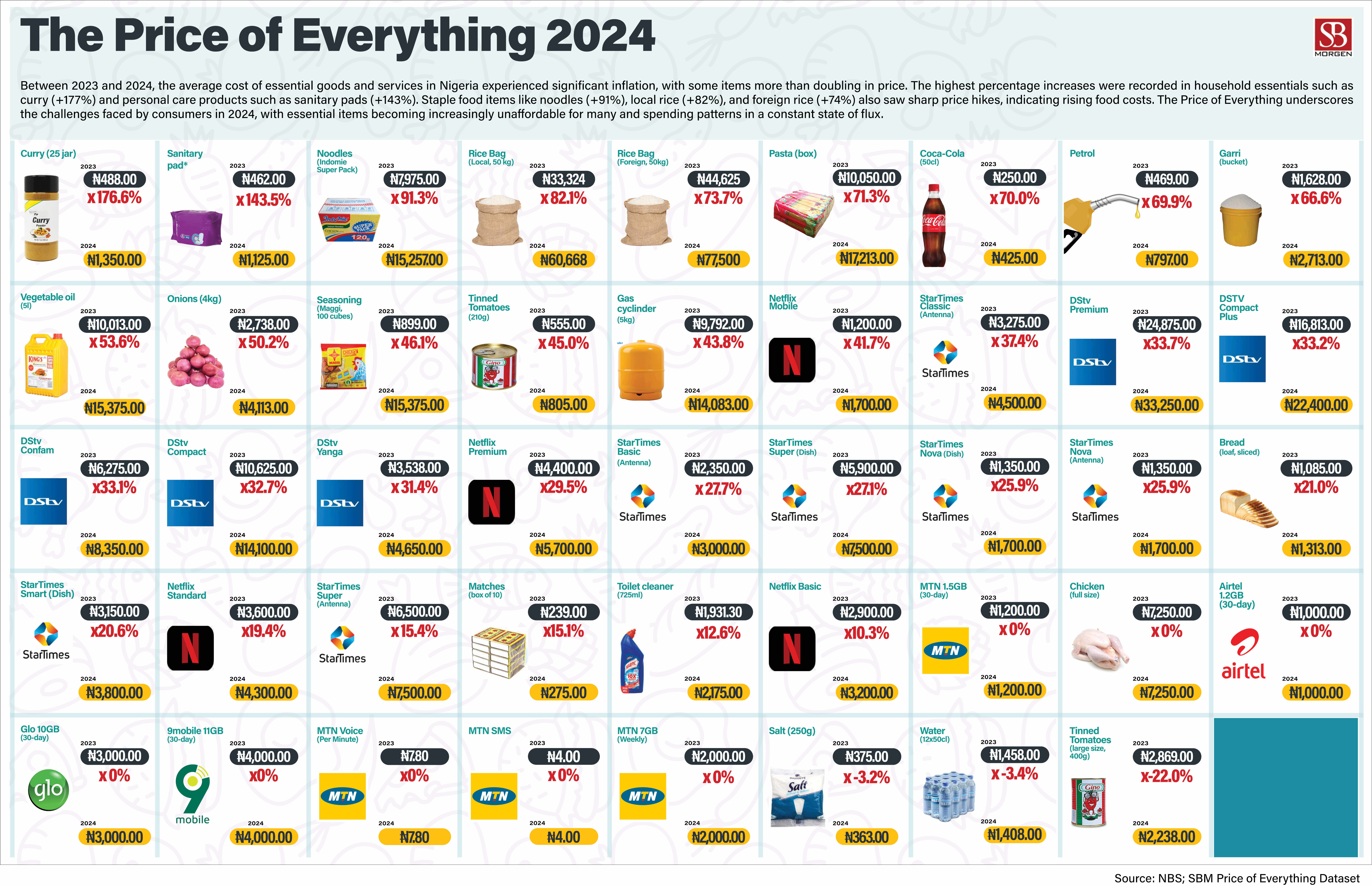
Nigeria's inflation soared to a 30-year high of 33.2% in 2024, driven by food price surges due to harvest reductions, regional insecurity, and transport costs. This eroded purchasing power, pushing 14 million into poverty. Essential goods, like curry and sanitary pads, saw dramatic price hikes, with food items dominating the inflation list. Petrol price increases fuelled transport costs, exacerbating food inflation.
The rising cost of a healthy diet and staple foods further strained household budgets. Period poverty worsened as sanitary pad prices rose, impacting girls' health and education. Conversely, telecom prices remained stable despite operational cost increases.
Food production is expected to decline further. Addressing insecurity, infrastructure, and policy weaknesses is crucial to mitigating persistent inflation and its impact on Nigeria's economic stability and social well-being.
What we are watching
The Central Bank of Nigeria held its benchmark lending rate at 27.50%, citing exchange rate stability and moderating petrol prices.
Thousands of Nigerians who fled to Chad a decade ago due to the Boko Haram insurgency are returning to Borno State.
Nigeria is gearing up for its first national population and housing census in 19 years; this time, it's going digital.
Former Kaduna Governor Nasir El-Rufai has accused his successor, Uba Sani, and National Security Adviser Nuhu Ribadu of betraying him and trying to tarnish his image. El-Rufai denied allegations of financial mismanagement and hinted at leaving the APC.
Nigeria's NMDPRA banned 60,000-litre fuel tankers from roads starting 1 March to reduce accidents. However, petroleum tanker drivers and marketers threaten a nationwide strike over unpaid debts and alleged harassment, which could disrupt essential services and potentially cause fuel and diesel shortages.
Ghana's Trades Union Congress urges President Mahama to halt the mass termination of public sector appointments. The congress cites devastating consequences for young Ghanaians, particularly teachers, nurses, and other professionals.
A South African court dismissed claims of a "white genocide," citing lack of evidence. The court also blocked a $2.1 million donation to a white supremacist group, deeming it illegal and promoting racial hatred.