
The week ahead - Fragile Gains
Nigeria's economy showed fragile gains amid telecoms growth, while Ghana's currency slid and regional bloc exited Guinea-Bissau.

This week told a story of gains—albeit fragile. As Nigeria’s economy picked up amid a telecoms surge, a revenue chief sought to preserve his agency's existence, an ousted Speaker reclaimed his seat while local governments stood still on autonomy. Meanwhile, Ghana’s currency slid further, and the regional bloc bowed out of Guinea-Bissau.
Chart of the week
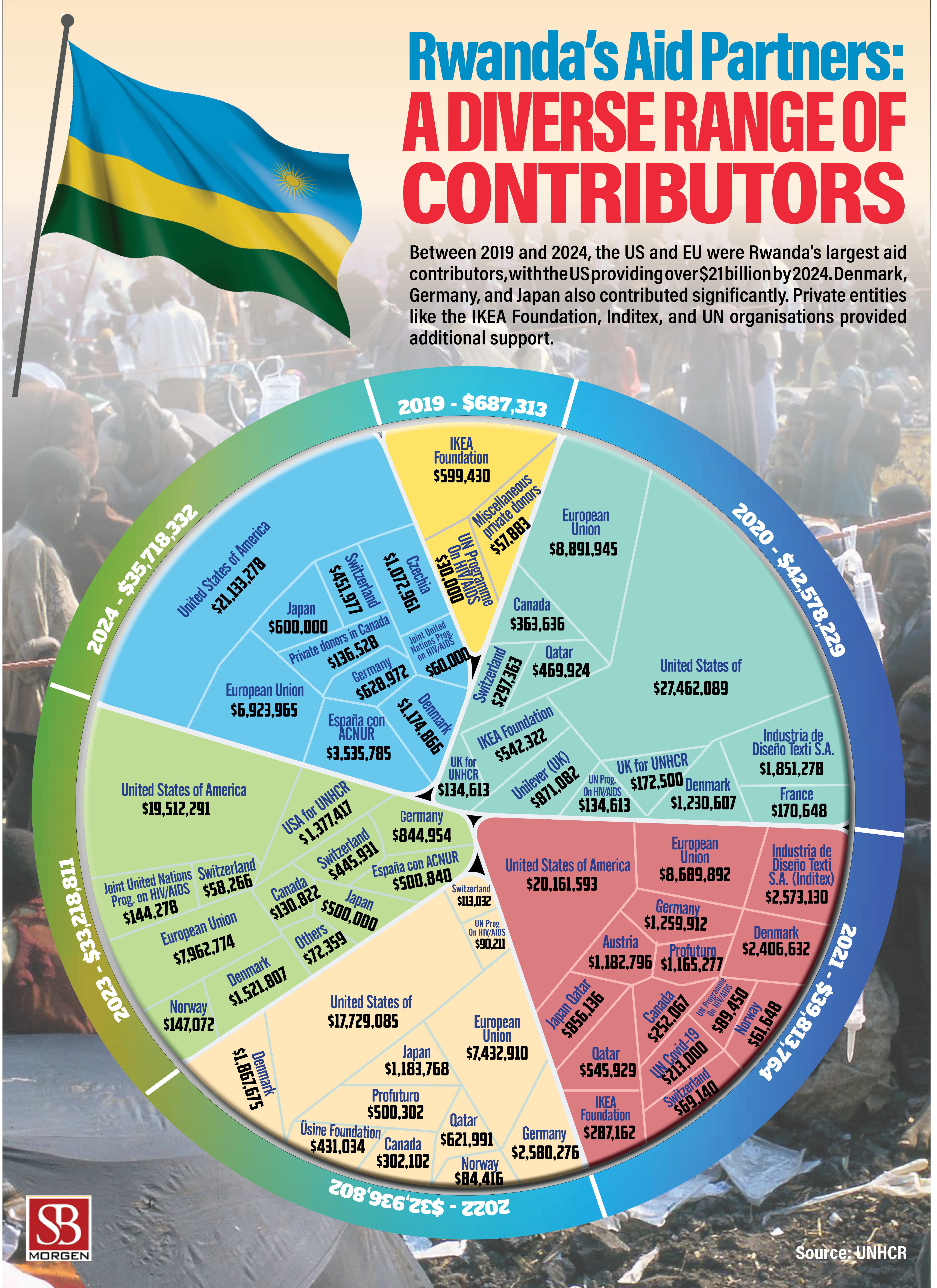
The UK has suspended some aid to Rwanda, citing its support for the M23 rebel group in eastern DR Congo, where escalating conflict has caused thousands of deaths and widespread displacement. Rwanda now acknowledges border security concerns and calls the UK’s action “punitive.” The UK’s measures include halting bilateral aid, excluding support for the most vulnerable, and considering sanctions and defence training suspension until Rwandan troops withdraw. The UN estimates thousands of Rwandan soldiers are in DR Congo. Rwanda argues the measures hinder a political solution. Previously a close ally, the UK has also ended a controversial asylum deal with Rwanda. DR Congo has lobbied for international sanctions, and the US has already sanctioned Rwandan officials and M23 figures. The M23 claims to fight for Tutsi rights and order in DR Congo, having captured key cities.
#ICYMI: Power Africa’s Demise: A Wake-Up Call for African Energy Independence
The shutdown of Power Africa, a US initiative launched in 2013 to improve electricity access in Africa, has sent shockwaves through the energy sector. The decision stems from shifting US foreign policy priorities and budget constraints. The programme's termination exposes the fragility of donor-driven initiatives and highlights the need for African countries to take control of their energy future.
Power Africa's abrupt withdrawal threatens to slow electrification efforts, creating an urgent gap. The impact extends to the private sector, as investors may hesitate to commit to African energy projects without US backing. Africa must focus on internal capacity-building and self-sufficiency in energy production and financing to drive its energy transformation.
What we are watching
Thanks to successful economic reforms, Nigeria's business activities have seen their fastest growth since 2024.
Nigeria's telecommunications sector has bounced back, with active subscriptions increasing to 169.3 million in January 2025.
Nigeria's federal allocations committee has been unable to implement direct allocations to local governments due to a lack of bank accounts.
The head of Nigeria’s Customs has warned that tax reform could dismantle the agency. Meanwhile, President Bola Tinubu signed the $36.6 billion 2025 budget into law, nearly doubling the 2024 budget in naira terms.
Mudashiru Obasa has been reinstated as Lagos Assembly Speaker after Mojisola Meranda's resignation, highlighting a deep problem with democracy at the sub-national level in Nigeria.
Ghana's Cedi depreciated 19% annually from 2022-2024 amid economic instability.
ECOWAS has withdrawn its mission from Guinea-Bissau amid an election dispute.