
The week ahead - Which strategy works?
Nigeria’s opposition splinters as petrol soars, Boko Haram kills, and regional neighbours face financial losses and attacks.

Nigeria's opposition leaders finally agreed on presenting a single candidate, then promptly disagreed on everything else. Meanwhile, in the real world, petrol prices jumped 22%, making jollof rice a luxury dish. Elsewhere, South Africans chased Nigerians home, which is awkward for bilateral trade and even worse for diplomatic dinners. Boko Haram keeps killing while Nigeria’s deradicalisation programme burns cash quietly. In the wider region, Ghana lost $1.25 billion on a gold scheme; the Ivory Coast dreamt up a $204 million plan; and Mali’s defence minister was killed in a Jihadi attack. It looks like the only successful strategy is the one taken by problems.
Chart of the week
Podcast
SBM’s Jollof Index shows that a meal now costs 43% of Nigeria’s minimum wage as energy prices soar. Nigeria seeks the evacuation of 130 citizens from South Africa after xenophobic attacks. Ghana’s bank lost $1.25bn, but currency issuance costs fell sharply.
Listen here, or search for “SBM Intelligence, the week ahead” anywhere you find podcasts.
Video
In Arise News’ Global Business Report, David Olujinmi, a financial analyst with SBM Intel, broke down the latest Jollof Index, revealing that soaring food prices across Africa aren't just market shifts but symptoms of deeper policy failures.
ICYMI
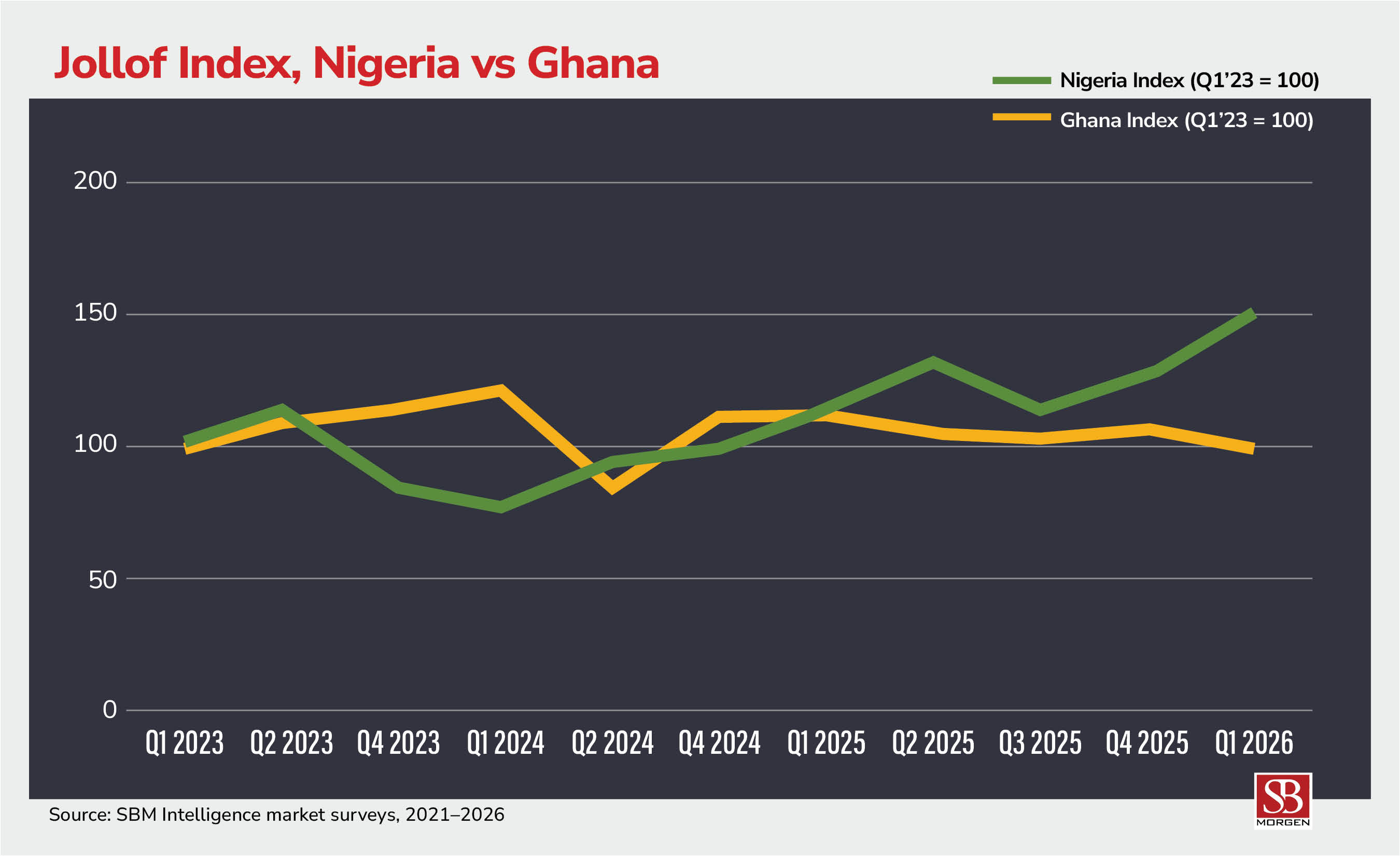
The SBM Jollof Index showed Nigeria’s jollof pot hit a record ₦30,435 amid a fuel shock, while Ghana’s real food costs eased, revealing two West African economies on sharply divergent paths.
What we’re following this week
Nigerian opposition parties, including the PDP and ADC, adopted the Ibadan Declaration to field one candidate against President Tinubu in 2027. However, Peter Obi and Rabiu Kwankwaso quit the ADC to join the NDC. Meanwhile, former President Goodluck Jonathan says he is “consulting widely” on a possible bid.
Nigeria’s energy sector faces mounting pressure as petrol prices surged over 22% in March 2026, worsening inflation and regional cost disparities. President Tinubu replaced the head of the downstream regulator, while NNPC signed a deal with Chinese firms to revive refineries. Despite OPEC membership, low output and fuel imports persist.
Nigeria escalated diplomatic action after anti-immigrant violence in South Africa killed foreign nationals and targeted Nigerian businesses. At least 130 Nigerians requested evacuation. Pretoria’s envoy was summoned, and Cyril Ramaphosa condemned the attacks, but tensions remain over migrant crime allegations and strained bilateral relations.
Boko Haram and ISWAP intensified attacks in the Lake Chad region, killing at least 20 civilians in northeast Nigeria and 23 Chadian soldiers in a separate assault. Villages were raided and looted. Meanwhile, Nigeria’s deradicalisation programme for repentant fighters is criticised for high costs, poor oversight and recidivism risks.
The Bank of Ghana reported a $1.25 billion loss in 2025, largely driven by its gold−for−reserves strategy, which boosted currency stability but created high costs. Total comprehensive losses reached $2.8 billion, widening negative equity. Despite stable inflation and lower printing expenses, analysts warn of future fiscal strain.
Côte d’Ivoire’s Senate has approved a 114.8 trillion CFA franc development plan for 2026–2030, aiming for upper-middle-income status. The plan targets 7.2 per cent annual growth, led by private investment, while the IMF has endorsed progress with a potential $843.9 million agreement.
Mali’s defence minister was killed in coordinated attacks by jihadist groups and Tuareg separatists, who struck military sites, including in Bamako. Despite interim leader Goïta remaining in control and forces retaking Menaka, northern instability and foreign troop withdrawals threaten wider Sahel destabilisation.