
The week ahead - Façade
Nigeria's challenges mount: disputed elections, ineffective recalls, northern terror, and healthcare inadequacies, while Ghana and Algeria face political strife.

This week, the facade began to show signs of strain. A defeated governorship aspirant was told he had no proof, and disillusioned constituents found that recalling a lawmaker is not as simple as ABC. While the Naira wore a mask of strength, Northerners were weakened by the terror at home even as citizens confronted the harsh reality that vaccines alone are inadequate without doctors to administer care. Beyond Nigeria, Ghana’s president pressed on with efforts to unseat the Chief Justice. France and Algeria settled into a diplomatic truce that appears more driven by necessity than true resolution.
Chart of the week
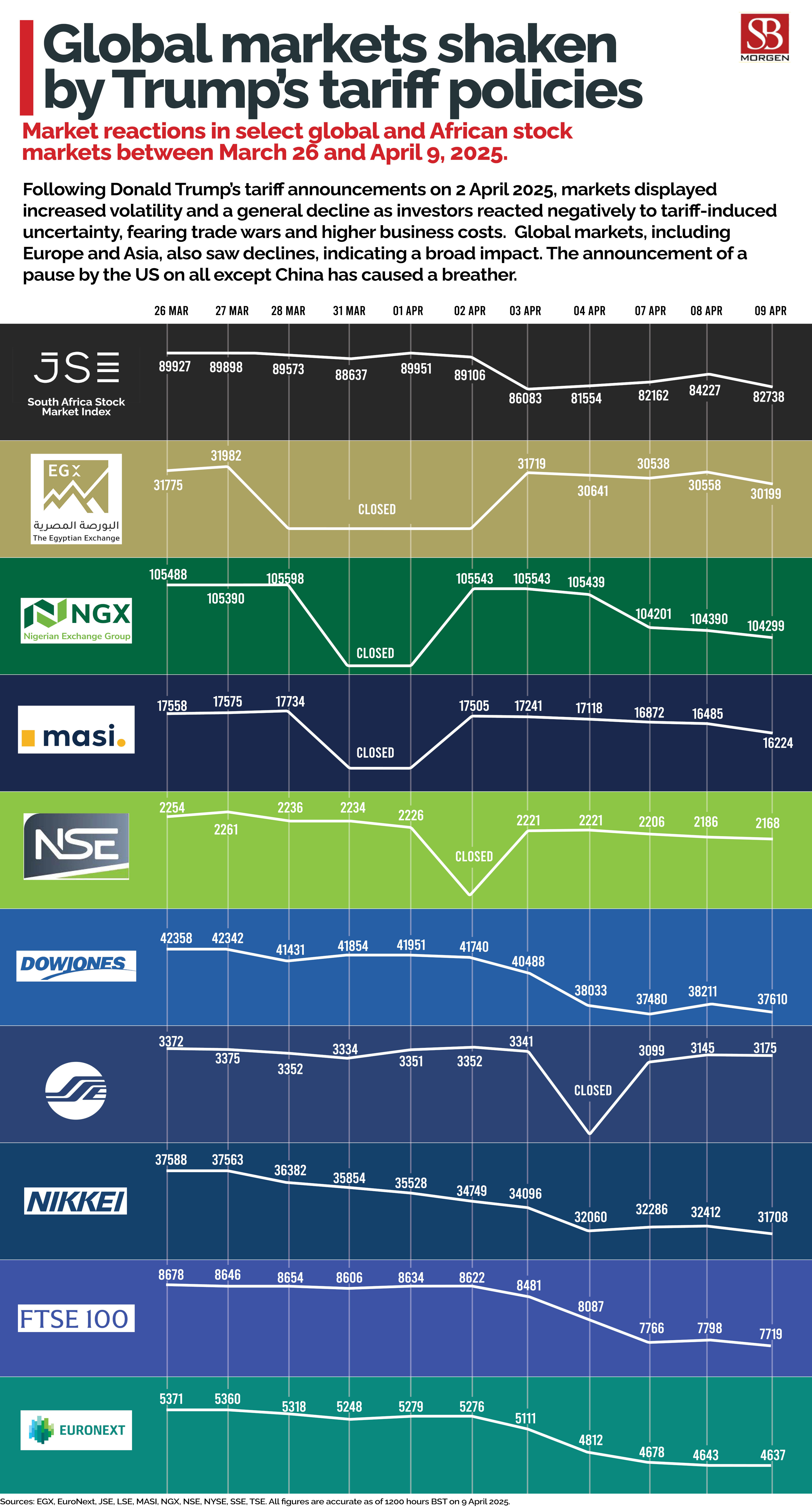
Cutting through the noise, the direct impact of US tariffs on African economies is likely to remain limited, as, in 2024, Africa accounted for less than 5% of total US imports. However, indirect effects—such as global supply chain disruptions and slower economic growth—could still pose risks, though their scale remains uncertain.
A key mitigating factor is Africa’s large informal sector, which is less exposed to global trade fluctuations. Additionally, China’s role as Africa’s top trading partner (over 20% of total trade in 2024) provides a buffer, enabling potential trade diversification away from US dependence.
While immediate tariff effects may be contained, indirect consequences are likely. Strategic responses could include strengthening ties with China and expanding export markets to enhance resilience. Vigilance and adaptive policies will be essential to navigate potential economic ripple effects.
Podcast
You can also search for “SBM Intelligence, the week ahead” wherever you get your podcasts.
What we are following this week
France and Algeria have mended diplomatic ties, ending months of tension sparked by France's stance on Western Sahara and Algeria's actions regarding Mali. Meanwhile, Algeria's flight ban on Mali led to Mali, Burkina Faso, and Niger recalling their ambassadors, accusing Algeria of destabilising the region.
In Nigeria's Plateau State, 52 people were killed in village attacks, which displaced 2,000. Kebbi State saw 16 vigilantes killed by terrorists. Borno's Governor Zulum warned of renewed Boko Haram activity, with the Shehu of Borno confirming their control of three areas.
Nigeria's naira strengthened by 0.6% to ₦1,530/USD, driven by the Central Bank's $23 billion forex reserves and improved oil output. However, Nigerian equities plummeted, losing ₦659 billion due to US President Trump's tariff plans.
The Edo Governorship Election Petition Tribunal dismissed the PDP's petition challenging Governor Monday Okpebholo's victory, citing lack of evidence for claims of over-voting and non-compliance with electoral law. This marks the third dismissal, following similar rulings against Action Alliance and Accord Party petitions.
INEC declared the recall petition against Senator Akpoti-Uduaghan failed, with 43.86% of signatures, below the 50% threshold. This follows her Senate suspension and sexual harassment accusations against the Senate President, escalating political tensions.
Nigeria received a million meningitis vaccines to tackle a deadly outbreak. Simultaneously, over 16,000 doctors emigrated, exacerbating the country's healthcare crisis. The doctor-to-population ratio is critically low, putting immense strain on the struggling system.
Ghana faces legal and political controversy over President Mahama's consultation on petitions to remove Chief Justice Torkornoo. Critics like MP Assafuah argue due process wasn't followed. Assafuah has sued, and the Chief Justice seeks petition copies and time to respond.