
The week ahead - The only thing not rising
UN says Sudan genocide, Ivory Coast and Ghana battle crises, Nigeria's debt and oil rise. Soldiers paid, kids rescued.

The UN says RSF committed genocide; RSF says "fake news." Ivory Coast cracks down on gold, Ghana deals with fraud; Peter Obi fears for his life. Nigeria's oil is up, Dangote is pricing in dollars, and the government is borrowing like there's no tomorrow. The House wants to stop rehabbing terrorists, soldiers get a pay rise, and 45 kids are rescued. The only thing not rising is the government's willingness to investigate itself.
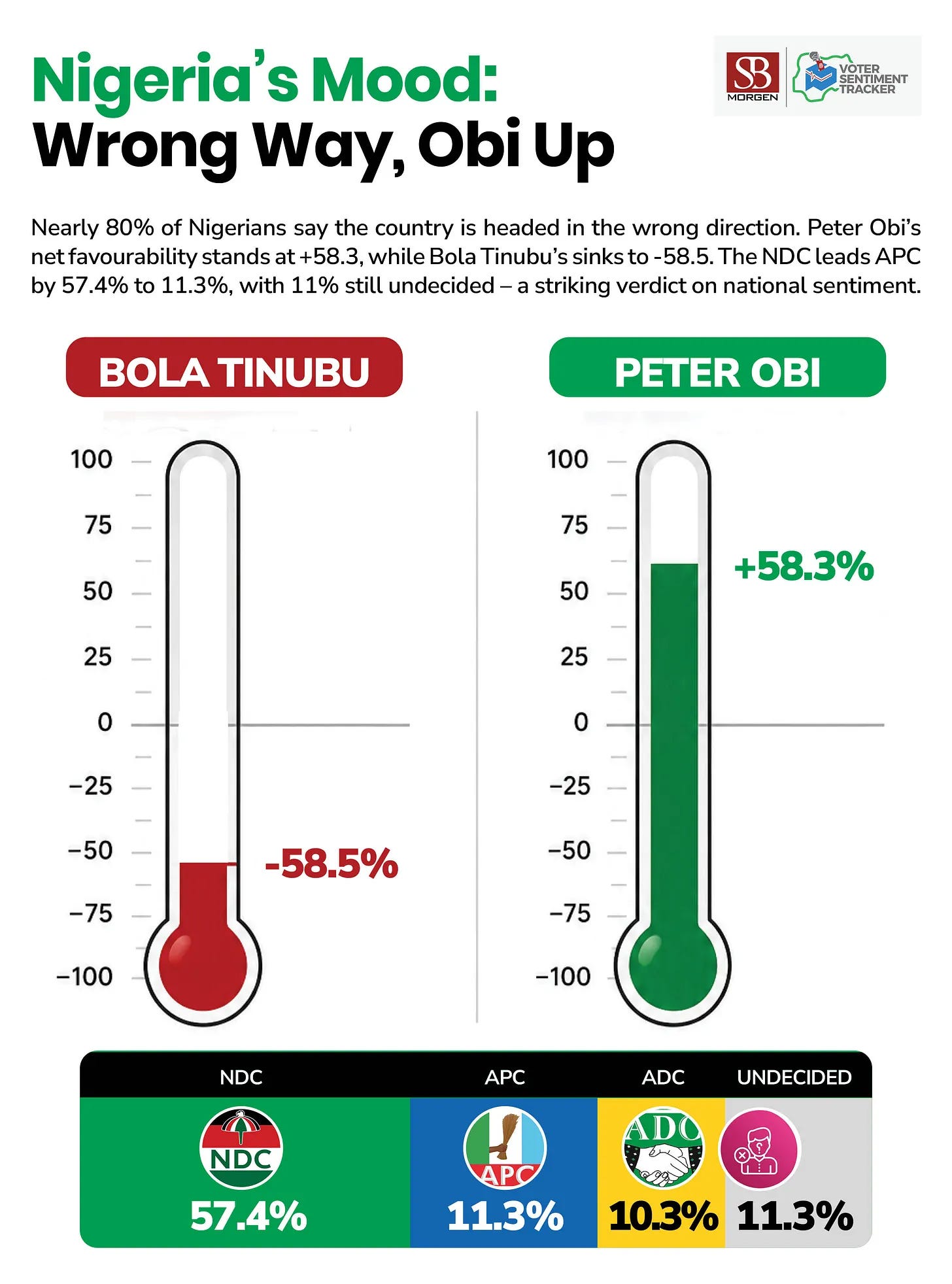
Chart of the week
Podcast
Veronica’s guest this week is Uche Ejezie, and they discuss Nigeria’s oil production hitting a six-year high, bond sales raising ₦5 trillion, and the 48% jump in fraud cases in Ghana, which may be a tale of growth versus security. Listen here.
You can follow our podcasts by subscribing here.
Video
SBM Intelligence’s Managing Partner, Ikemesit Effiong, discussed the findings of the Voter Sentiment Tracker in the Morning Brief, suggesting that high voter turnout in Nigeria's 2027 election could significantly benefit the opposition.
What we’re following this week
In a busy week, Nigeria’s security forces rescued 45 abducted students and teachers in Oyo State and arrested eight suspects. Troops also repelled an ISWAP attack in Borno and arrested a Moroccan ISIS operative. Meanwhile, the country’s Representatives called for an end to terrorist rehabilitation, while soldiers’ minimum pay rose to $71.
Nigeria’s crude production rose to 1.56 million barrels per day in June, its highest level in more than six years, exceeding its OPEC quota. Meanwhile, Dangote Refinery has begun pricing fuel in dollars, citing crude supply shortages under the naira-for-crude programme and rising global prices.
Nigeria raised ₦5.08 trillion from domestic bonds in the first half of 2026, a 77.8% increase year‑on‑year, as the government stepped up borrowing to meet fiscal needs. Subscriptions exceeded ₦9 trillion. Analysts warn that heavy borrowing could crowd out private credit and push up debt‑servicing costs.
Peter Obi, the NDC’s presidential candidate for the 2027 election, has alleged persistent government harassment and intimidation, saying he “might not even be alive” to contest. He claimed daily harassment, including having his car clamped at an airport. The Federal Government had not responded at the time of reporting.
Ghana’s financial sector recorded a 48% increase in fraud cases to 24,778 in 2025, with potential losses exceeding $8.7 million as digital payments expanded. The Bank of Ghana called for stronger cybersecurity. Separately, money supply growth slowed to 22.2% in April 2026, while a former official was arrested for misappropriation of GH¢55 million.
Côte d’Ivoire is tightening governance of its mining sector as the Union of Gold and Diamond Buyers and Sellers expands to seven districts to improve traceability and fight illegal mining. Security forces destroyed illegal installations in Soubré. Meanwhile, a land dispute between Gblapleu and Guitrozon communities risks renewed violence.
A UN fact-finding mission has accused Sudan’s Rapid Support Forces of genocide in al-Fashir, citing mass killings and sexual violence. The army insists it will only accept a US-backed peace deal if the RSF withdraws from all cities it has held since 2023, despite the RSF welcoming the initiative.
Media mentions
SBM Intelligence’s analysis featured prominently across multiple platforms this week, with a strong focus on security, AI, electoral integrity, and sanctions.
The firm’s report on AI and misinformation, The Algorithm and the Ballot Box, received widespread coverage, with BusinessDay framing it as an emerging market opportunity for deepfake detection and verification technologies, while Channels Television highlighted Ikemesit Effiong’s warning that low voter turnout tends to favour incumbents. Nairametrics cited an SBM report on rising kidnap threats and mob justice, among other outlets, while a ThisDay letter referenced SBM data on ransom payments in the Southeast.
The South China Morning Post quoted partner Cheta Nwanze on how overlapping US and China sanctions are complicating business in Africa. Al Jazeera’s report on the Oyo rescue also cited SBM’s data on ransom payments.